


































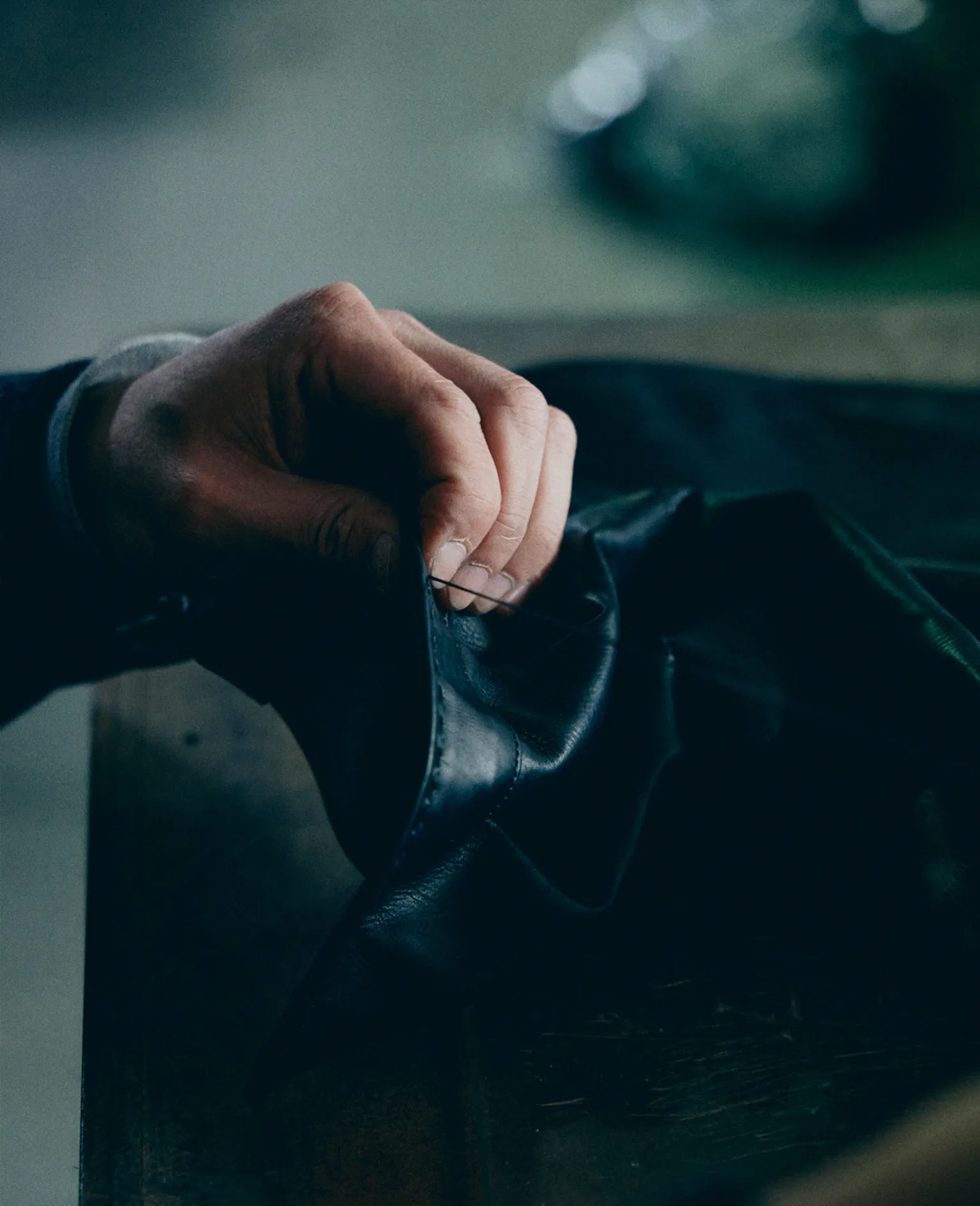


One theory traces the origin of the bandana back to India. The word is said to derive from the Hindi “बन्धन (bandhan),” meaning to tie or to bind. In pursuit of craftsmanship marked by the touch of human hands, we found ourselves in India—working alongside artisans who carry forward rare and valuable production traditions. From that collaboration came the idea to create products that symbolically bind together India and Japan, as well as connect the American bandana culture that took root around the early twentieth century with contemporary Japanese sensibility.
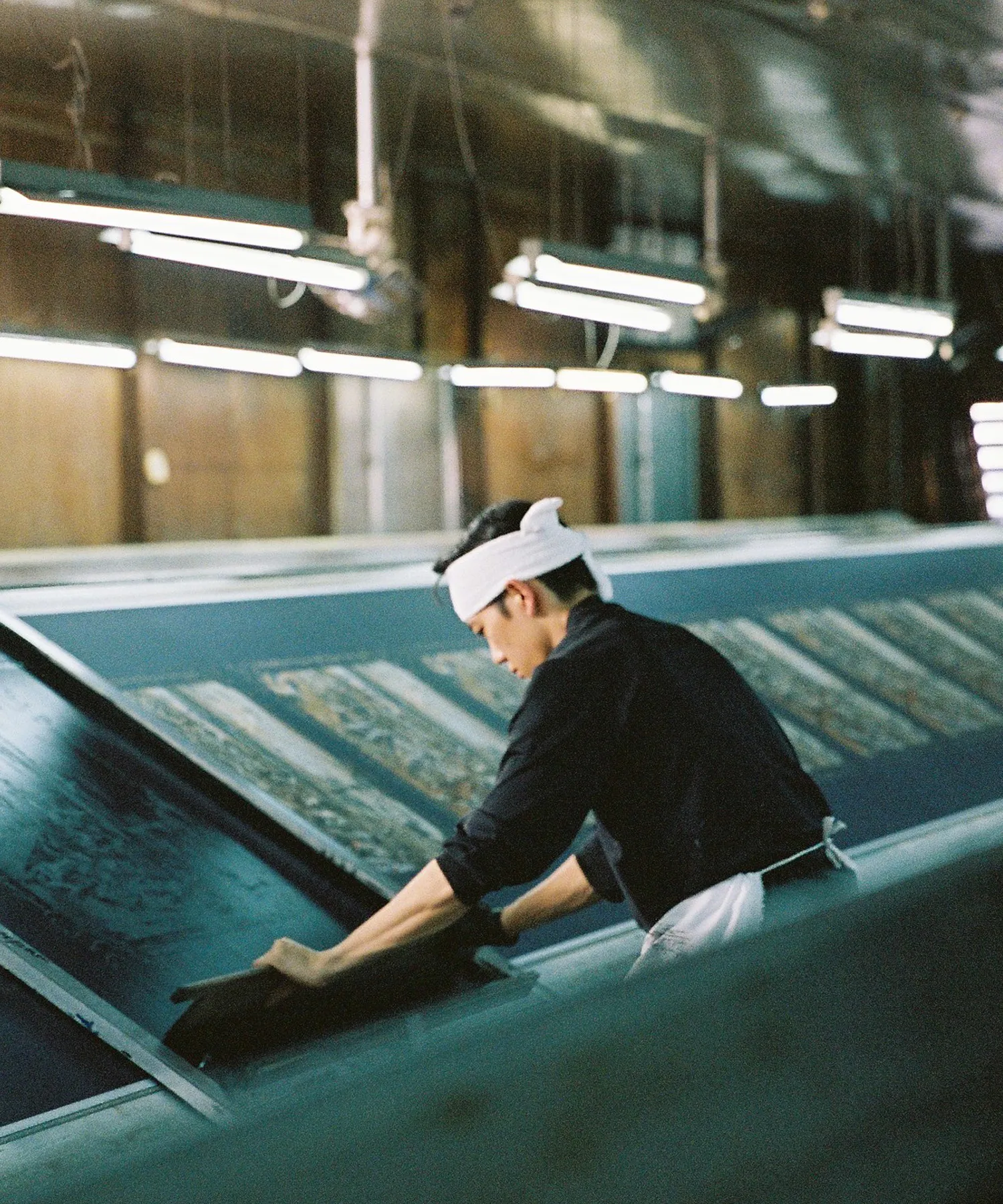
A typical bandana measures about 60 centimeters per side. In India, however, we discovered the remarkable ability to hand-print an entire 180-centimeter square panel in a single frame. The thought of composing an original bandana design across such a vast canvas—like painting a picture on fabric—was exhilarating. We could have simply enlarged a standard bandana pattern, but doing so would have sacrificed the intricate dotwork and delicate detail that define vintage examples. Instead, we decided to draw at the same level of fineness as a 60-centimeter bandana, scaled across the full 180-centimeter field.


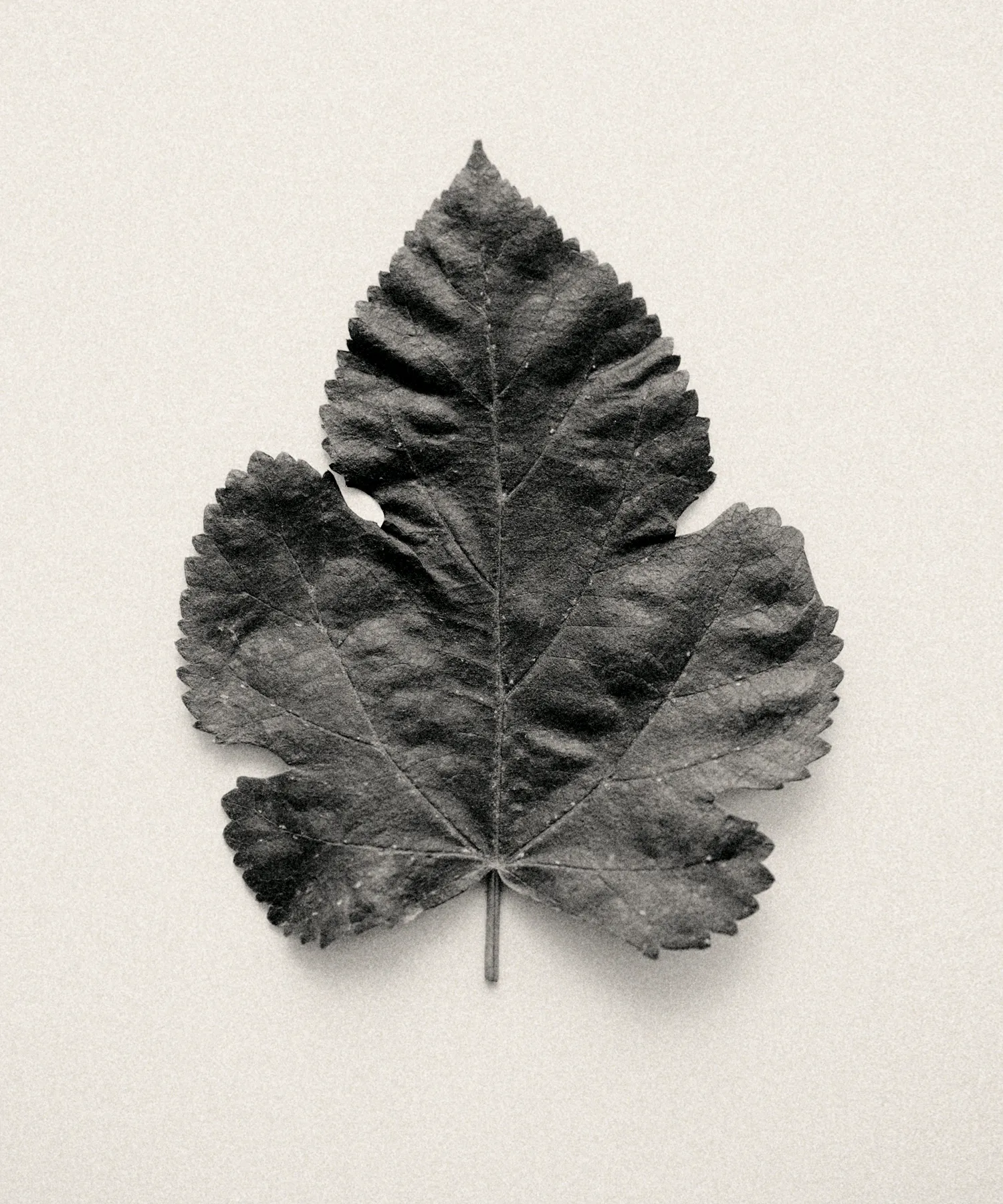
The outer border of the design follows the classic paisley and cookie motifs seen in vintage American bandanas. While staying faithful to tradition, we incorporated elements drawn from various regions and eras—adding abstract depictions of animals and other original details. Inside the border, we placed traditional Japanese patterns such as aoi-mon, sasa-kazura, shida, and kumo—motifs inspired by native flora and birds used historically in kimono textiles. Between these layers, leaves intertwine the two worlds, expressing the connection between cultures.
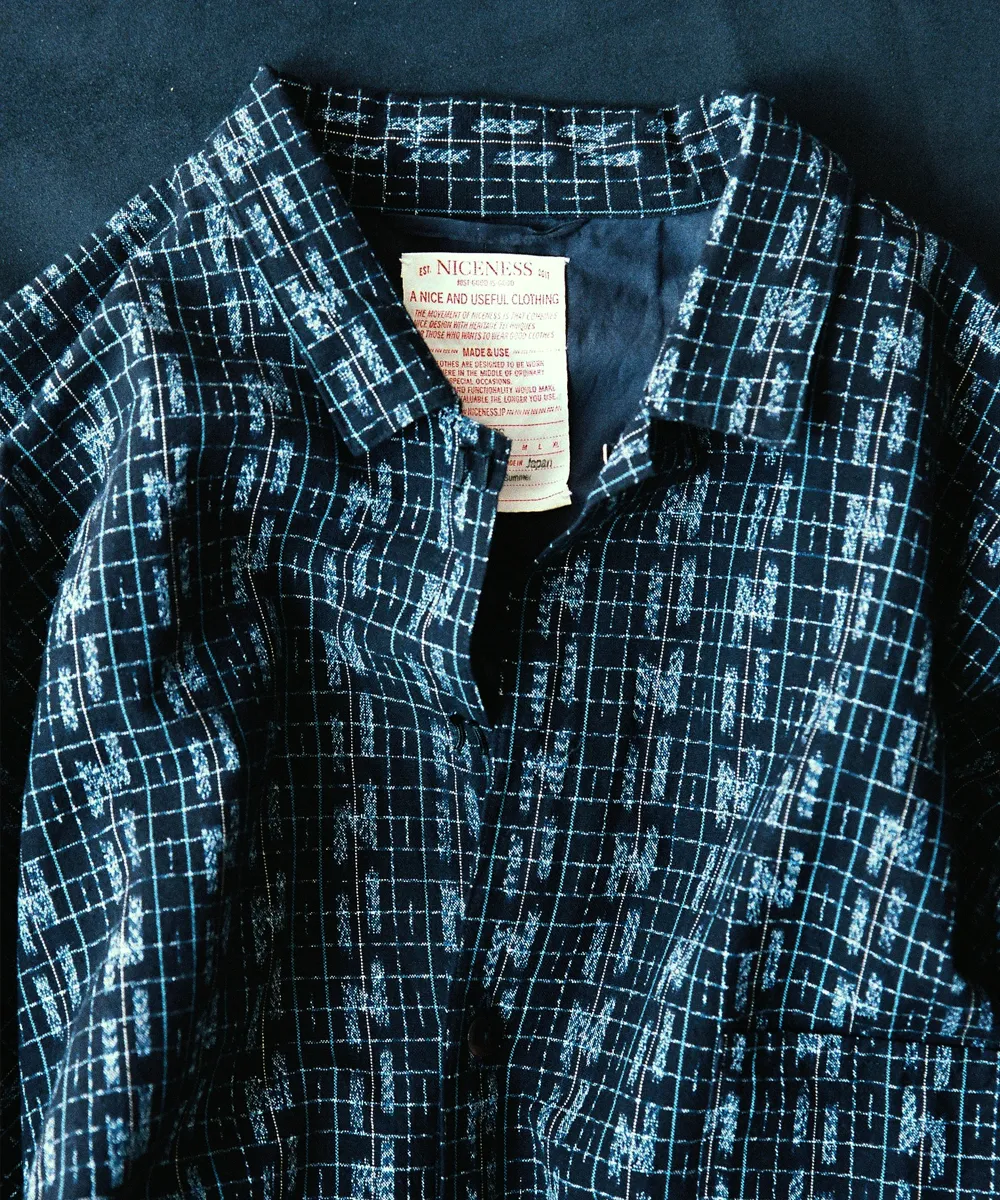
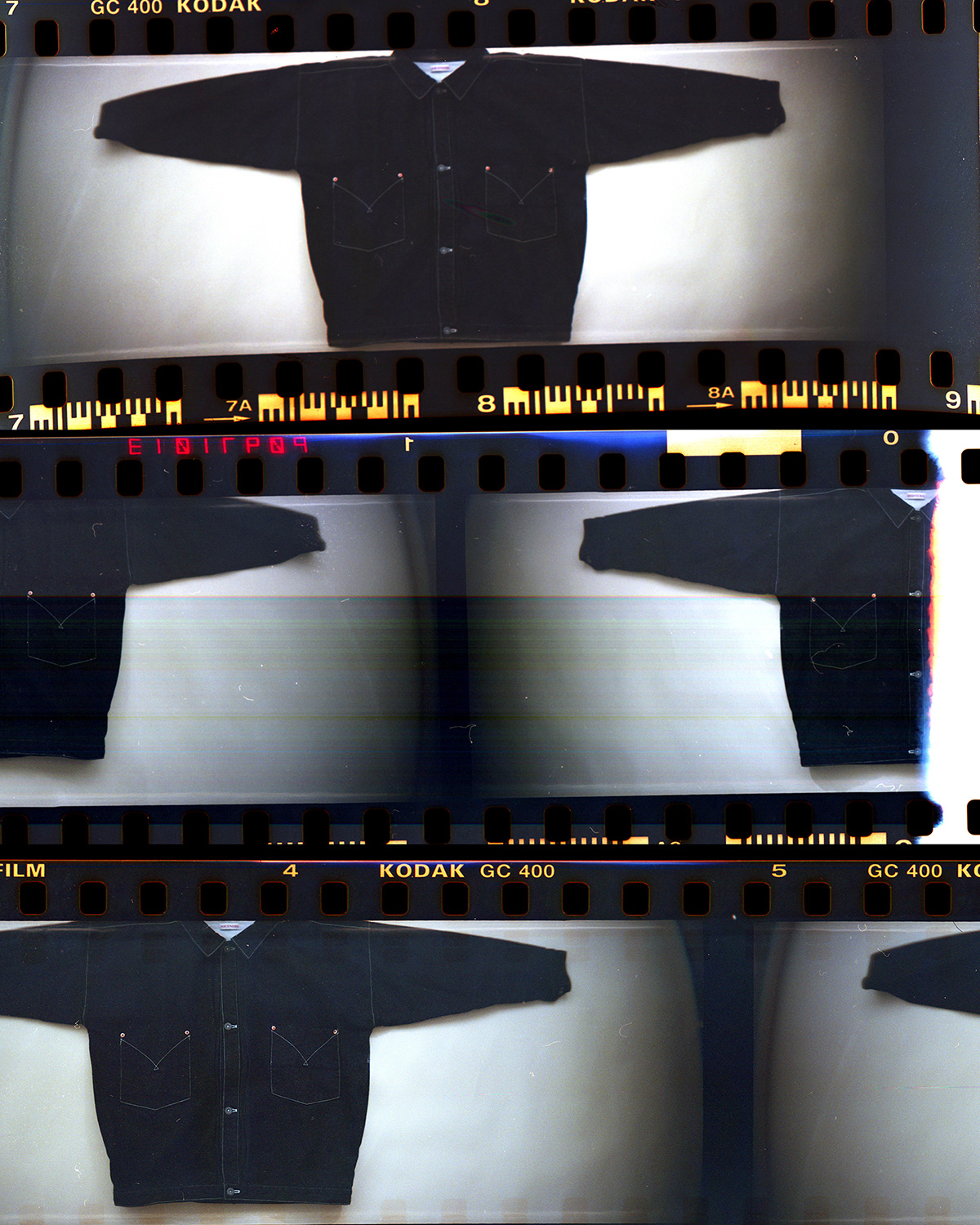
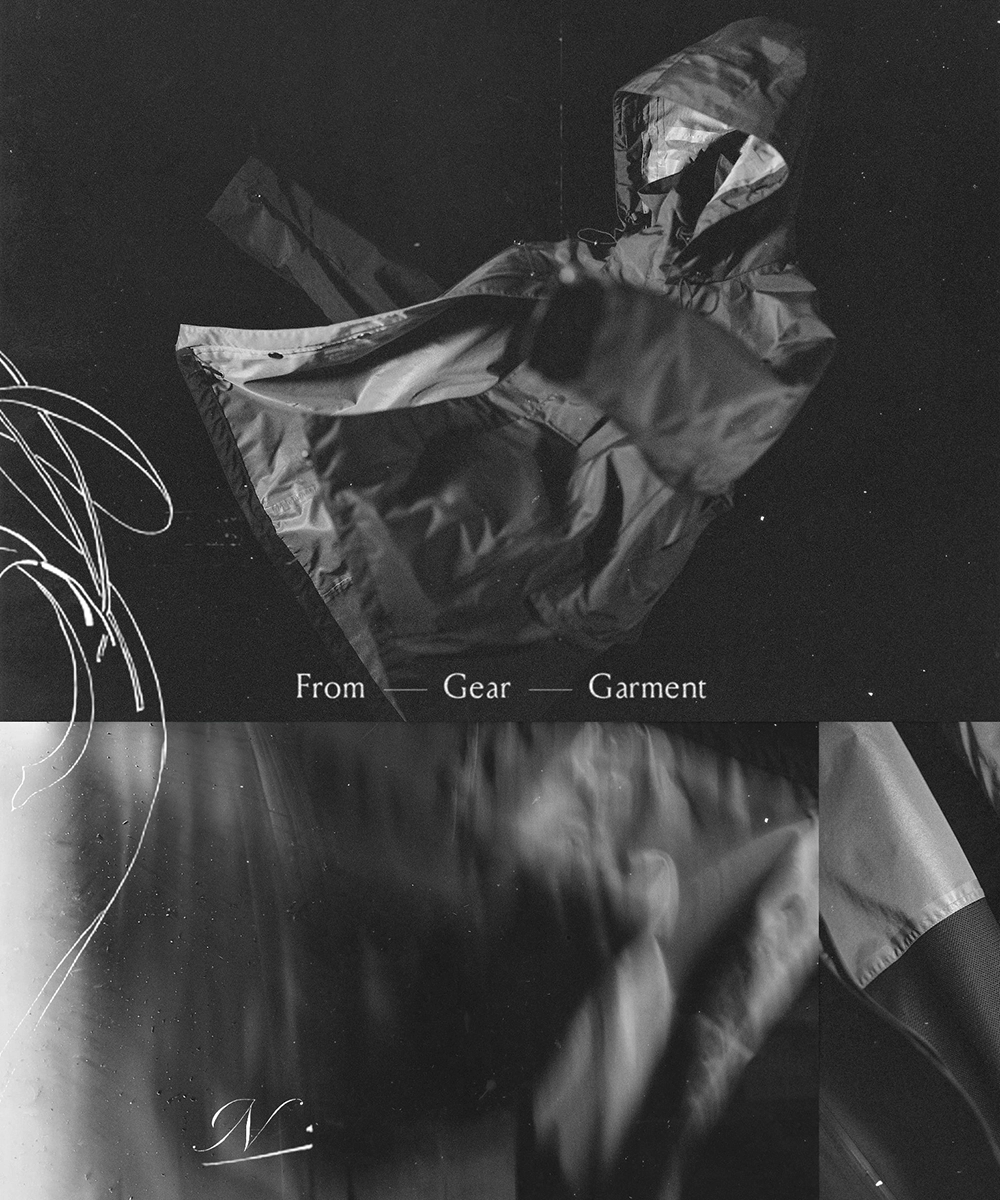
This season in India, we used the large hand-printed bandana NAIR to create two garments. Wanting to preserve both the full scale and character of the print, we minimized cutting and approached the construction almost like origami. The result was the smock parka DAS and the trucker jacket GYAN, each crafted from a single NAIR bandana. Folded, tucked, and shaped with precision, every detail reflects the logic of turning a perfect square into a functional garment—best appreciated when the piece is unfolded and examined in person.


In Japan, we reinterpreted the same pattern using a silk-and-cotton blended lawn, woven with silk warp and cotton weft, and printed by silk screen. This version carries a more dress-like impression, developed into the CHAO scarf and PAT scarf tie. Six panels of CHAO were also combined to form the JAMET shirt—a design that, through its linear structure, echoes the composition of the kimono.
This season’s bandana series belongs neither solely to India, nor America, nor Japan. Instead, it exists as a gesture of respect toward them all—a weave of traditions bound together by shared artistry and human touch.

Product


Episode