AUTUMN / WINTER 25
Embedded Memory
The autumn/winter deliveries have finally found their way to shelves and wardrobes, yet here in the studio, the next season is already mid-production, and the one after that is taking its first tentative shape. This rhythm—half a year at a time, always overlapping—continues for as long as the brand does. New fabric swatches and trimmings colonize every surface in quiet waves, and somewhere within that accumulated disorder, the silhouette of a collection slowly comes into focus. Autumn/winter offers far more material choices than spring/summer, and there are days when the floor itself disappears beneath it all. The long journey toward the moment a piece finally reaches your hands begins right here, in this room.
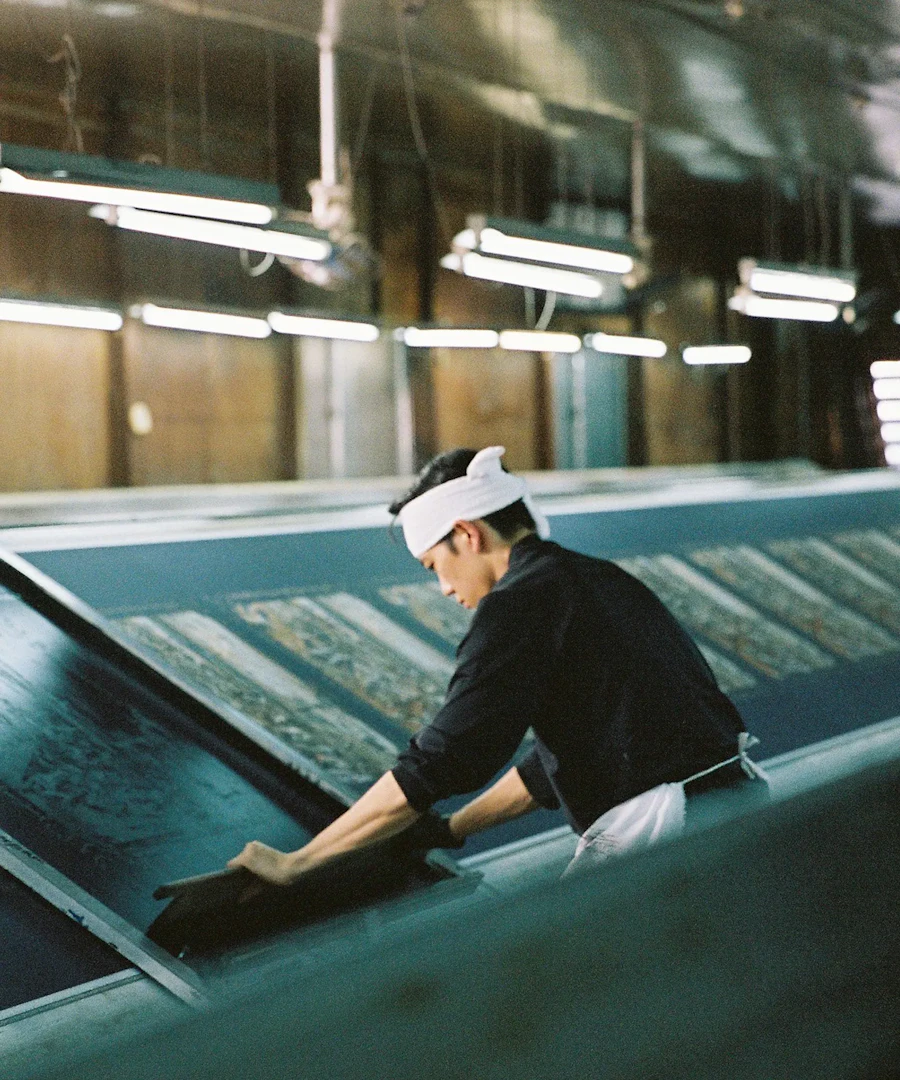
We pull on our clothes without much thought. Yet each material that forms a single garment has traveled extraordinary distances and passed through countless hands before arriving. Fiber becomes yarn in a spinning mill; yarn becomes cloth on a weaver's loom; cloth becomes a garment under a tailor's hand. It is only because of the infrastructure and transportation of the modern world that we are able to reach across the globe for materials, while standing in a studio in Japan.


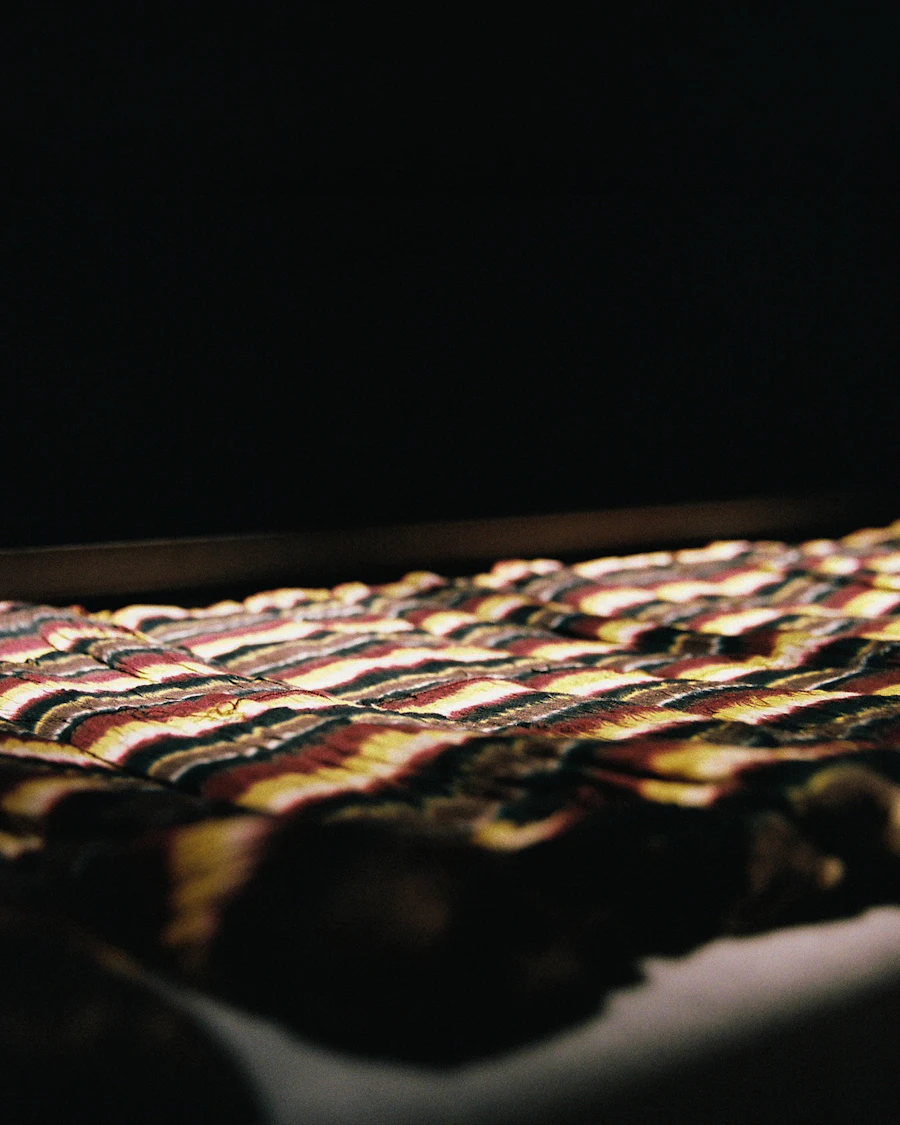
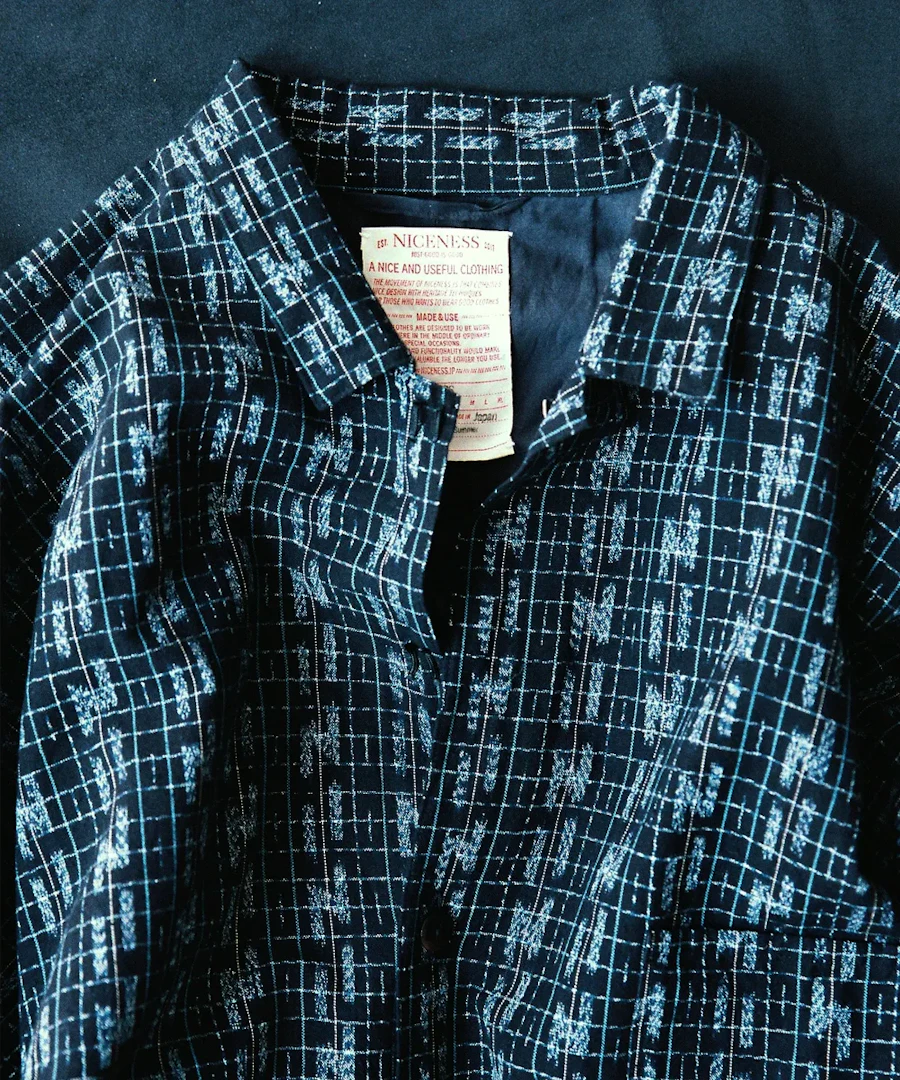
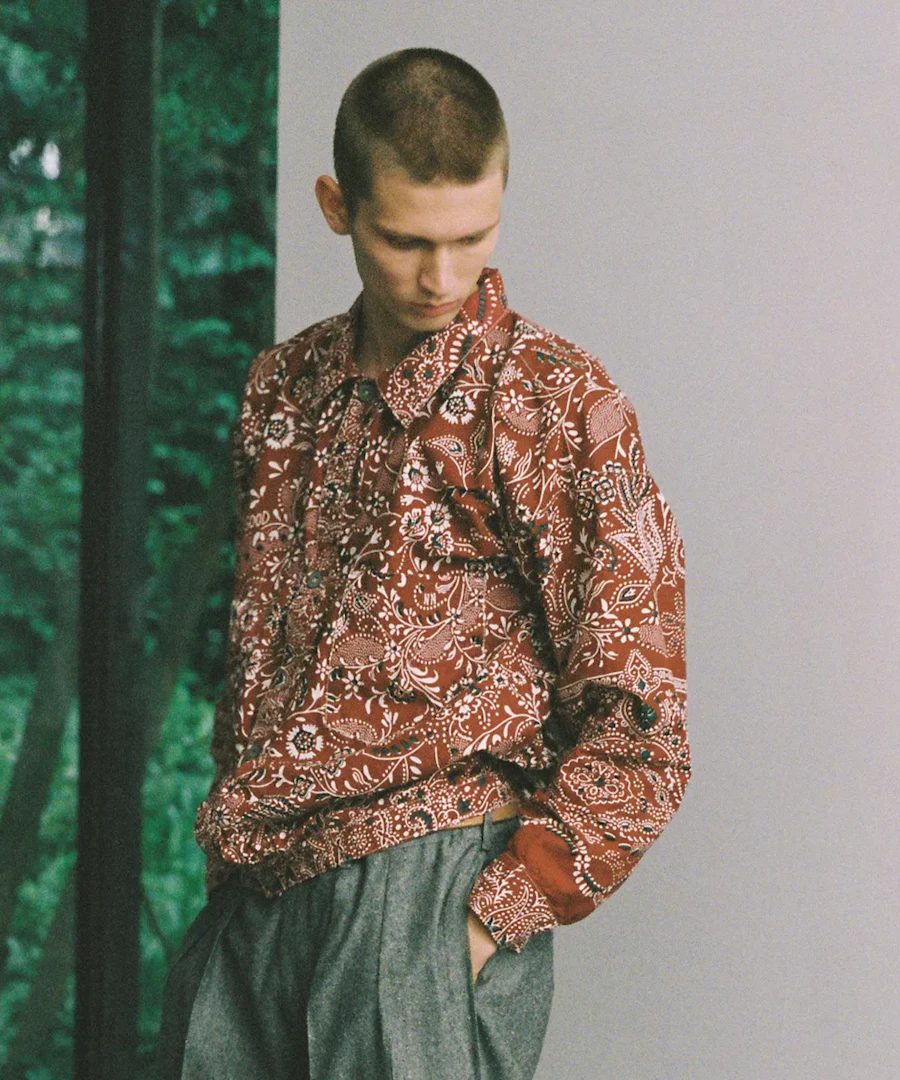
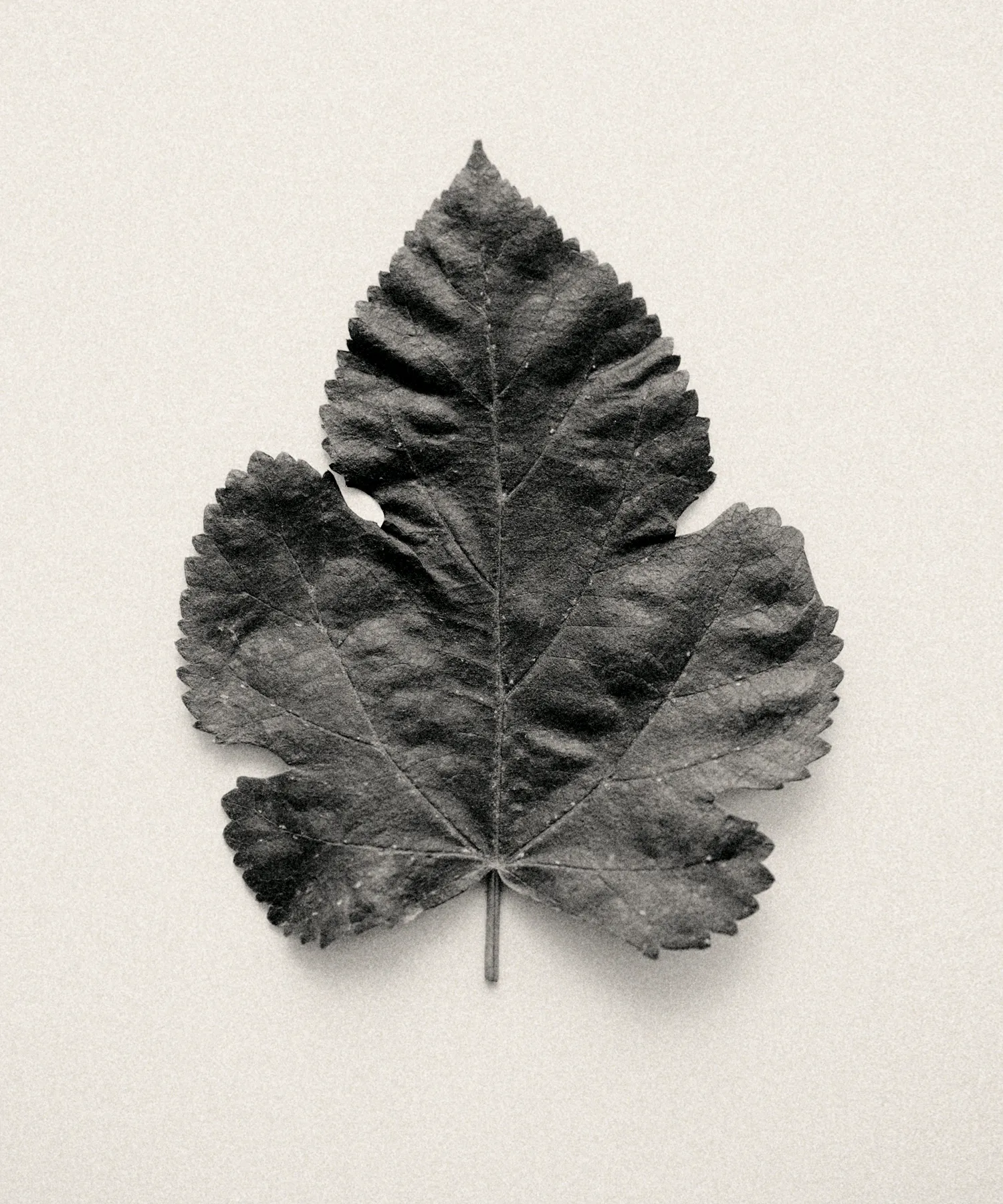
On the shop floor, a series of flannel shirts has arrived—woven in a check pattern from yarn-dyed mulberry silk. Mulberry is the tree whose leaves feed the silkworms that produce silk. The species used in sericulture originated in China and made its way to India and Japan long before the common era—its Japanese name, loosely meaning the mulberry from Tang, carrying the memory of that origin within the word itself. In an age without modern transport, this fiber traveled the full length of the Silk Road to reach Europe: an accumulation of staggering distance and unhurried time. Crossing regions of different climates, passing between peoples of different languages and cultures, silk continued to move and take root. That history alone speaks to how profoundly this material has captivated human beings, across civilizations and centuries.
Held in that light, a single shirt in our hands is no longer simply a garment. It becomes something quietly extraordinary—a vessel of accumulated journeys, of distances folded into cloth. And not only silk: every fabric we work with carries within it the memory of human movement and time. Invisible to the eye, yet unmistakably present—the trace of a long and winding passage. The road from first concept to the moment a piece appears on the shop floor is not unlike the Silk Road itself: distant, layered, and wrapped in a quality of time that cannot be rushed.
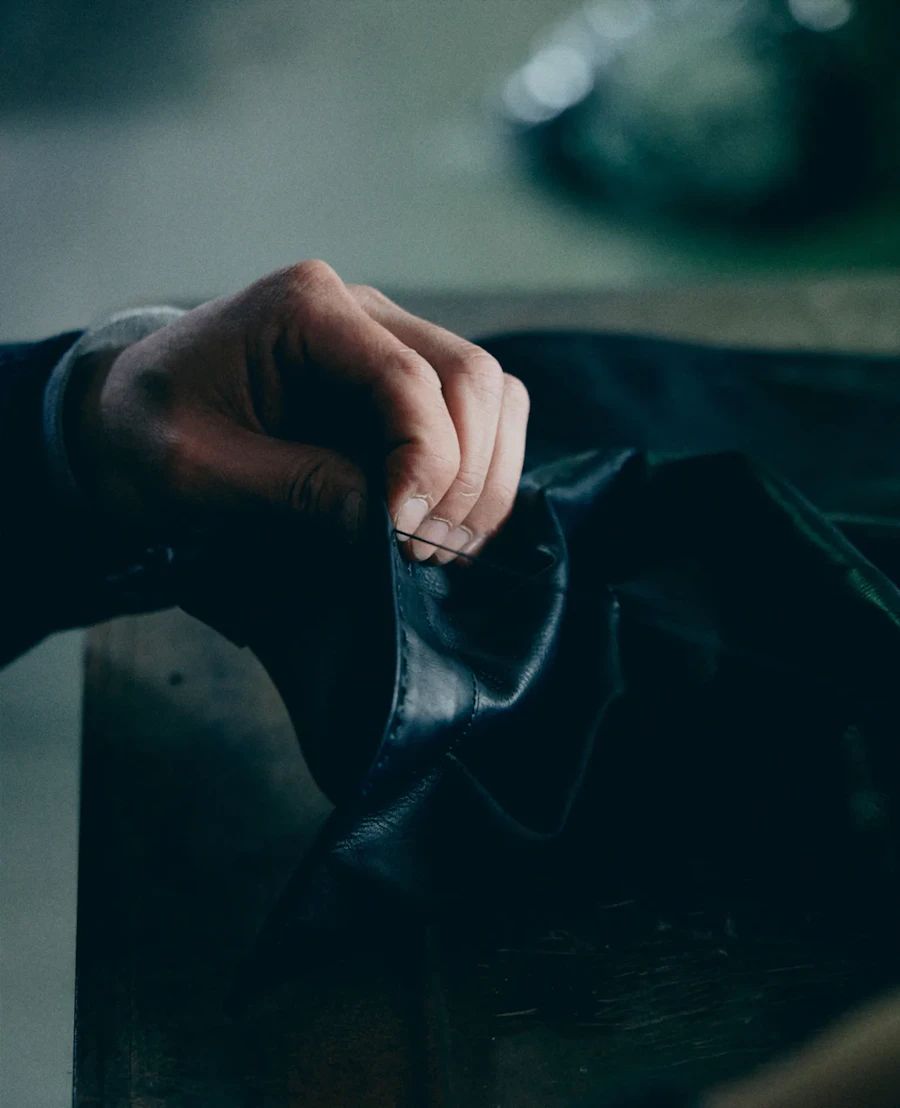
Clothing is an act of making built upon everything those who came before us left behind—each generation adding quietly to the last. And even now, it is only through the careful joining of many hands and many hours that a single form finally comes into being. If even a fragment of that journey can be imagined, perhaps the time spent with the clothes we love grows a little deeper, and what we feel toward them into something larger. As you reach for a favorite piece, try listening—just for a moment—for the faint presence of all the roads it has traveled to find you.


Episode