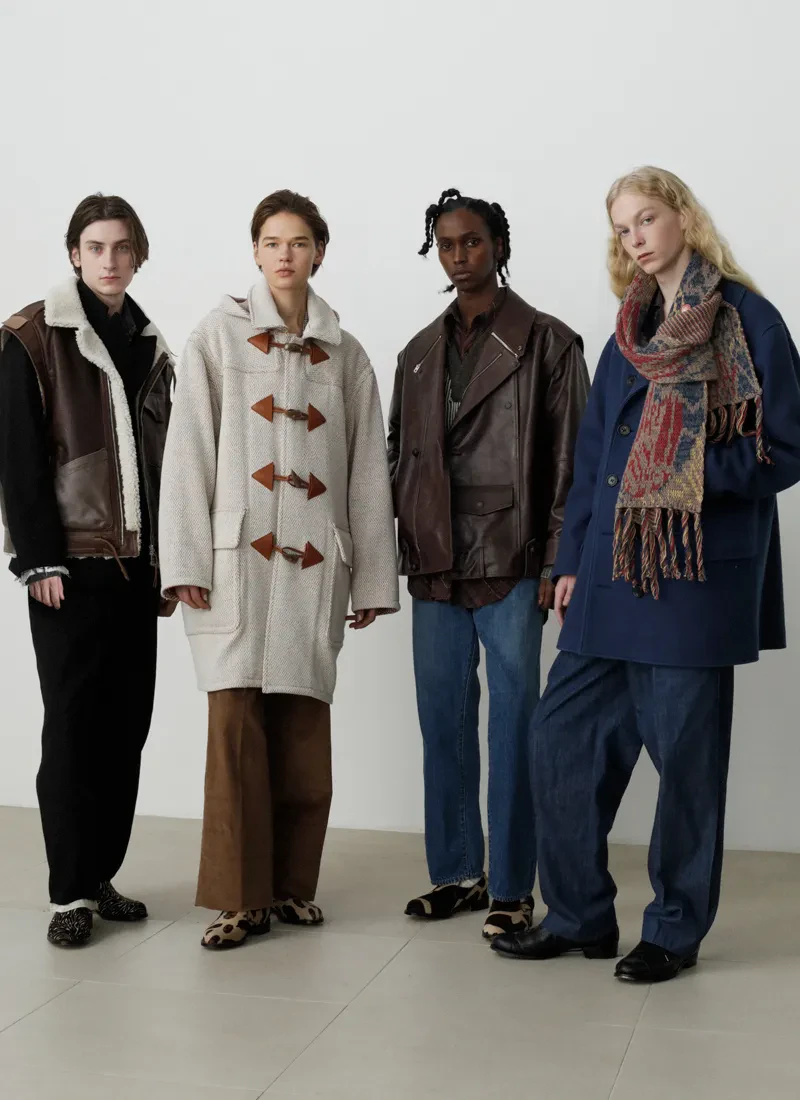
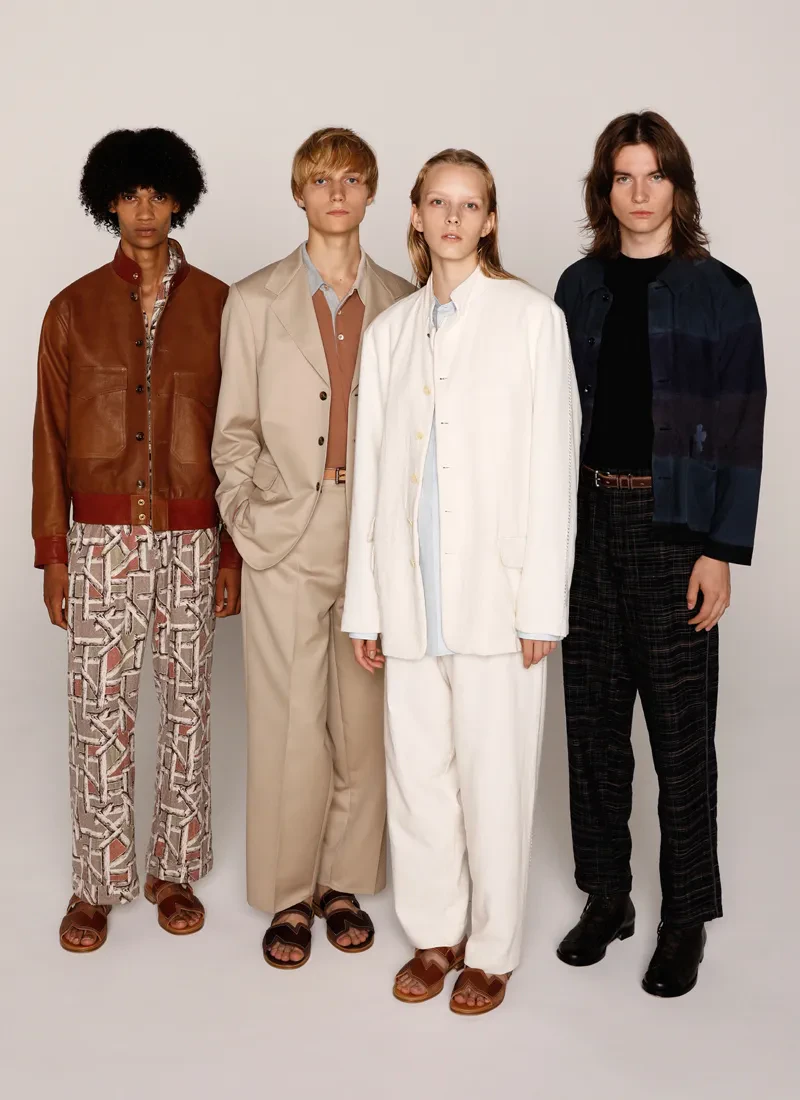
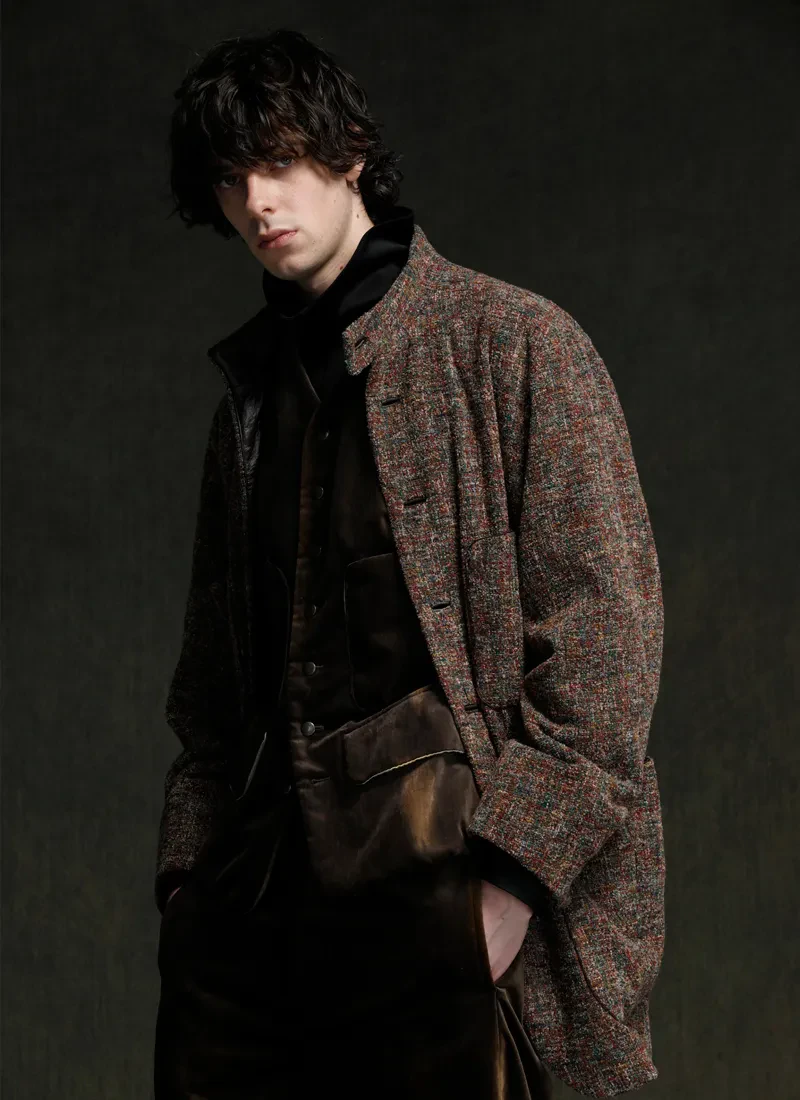
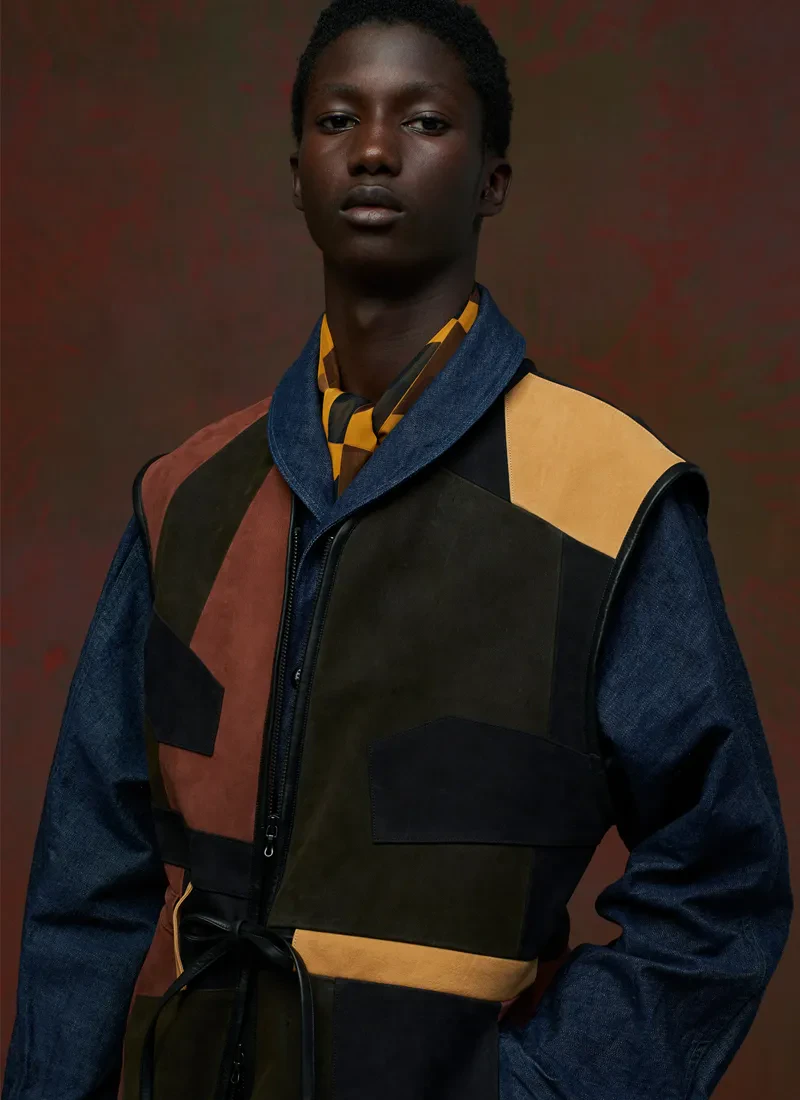
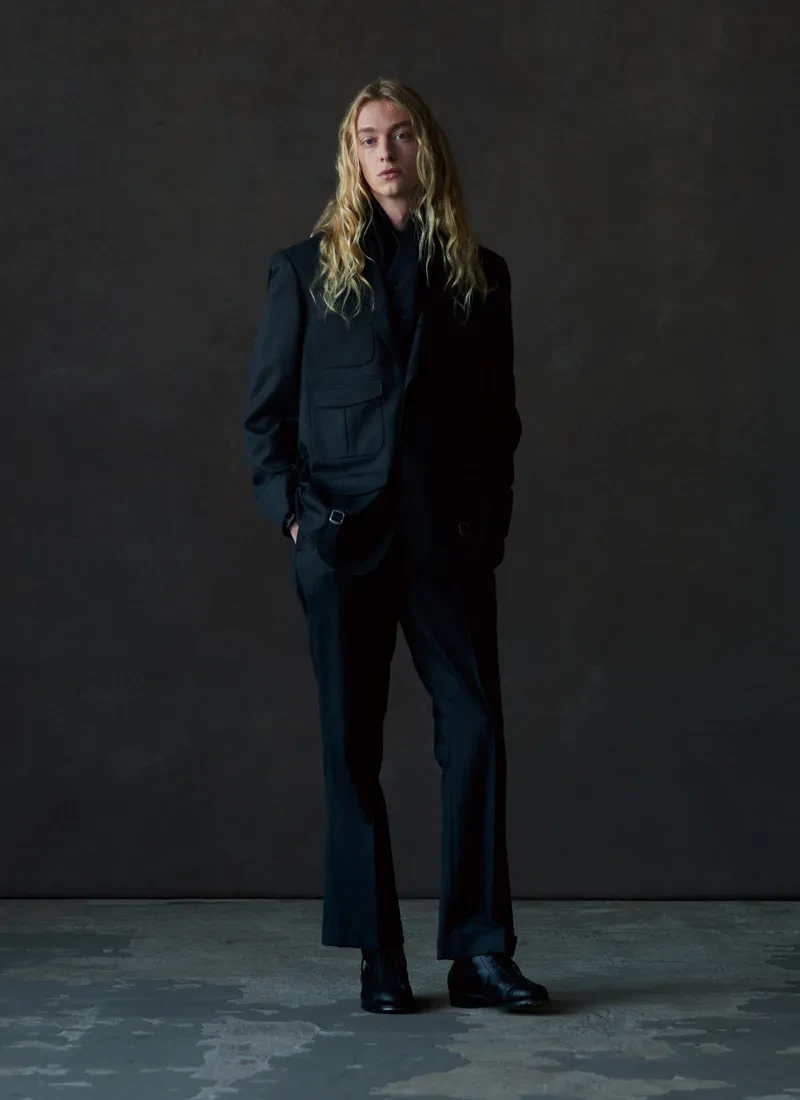
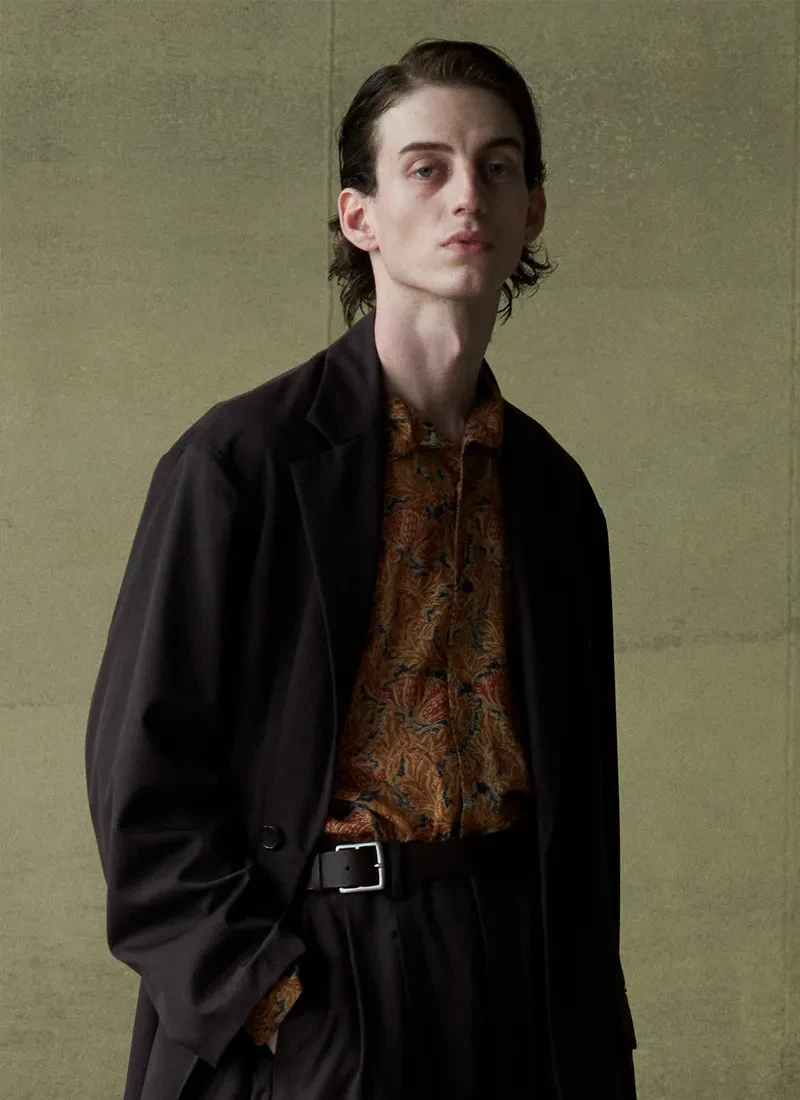
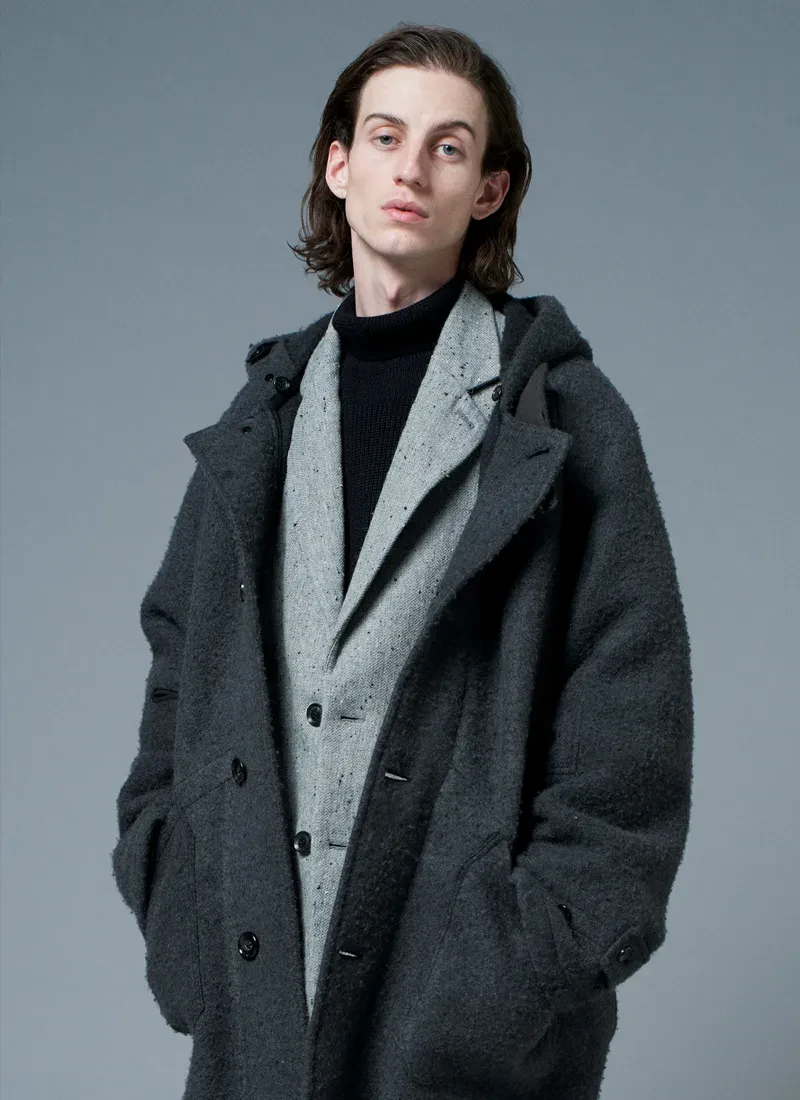
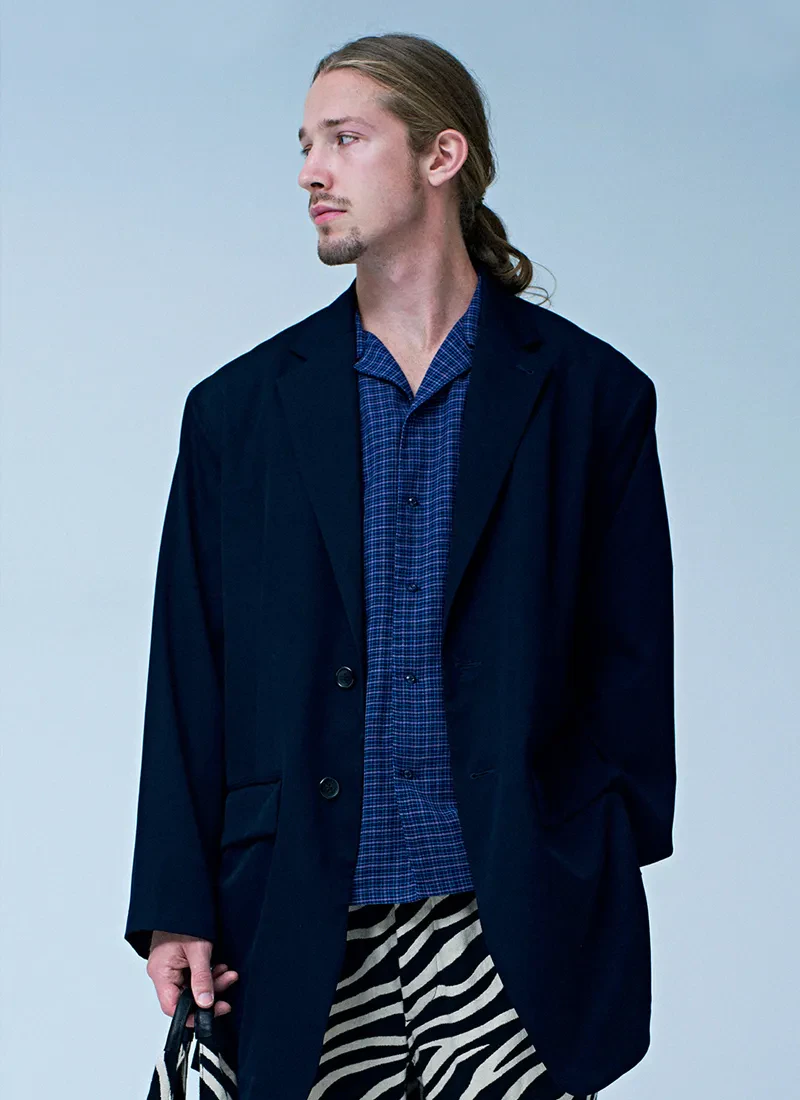


AUTUMN / WINTER 26
On a recent trip to Paris, the day after several long days at the showroom had finally come to an end, I found myself with a little time and nothing scheduled. Toward the end of my stay, I moved to a hotel in the unfamiliar 7th arrondissement. It was an area dotted with vintage shops and art galleries recommended by a local friend, as well as several restaurants I had been curious to visit. I made no particular plans. That freedom itself was a small reward for having brought the showroom safely to a close. Summer in Paris has a slightly different quality of light from Tokyo. Perhaps because the air is dry, the presence of the sun feels closer than usual. The walls of the buildings, the cobblestones, and the trees in the parks all reveal sharply defined outlines beneath the strong light. With time to spare before check-in, I walked through the sun toward the Musée Rodin, not far from the hotel.
The following day, I visited the Alexander Calder exhibition at the Fondation Louis Vuitton. It was by chance, but I found myself spending two consecutive days in front of sculpture. Rodin and Calder. The periods in which they worked, their materials, and the nature of their works could hardly be more different, yet after seeing both exhibitions, I was left with a strangely similar impression. Neither artist’s work contained an unnecessary line. Rather than creating presence by adding something, they brought the form itself into relief by leaving only what was necessary. Even inorganic materials such as bronze and iron seemed to acquire warmth through the human hand, revealing a different expression each time they caught the light. As I walked away from the museum, I remembered something the designer had said about the leather sandal IRVINE.


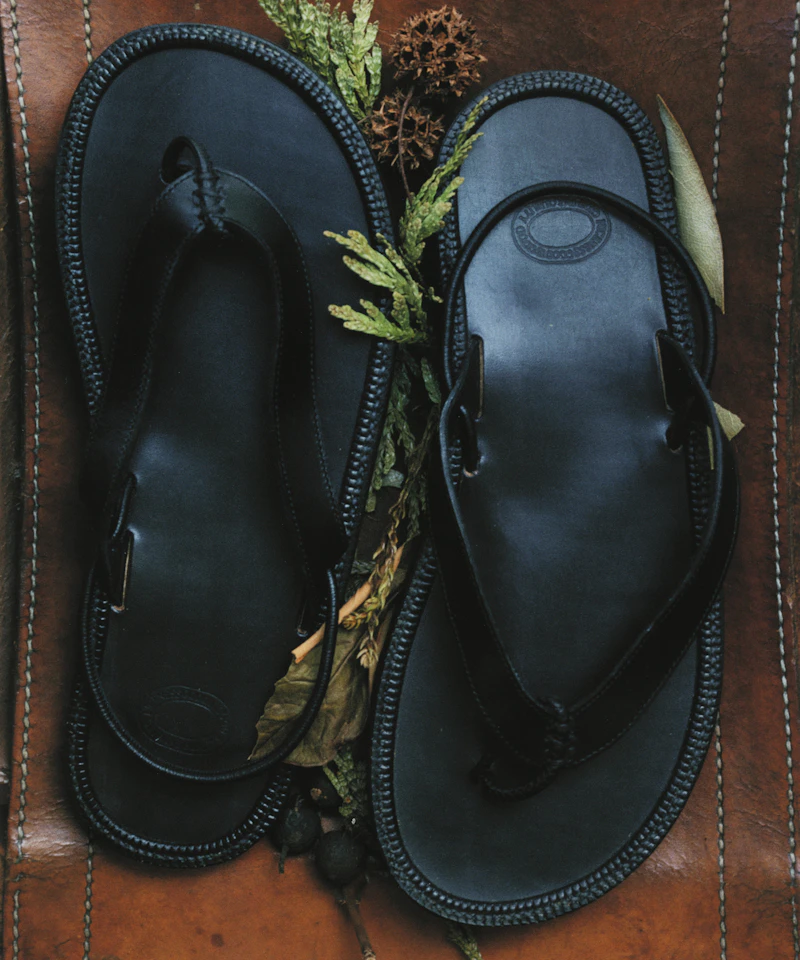
“Rather than making a sandal, I wanted to make a leather shoe in the form of a sandal.” At the time, I had simply taken it as a striking way of putting things, but after seeing the two exhibitions, the words suddenly made a curious kind of sense.
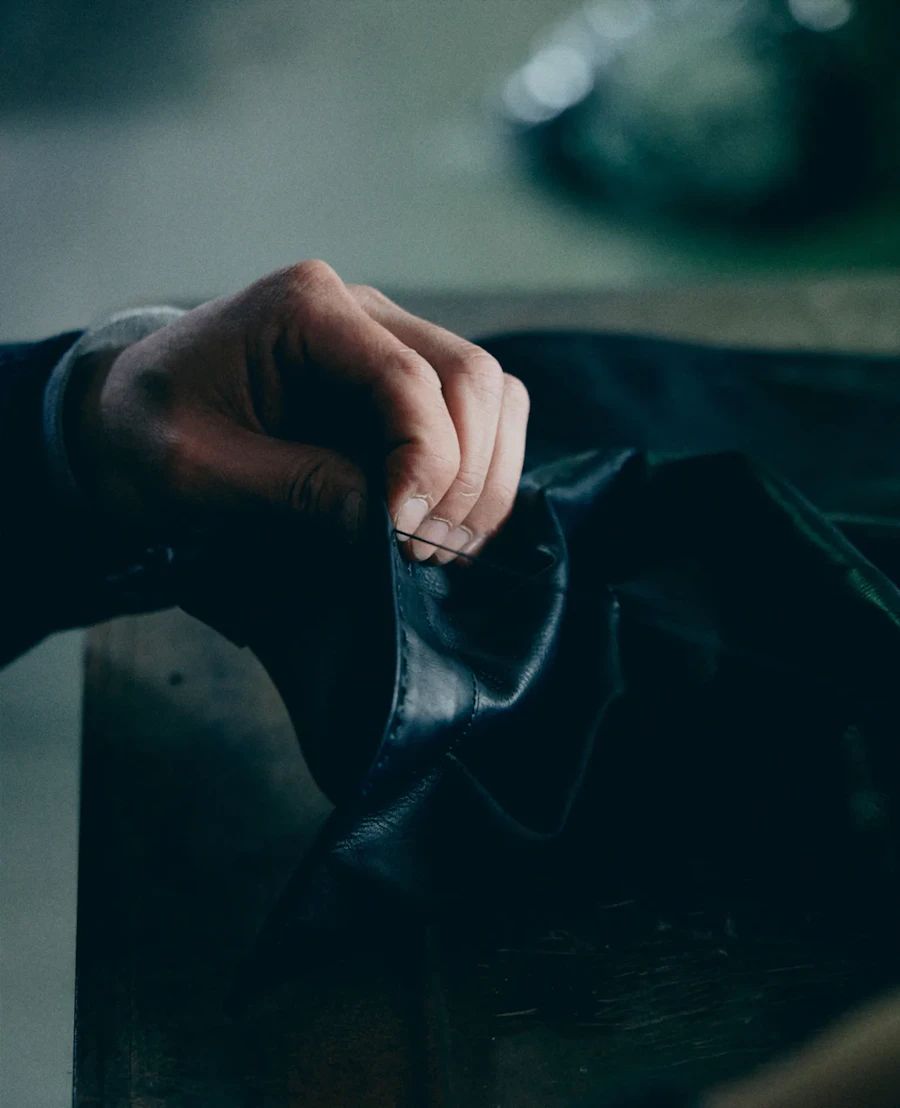
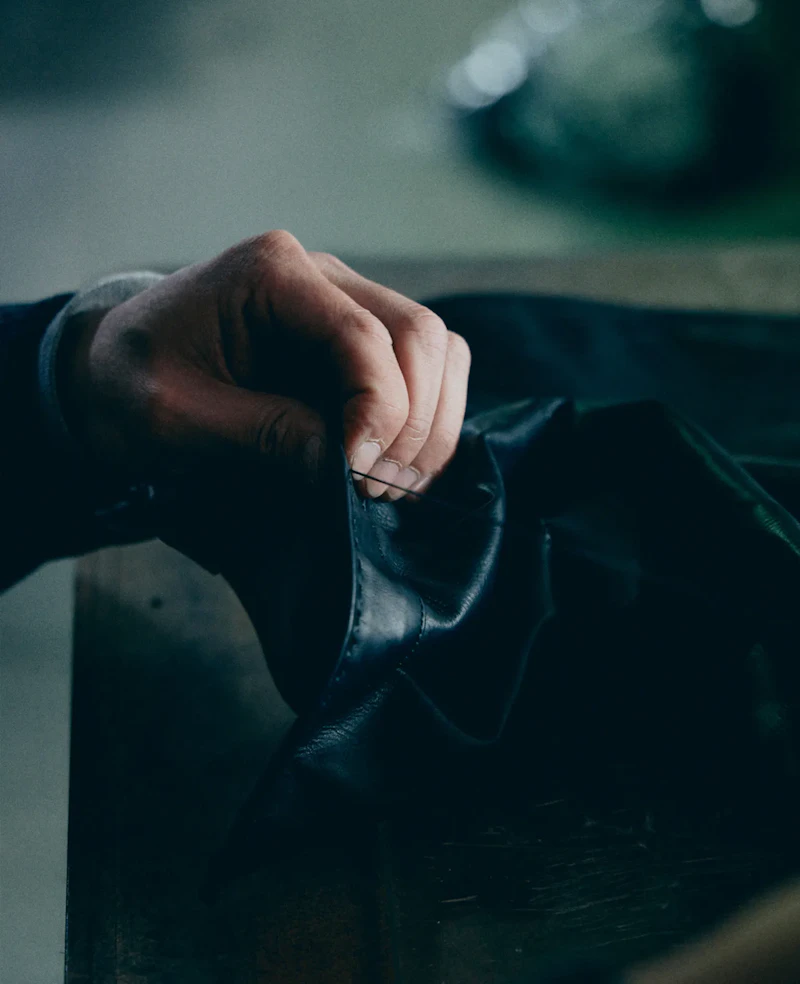
Most leather sandals are made to be as light and as simple as possible. This pair, however, is slightly different. A welt has been added, the edges carefully finished, followed by wheeling and decorative marking. The thong is formed from individually stitched leather-wrapped cords, while an elastic cord covered in lamb leather is used at the heel. Many of these details go unnoticed once the sandals are worn. Even so, through the accumulation of these unseen processes, the sandals acquire the quiet tension of a leather shoe.

The aim was not to add the ornamentation of a leather shoe to a sandal. It was to translate the structure and techniques that leather shoemaking has cultivated over a long history into the most pared-back form of footwear: the sandal. During the development process, a book of Richard Serra’s work remained beside the designer. Composed of monumental steel plates, Serra’s sculptures possess an overwhelming sense of mass, yet transform the space around them through only a limited number of lines and planes.
Not increasing the amount of information, but refining the structure. Not applying ornament, but drawing out the power inherent in material and form. That way of thinking has something in common with the making of leather shoes.


The question is not only what can be seen, but how much time can be devoted to the structure that supports the form. The accumulation of work that rarely appears on the surface eventually emerges as a single outline. Sandals are, by nature, footwear that symbolises summer. Yet considering the climate of recent years, that season has become longer than it once was. Paired with a substantial coat or wool trousers, they bring lightness only to the feet. That small margin of openness can greatly alter the impression of the entire look. In photographs of Giacometti’s and Picasso’s studios, they can often be seen working in sandals or slipper-like footwear. What their work required was perhaps not formality, but a body free to move. For them, sandals were not footwear reserved for summer. They were tools that supported the daily act of creation.
Sandals seem strangely suited to the feet of a sculptor. The larger the works a person creates, the more surprisingly simple the objects closest to the body often become. There is a quiet beauty that can exist only after everything unnecessary has been stripped away. To carry the time and techniques accumulated through leather shoemaking into the freest form of footwear. There is something sculptural in that idea. Not by adding form, but by leaving only what is truly necessary.


Episode