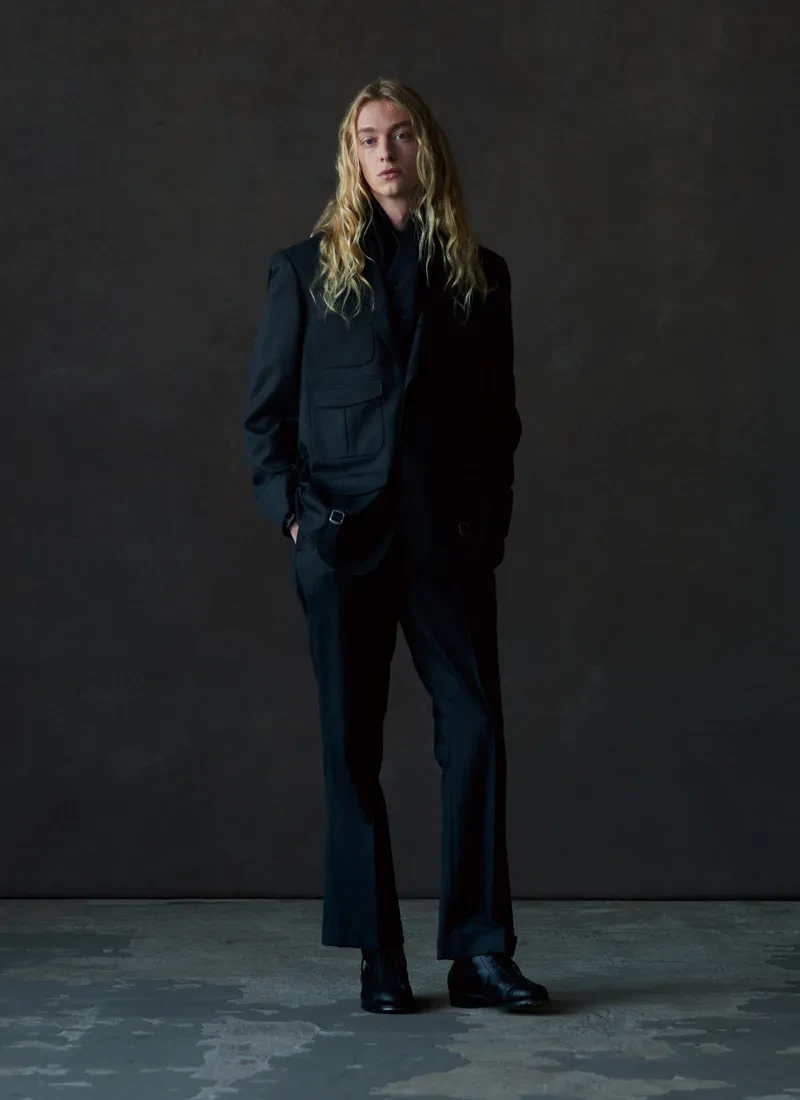
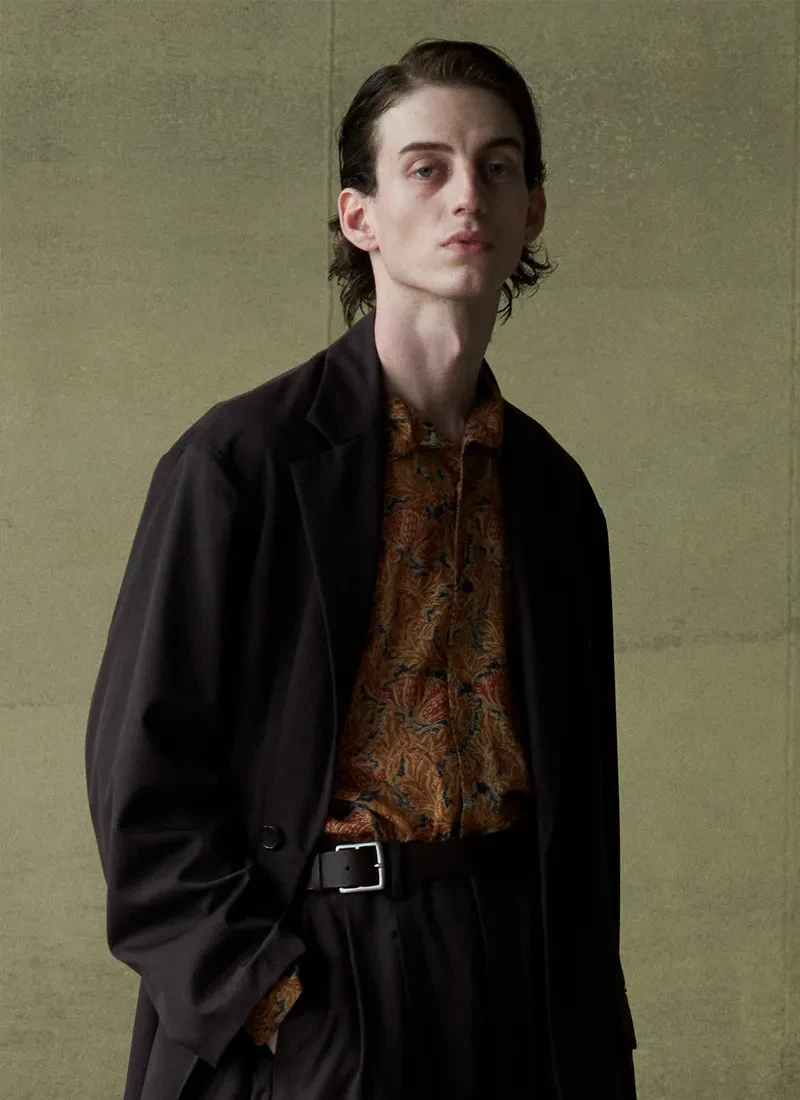
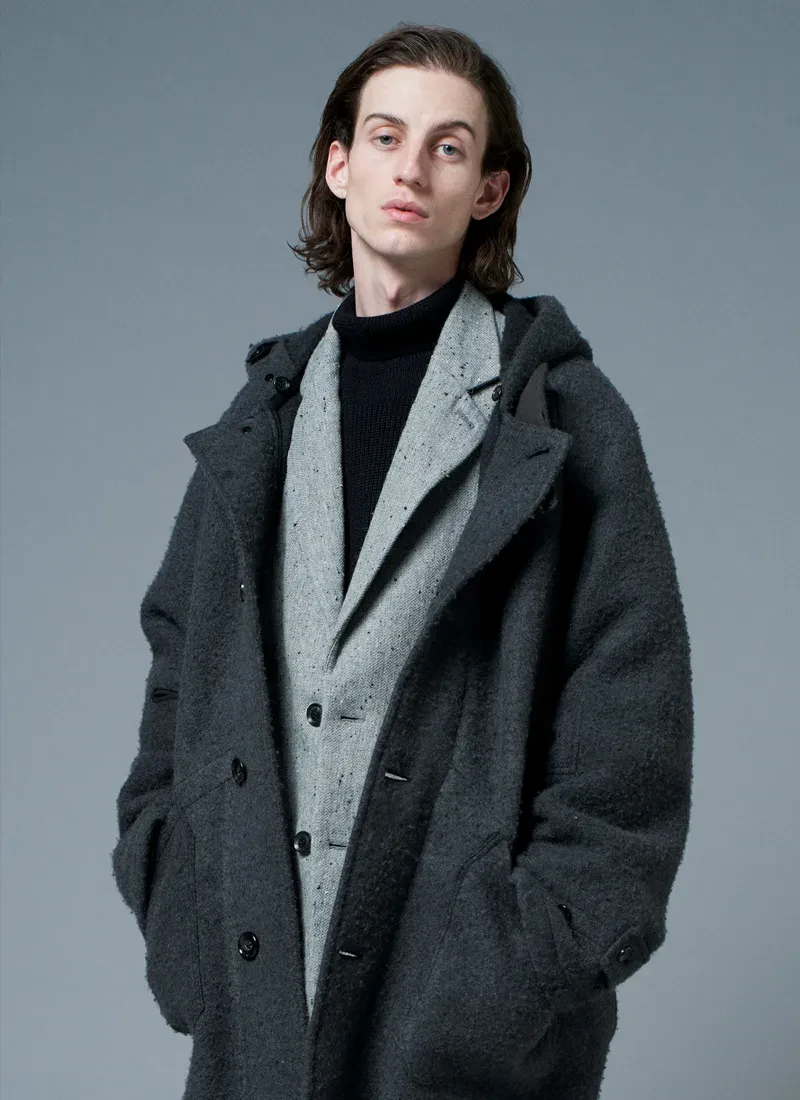
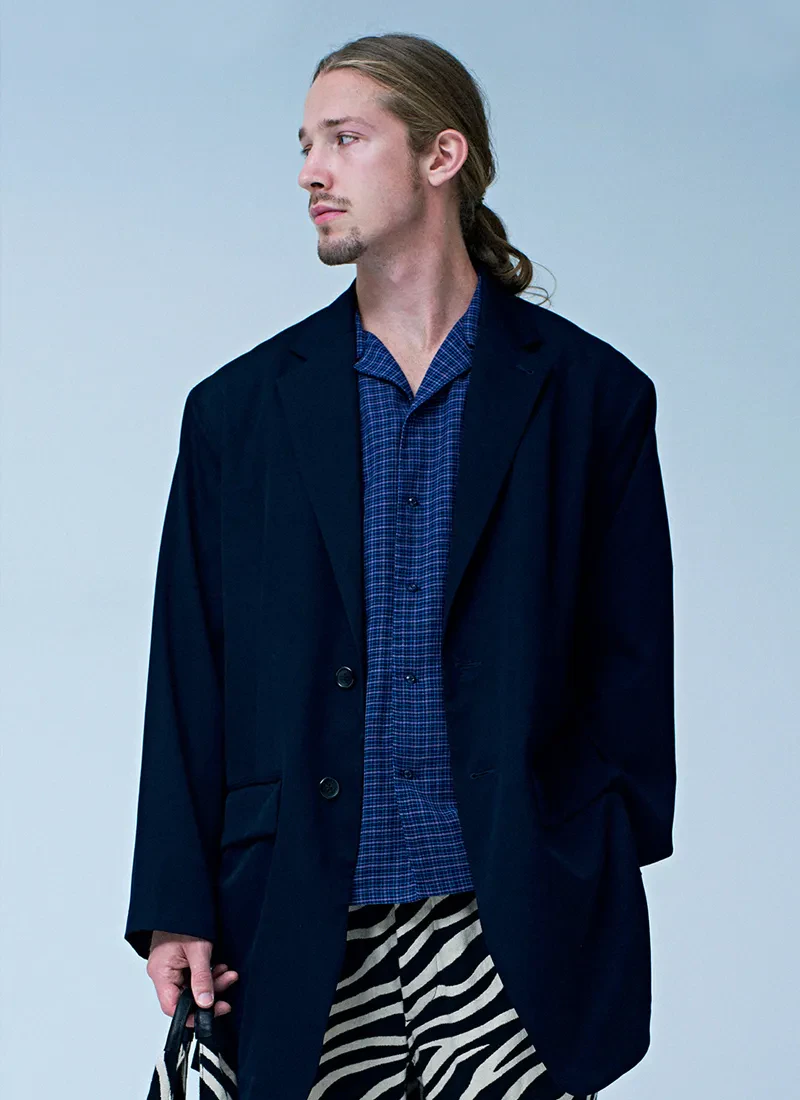


















SPRING / SUMMER 25
The Japanese kimono is built on a single principle: straight cuts, sewn together into a form that belongs to no particular body. Wrapped around the wearer and secured with an obi, it adjusts to the individual—width, length, proportion—through the act of wearing rather than through tailoring. The Korean hanbok and the Indian sari share something of this logic: straight construction, cloth that drapes and accommodates rather than conforms in advance. A design made for everyone and no one in particular. It is a fundamentally different starting point from the way most clothing is made today.
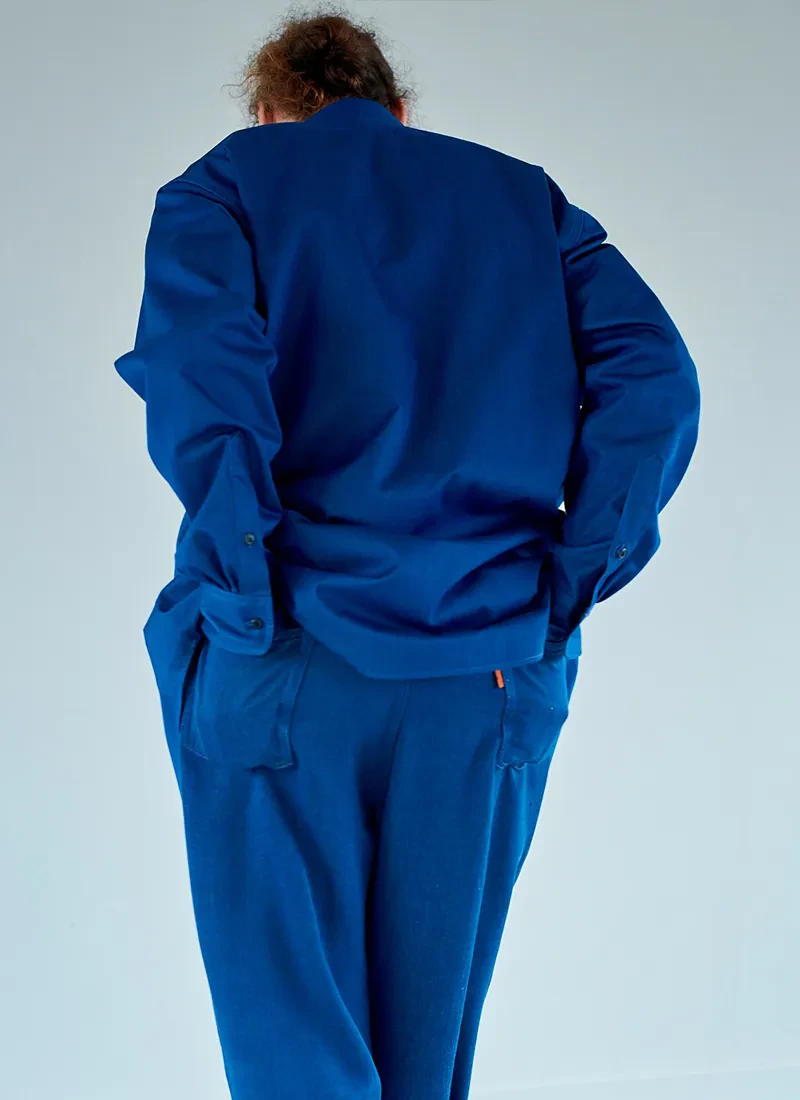
Early jeans, appearing in the early nineteenth century, followed the same principle—though for entirely different reasons. Straight-cut patterns weren't conceived as a gesture toward universality; they were the natural result of making a working uniform as efficiently as possible. Or perhaps more precisely: the denim woven on shuttle looms of that era came off the loom at roughly seventy centimeters wide, and to waste any of it would have been unthinkable. Using every centimeter, selvedge included, wasn't an aesthetic decision. It was a practical one.


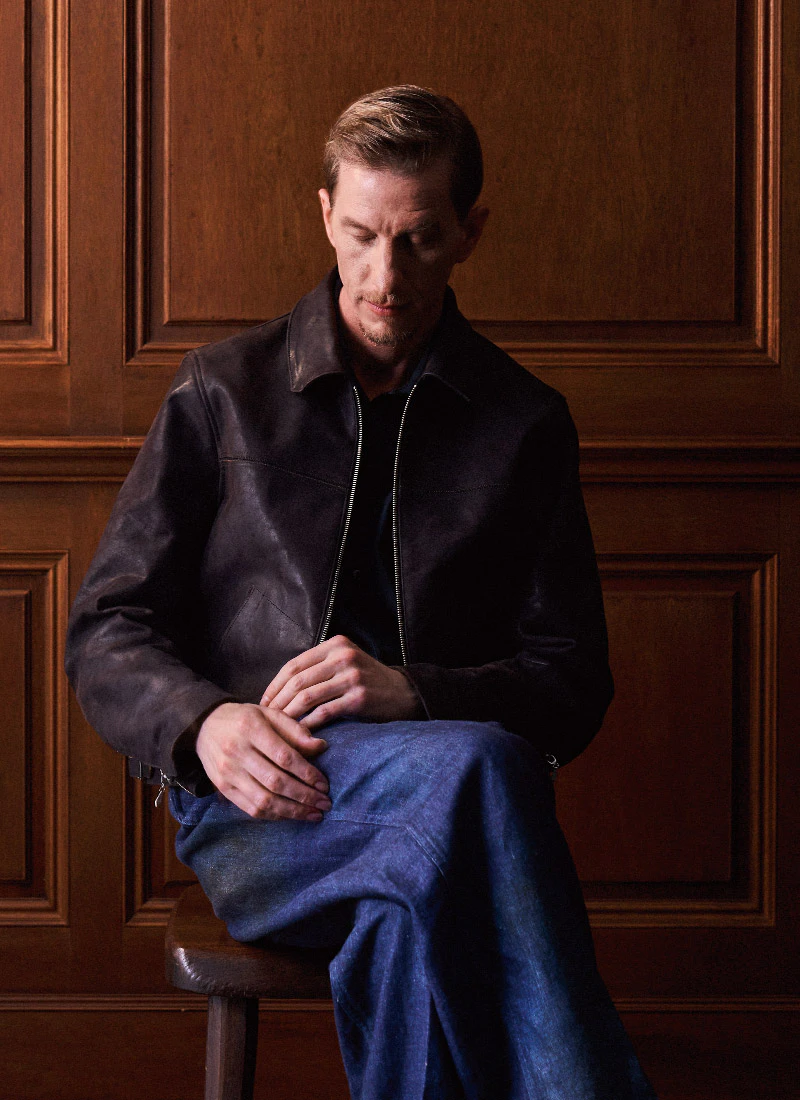
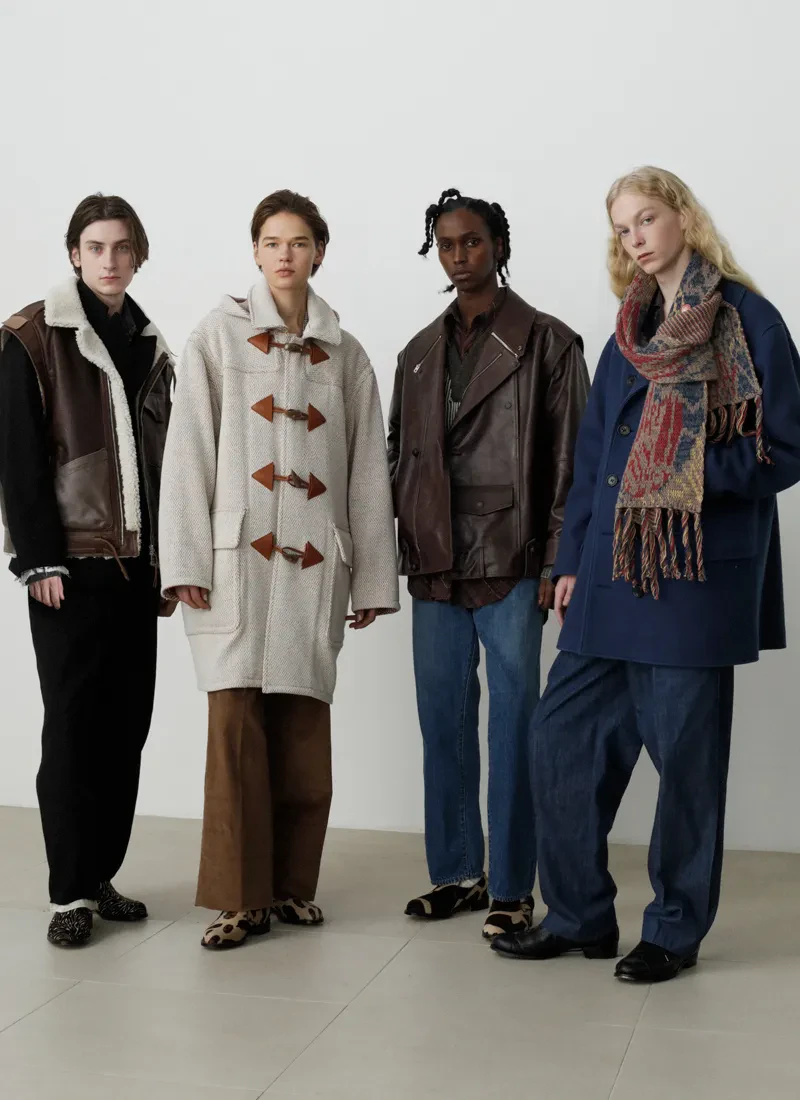
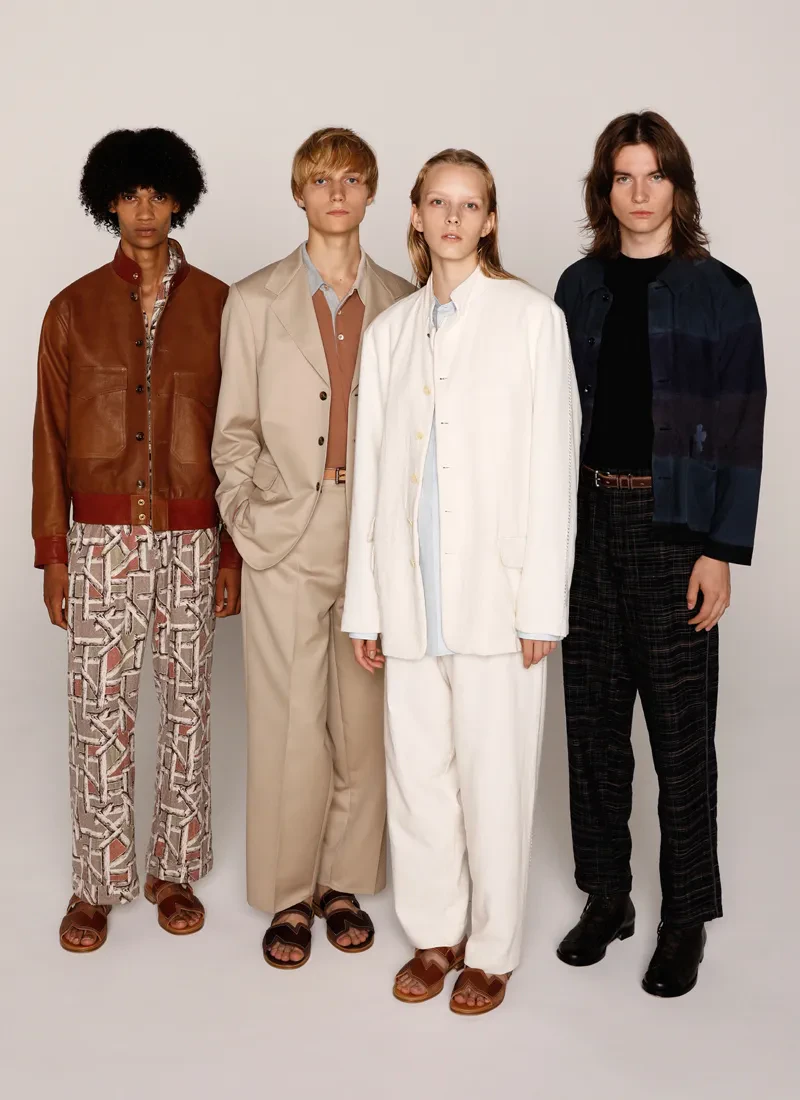
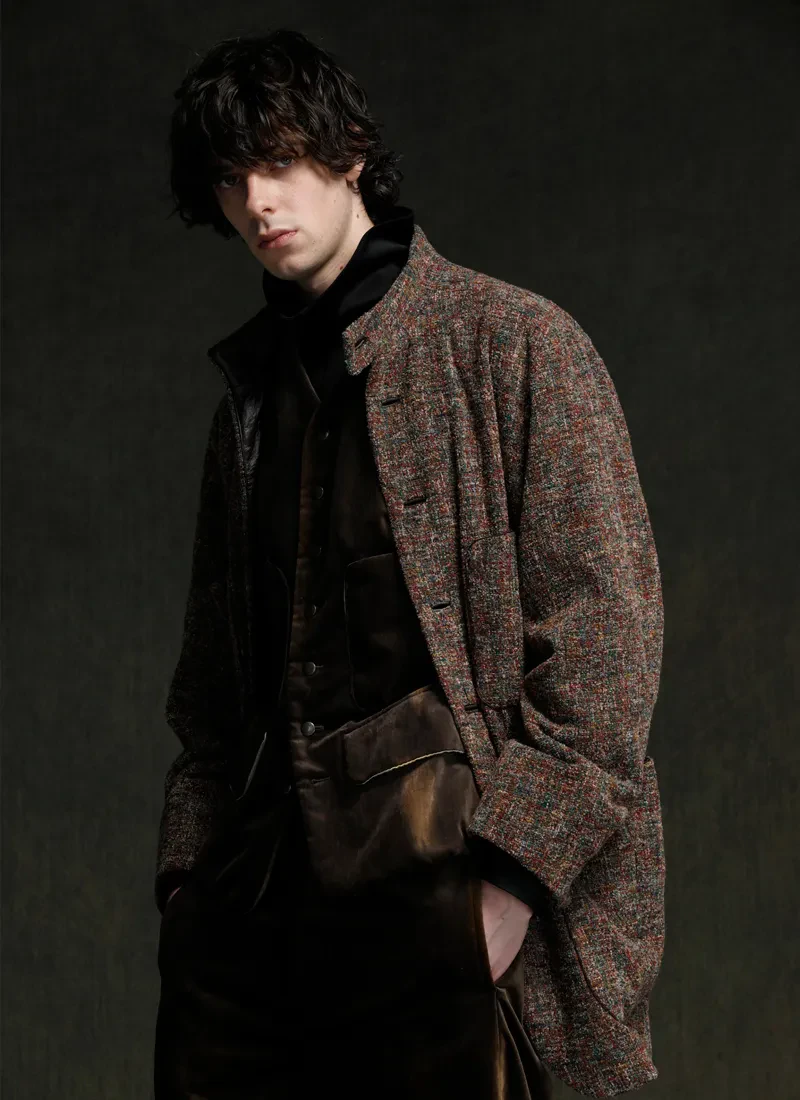
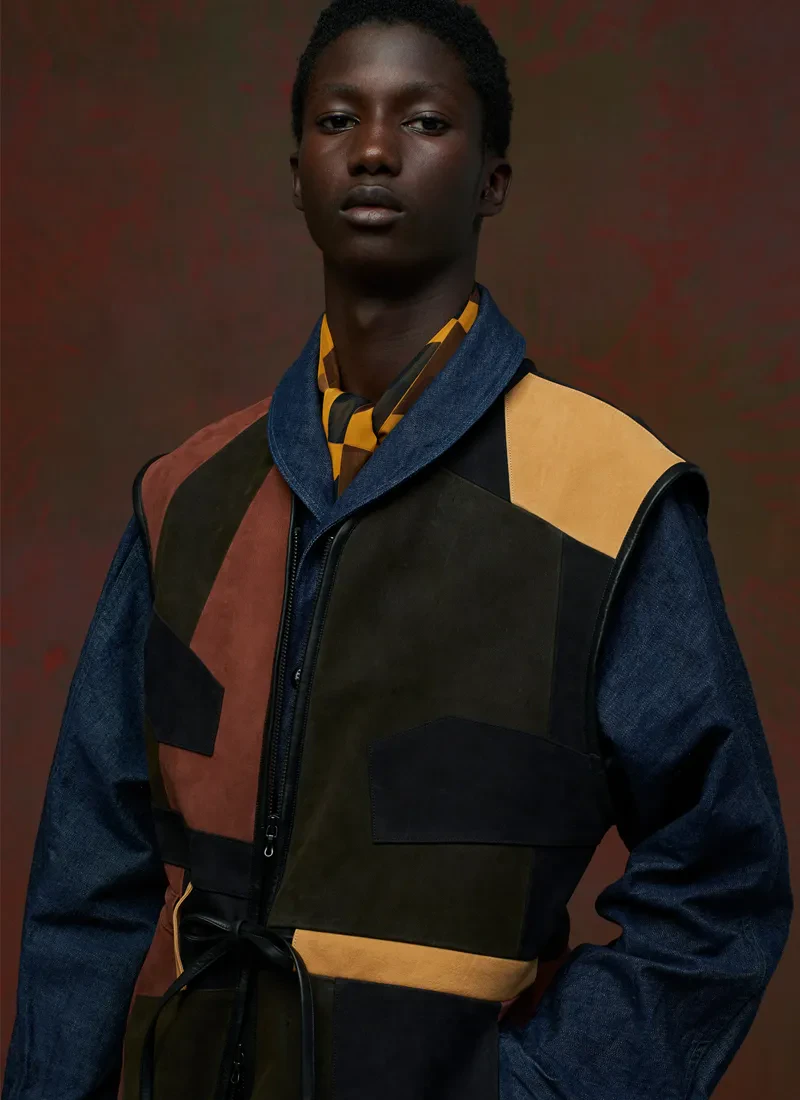
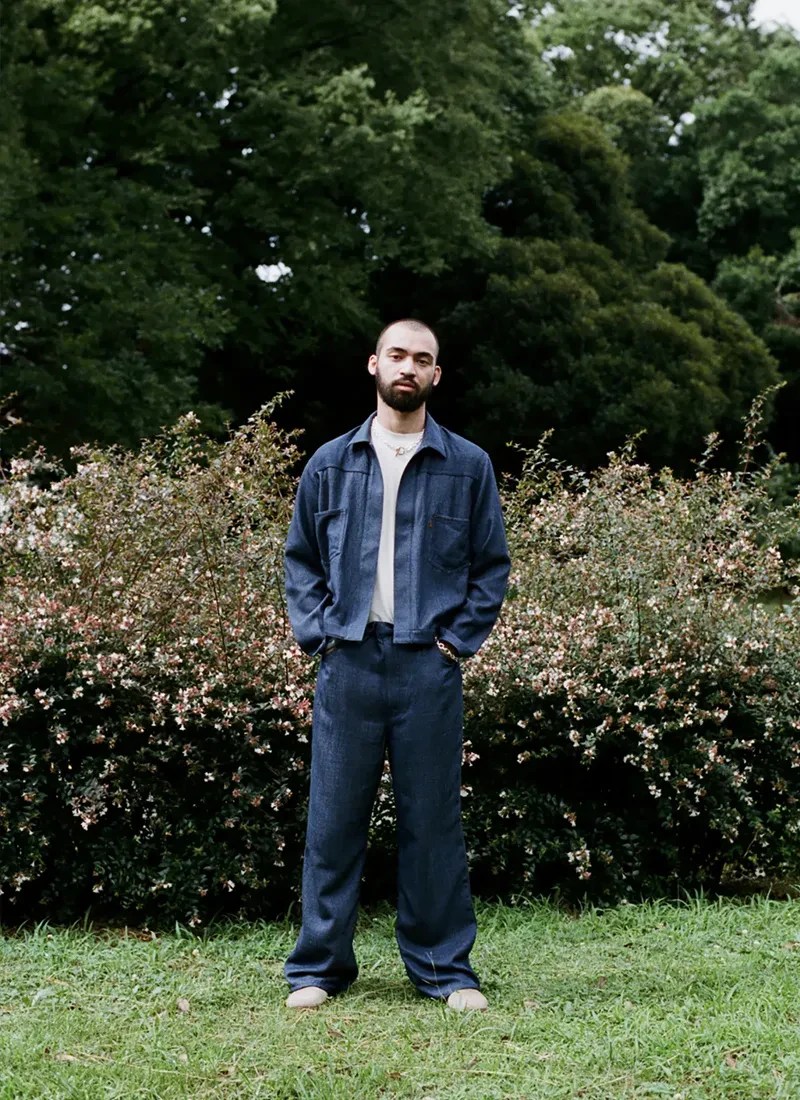
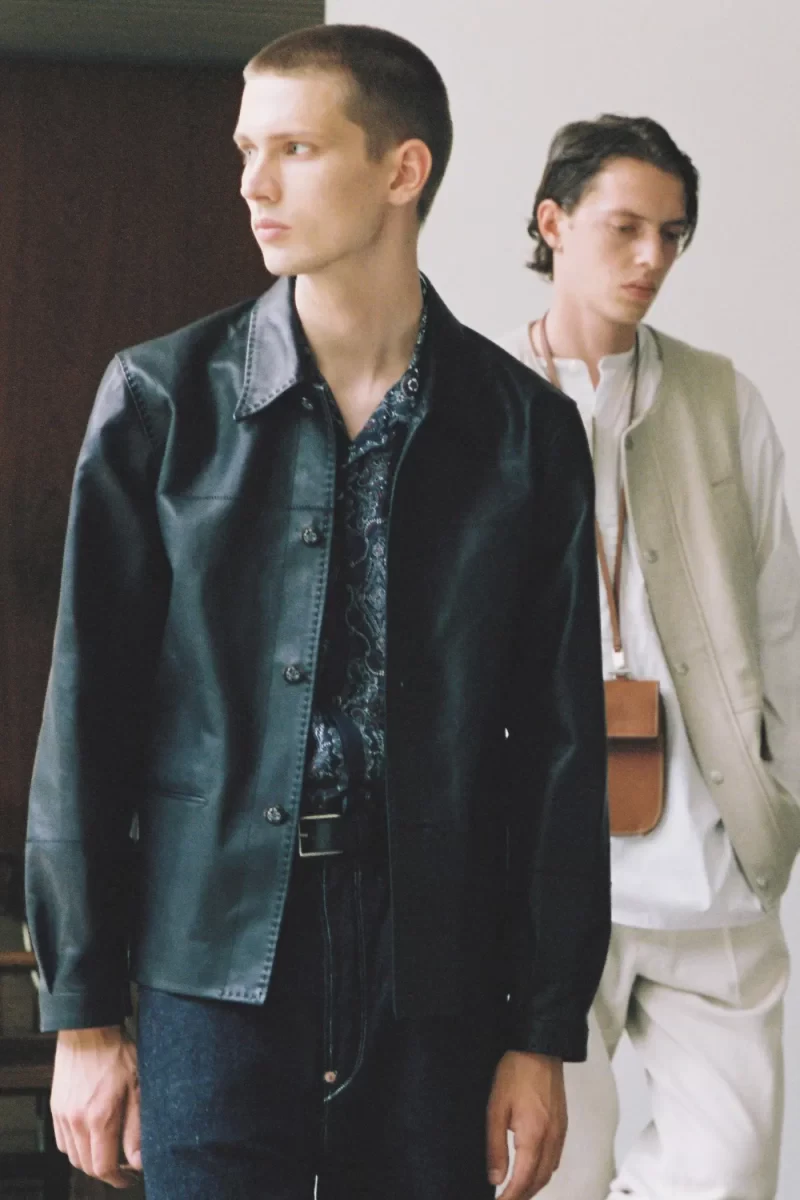
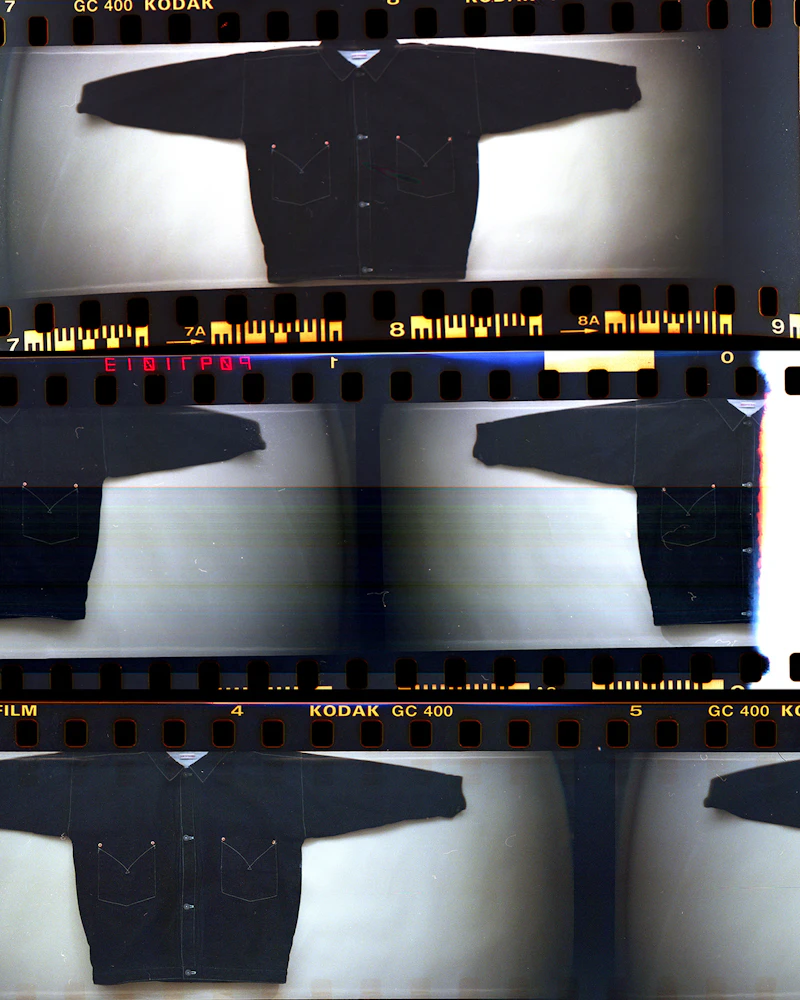
Across different lands, different histories, different intentions—the same straight line keeps appearing. And there is something quietly remarkable in that recurrence. Clothing built this way doesn't arrive with a completed silhouette or a fixed point of view. It leaves room. Room for each wearer to bring their own shape to it, and in doing so, to find that the garment gives something back—a quality of distinction that feels, somehow, like their own. This season, we set out to make something from that same logic, interpreted in our own way: the trucker jackets P.IGGY and H.IGGY, and the paisley series GYAN and DAS.
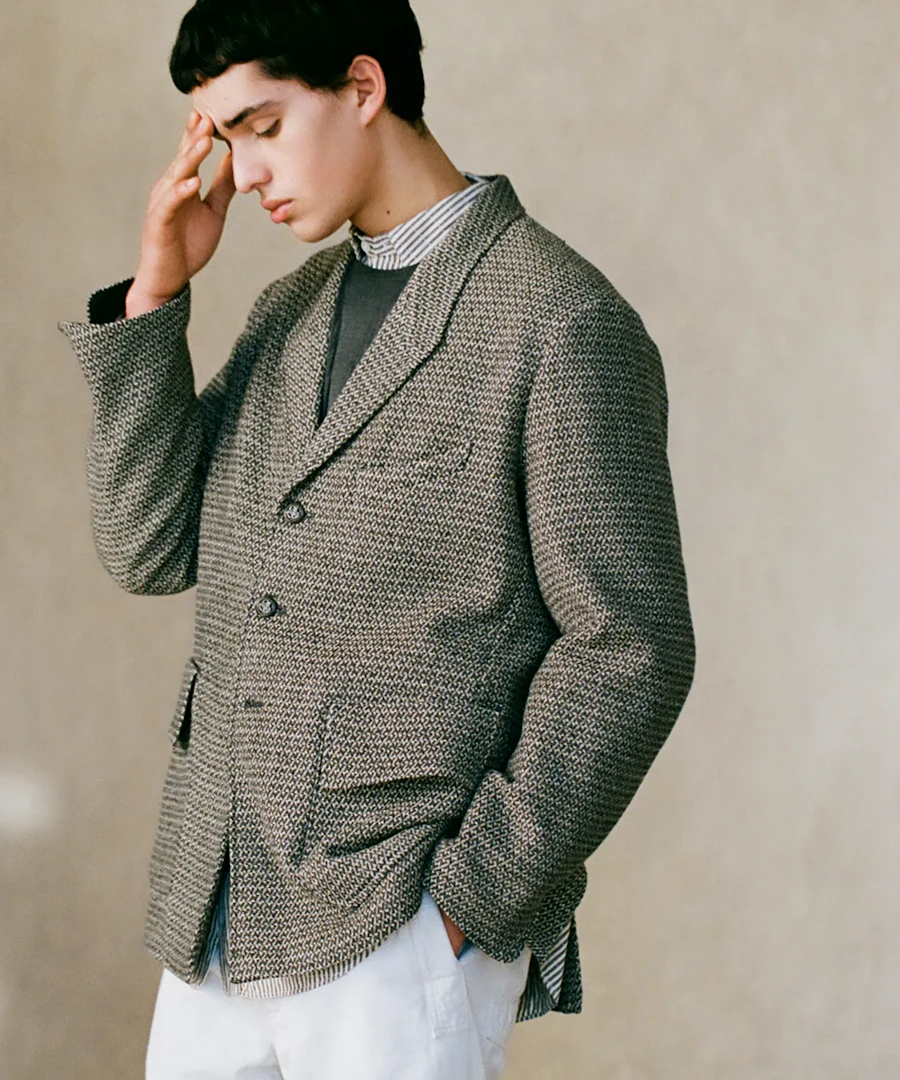
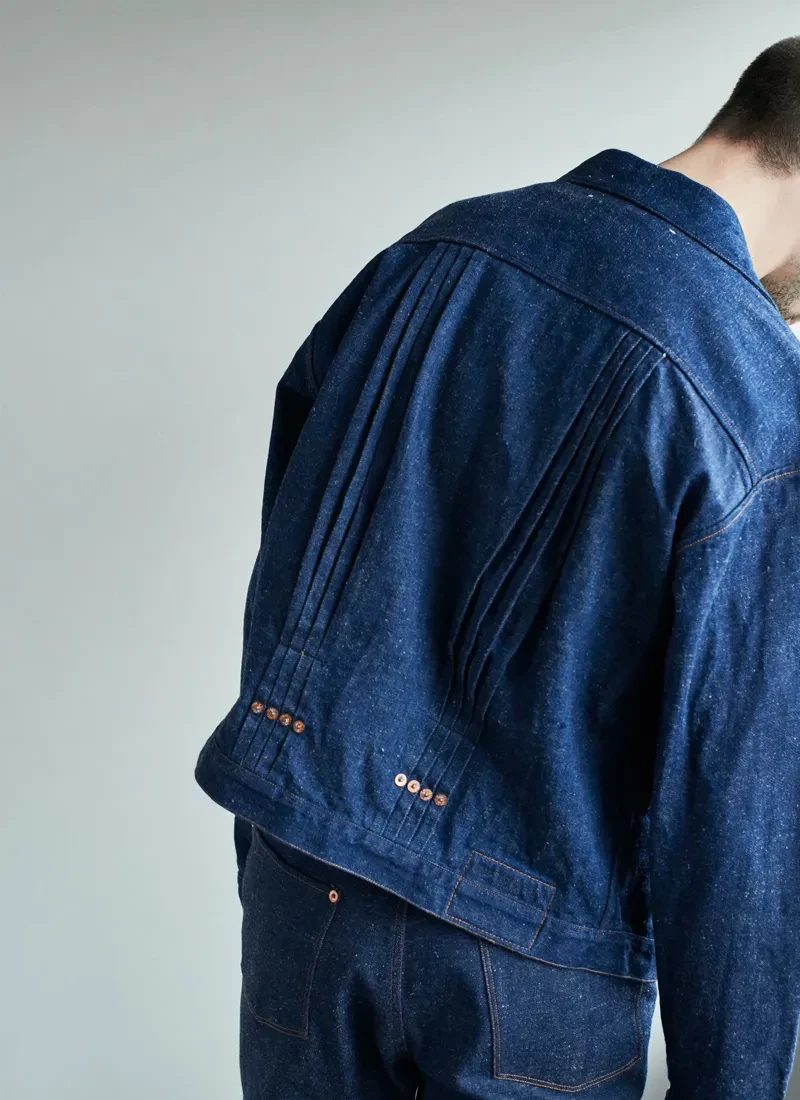
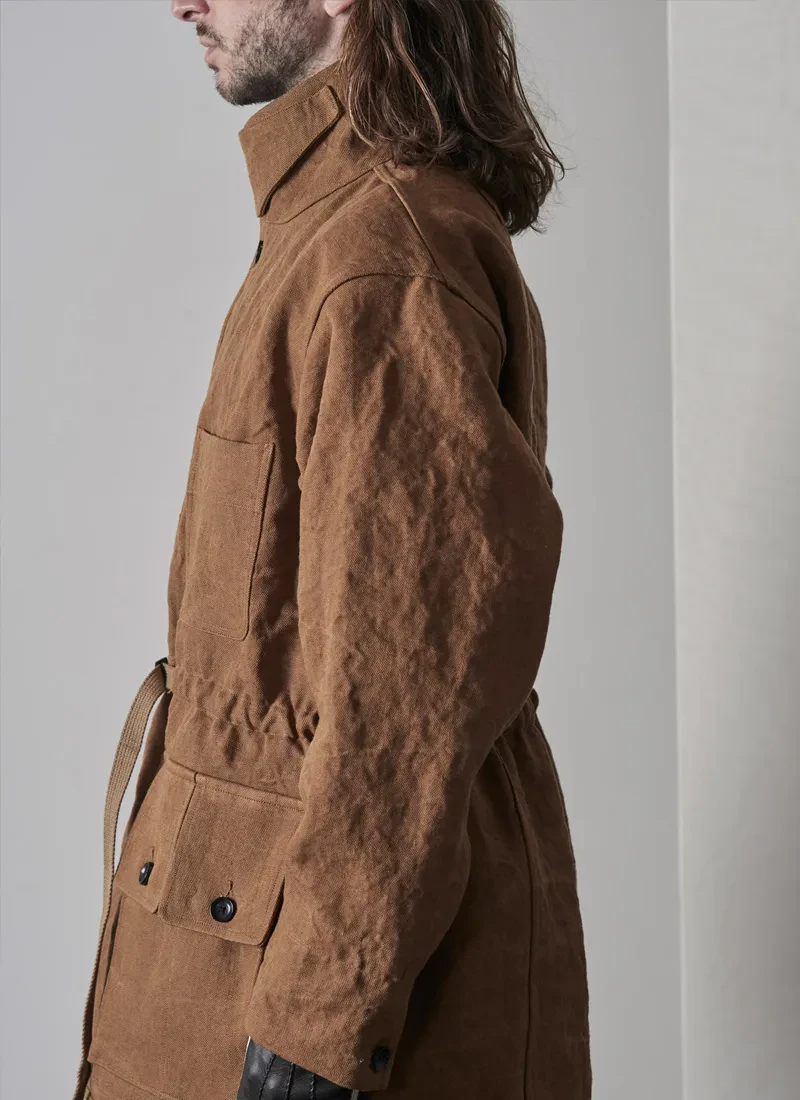
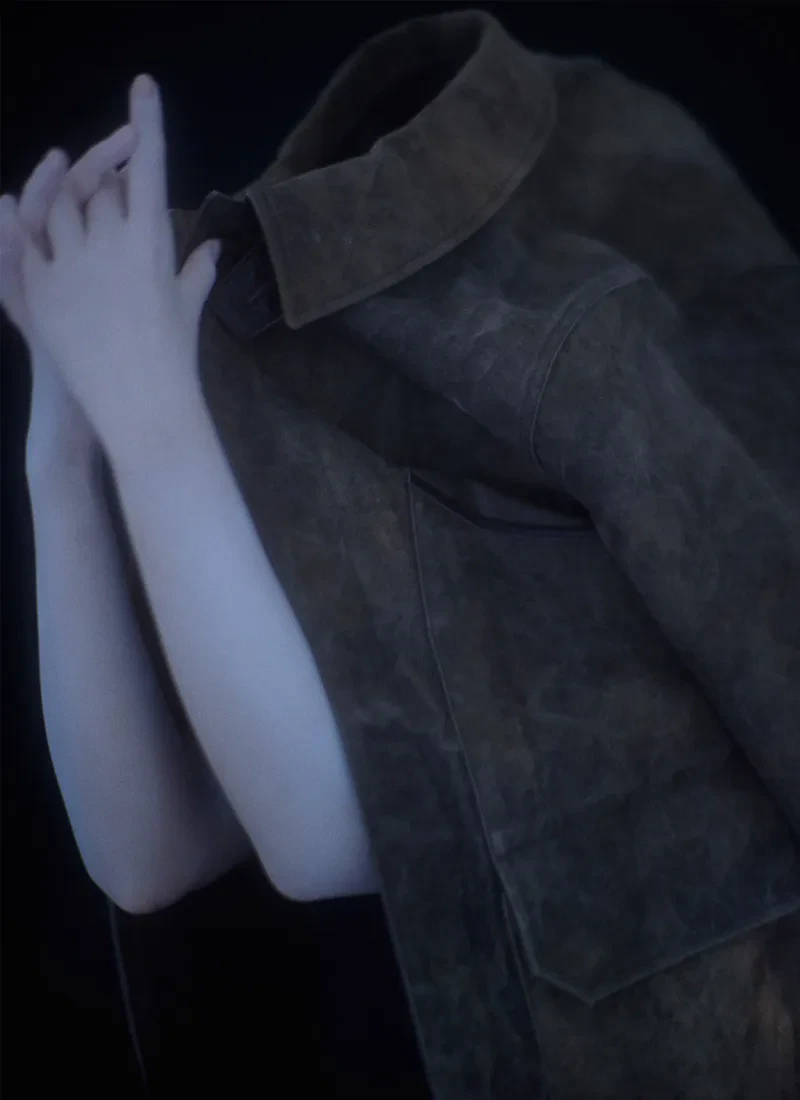
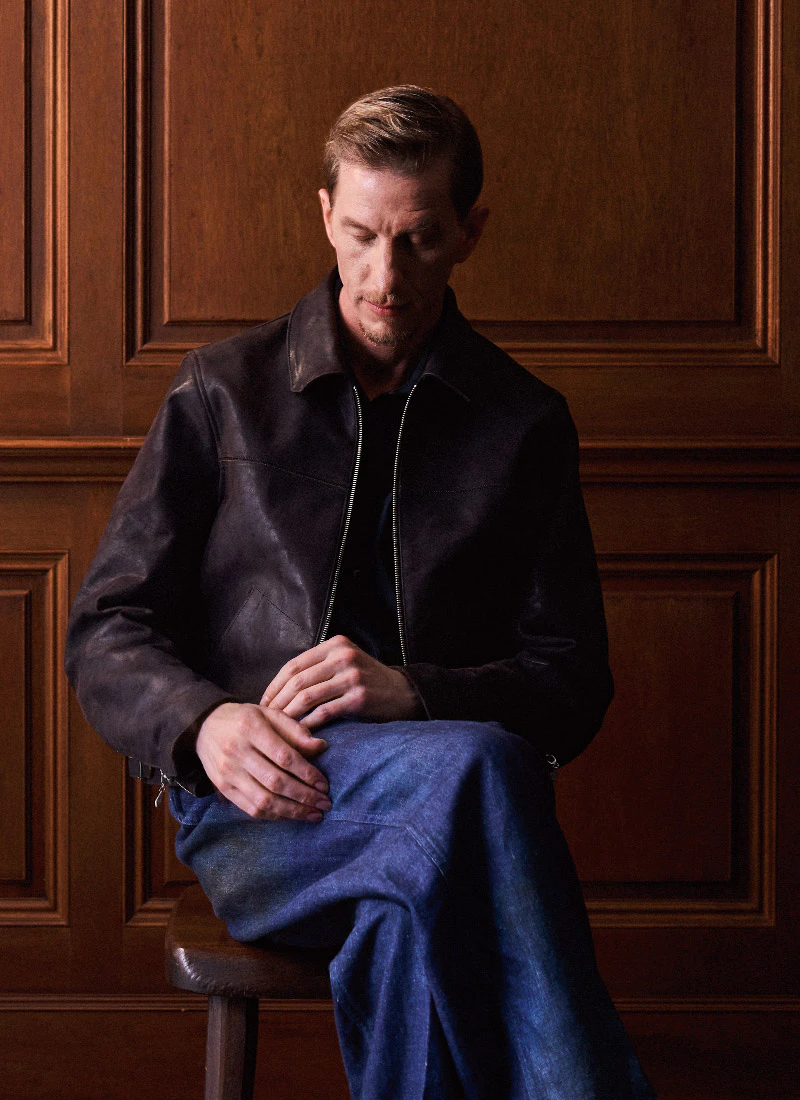
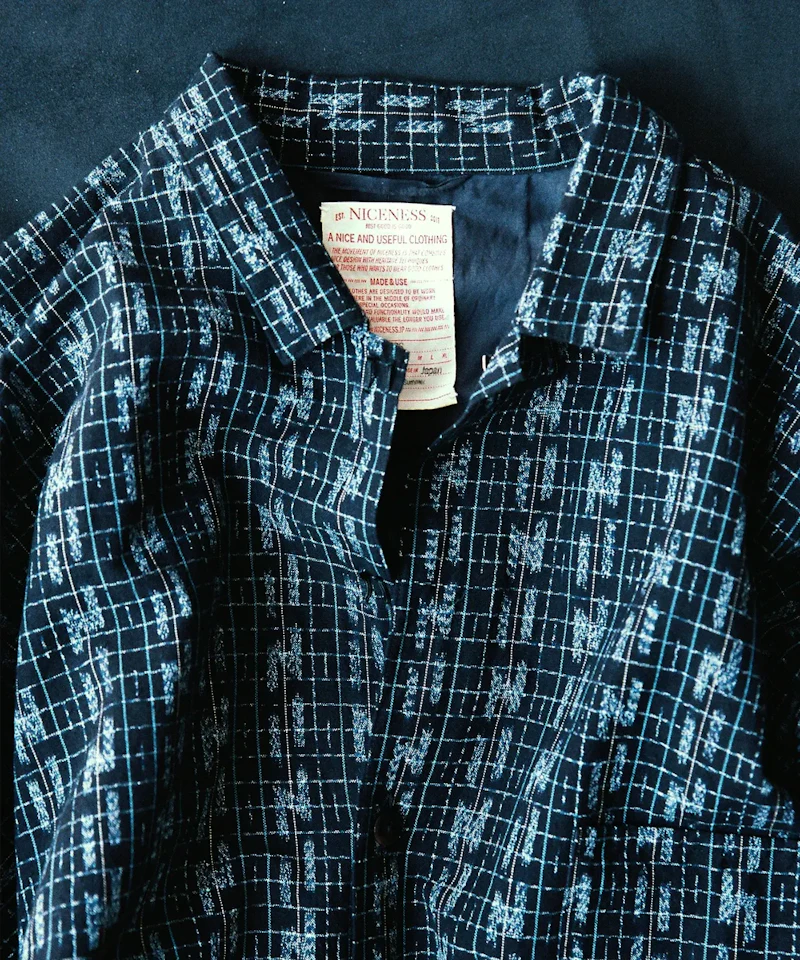
P.IGGY and H.IGGY are each constructed from a single panel per side—front, back, and sleeve in one continuous piece, folded at the shoulder like a length of cloth laid flat and hinged. The structure is as simple as it sounds. At the shoulder, where most garments carry a seam, there is none; in its place, a stay-stitched backing prevents stretch at the fold. Even the collar, which in conventional construction follows the curve of the neck and shoulder, is cut straight here—every component resolved through the same linear logic. And because the full width of the fabric is used, selvedge edges surface throughout the garment, unhidden.


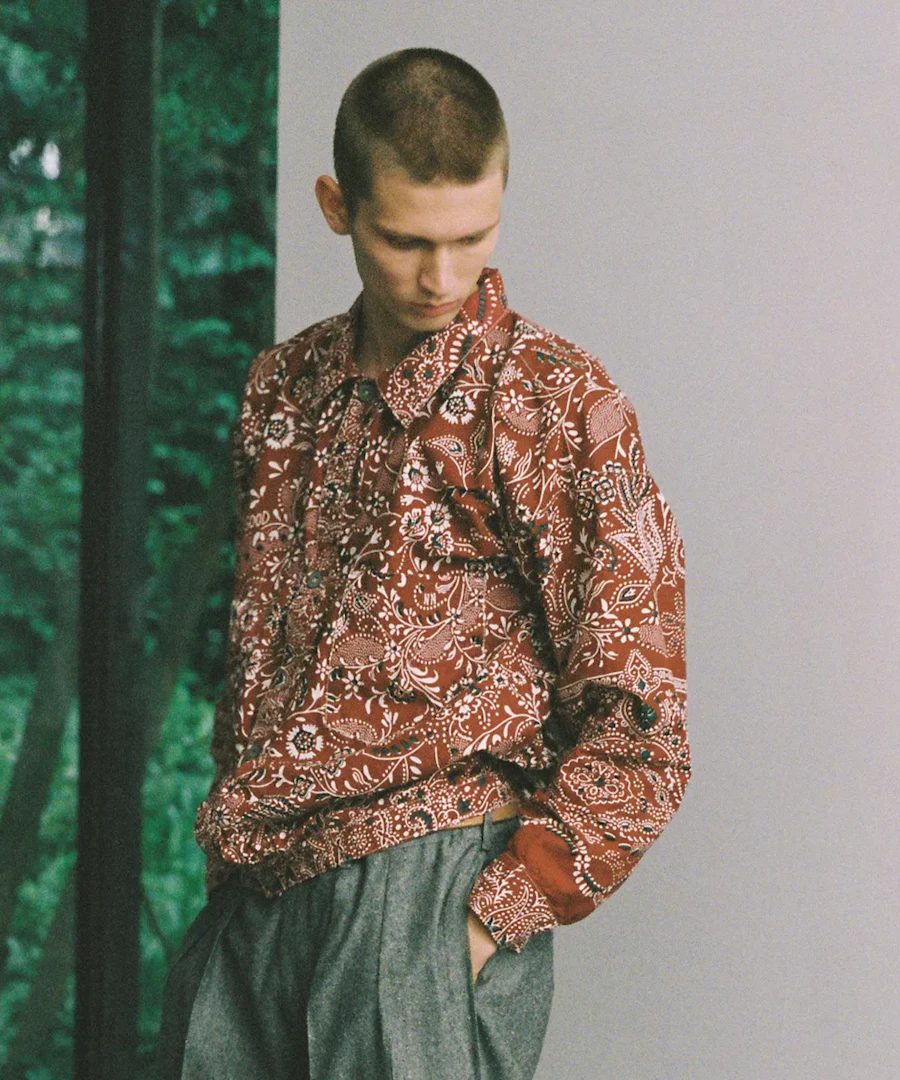
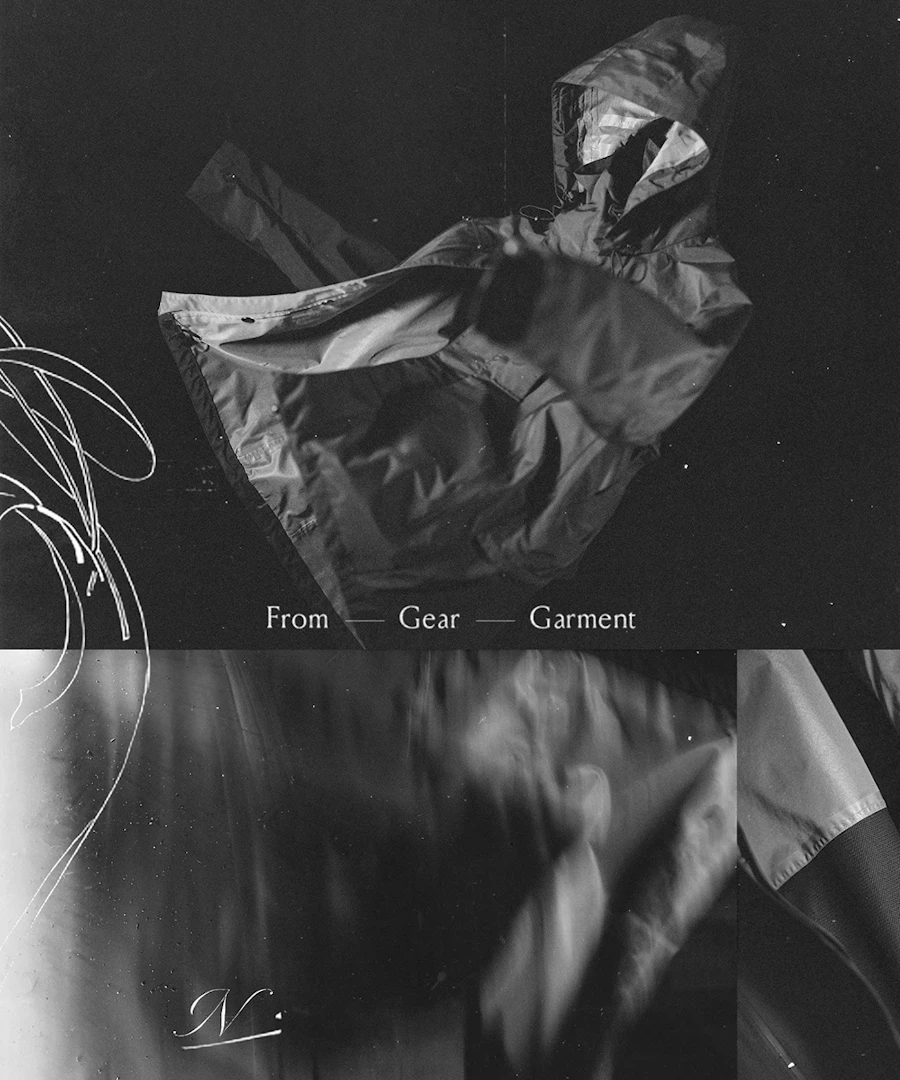
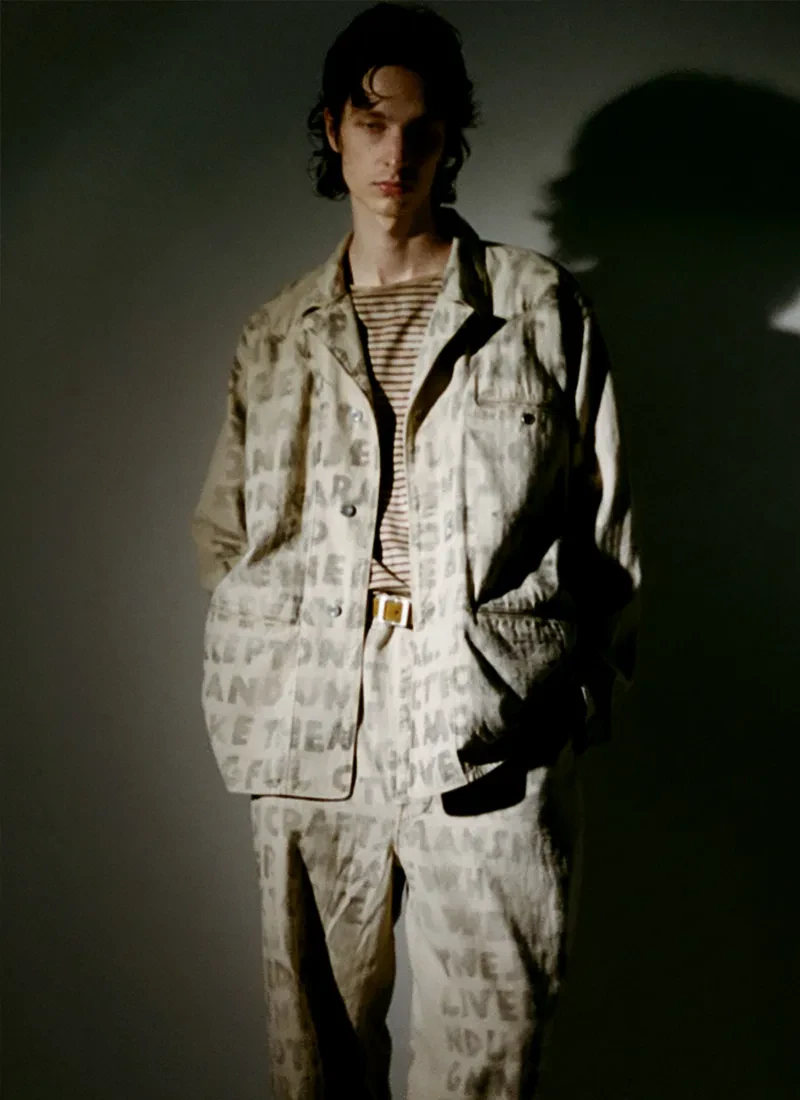
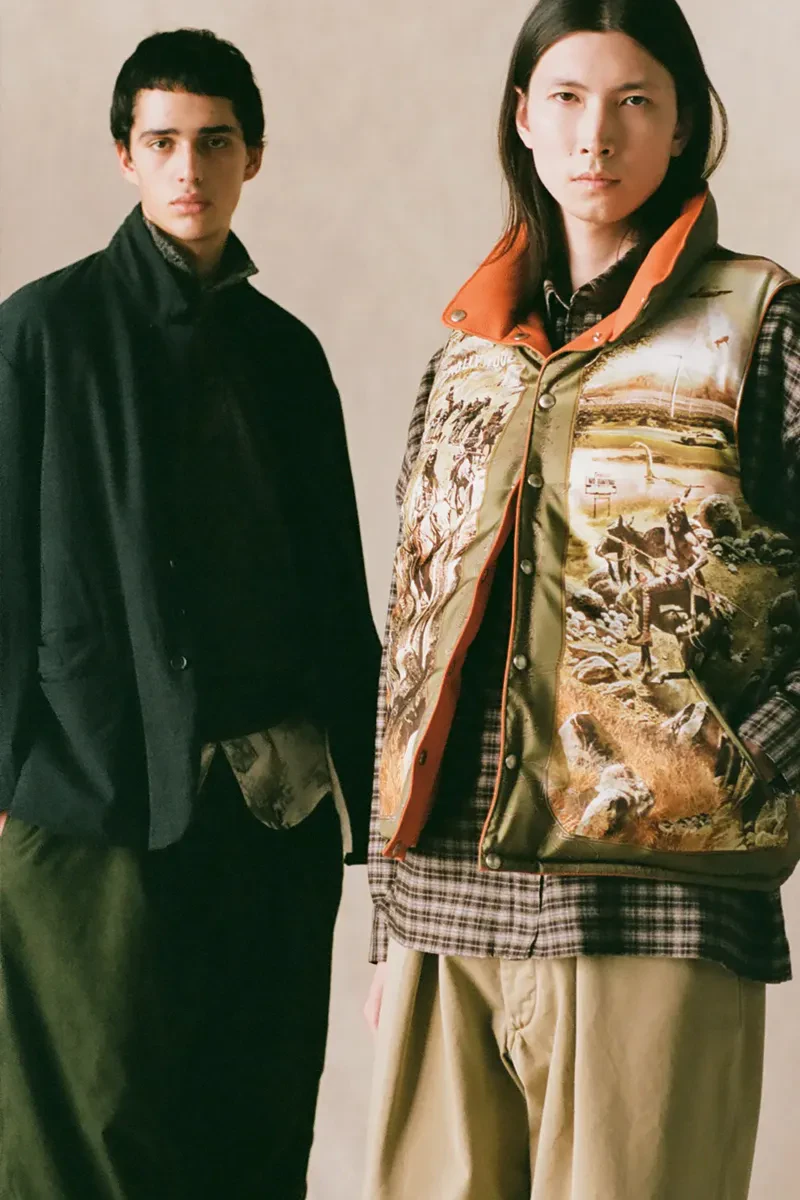
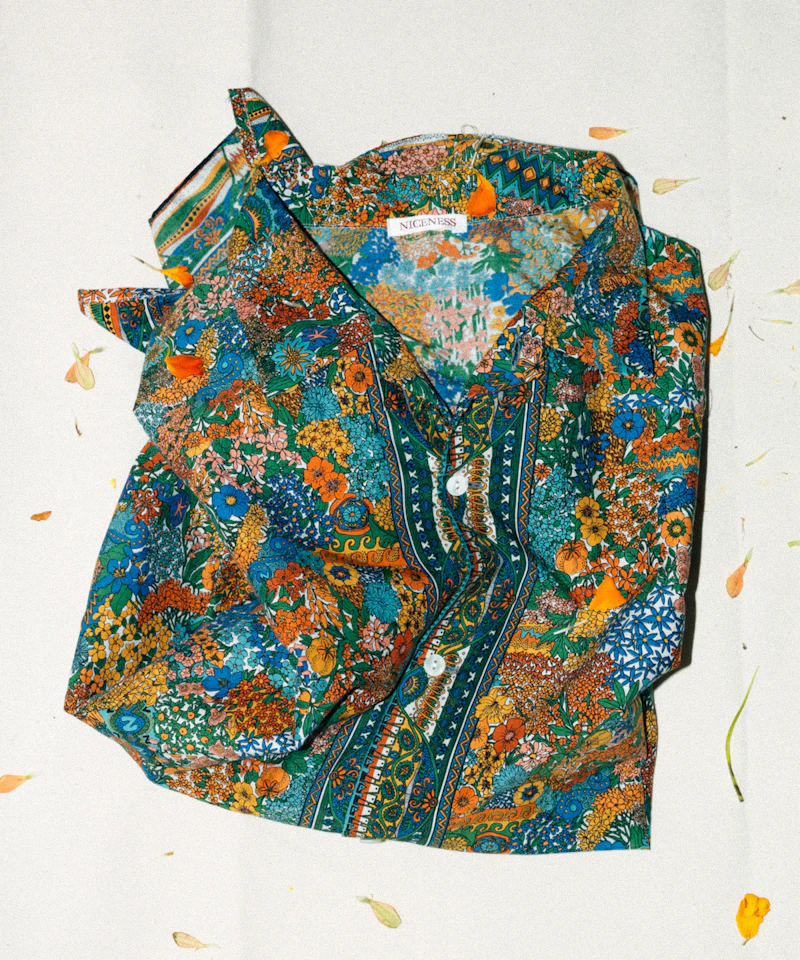
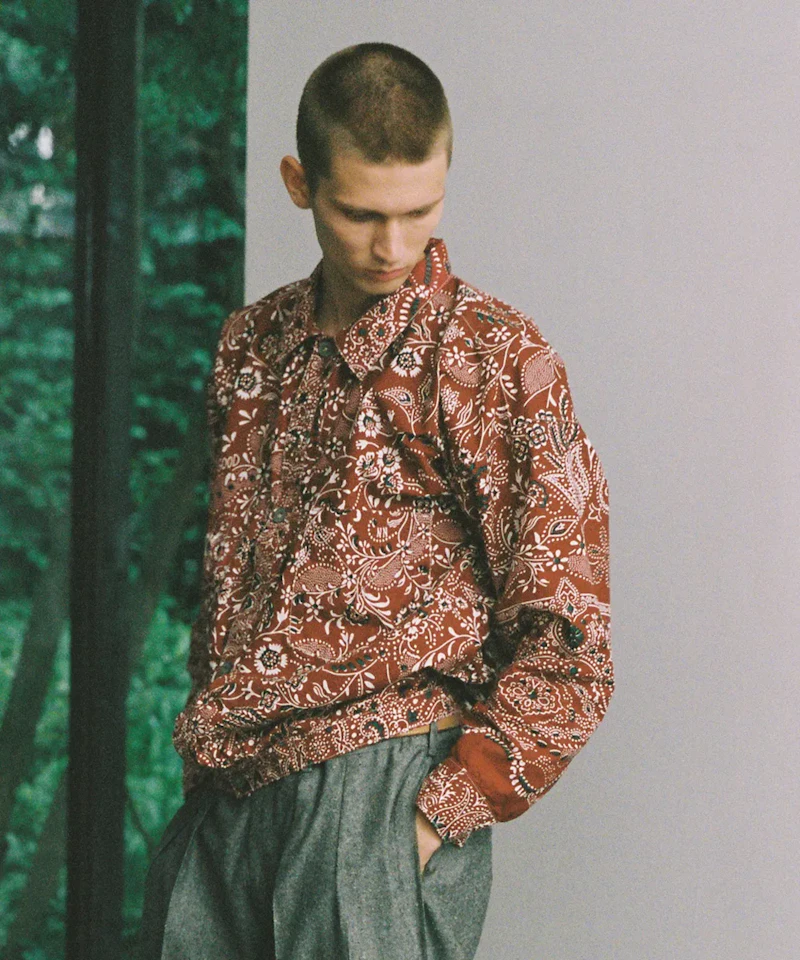
The GYAN trucker jacket and DAS smock parka draw from a different source: an oversized bandana, produced in India, used almost as one would use a sheet of origami paper. Both pieces are built on straight patterns, folded into three dimensions, with only the minimum number of cuts made to achieve the necessary form. DAS works the bandana on the bias, and its front pocket is constructed by folding a corner inward—the same gesture as pressing the point of a paper fold flat. In both pieces, the linearity of the pattern is offset by gathering at the sides, which coaxes a softly dimensional silhouette from what is otherwise a strictly geometric construction.
A garment with no seam at the shoulder sits differently on the body—more openly, more adaptively, closer in spirit to the kimono than to tailored Western dress. Because the garment itself does not insist on a particular shape, it settles into each wearer differently, and in that settling, something individual emerges. Not designed for anyone in particular. Available to anyone, entirely. We hope what comes through is not only the structural interest of how these pieces are made, but the small surprise of discovering what they become, once worn.


Episode