
AUTUMN / WINTER 24


While fierce battles unfold daily in Paris, Japan faces its own struggle against a relentless, scorching heat. In the background, headlines speak of historic stock market plunges and fears of an American recession—enough to leave many of us uneasy. Lately, it feels like a reminder that achieving greatness or protecting one’s assets ultimately comes down to personal effort and responsibility. In every era, the truth remains: one must protect oneself.
This time, the story is about camouflage—patterns originally designed to deceive the enemy and ensure survival. Over the years, countless variations have emerged, evolving alongside the times. Camouflage has always been about layering patterns and colors, but what if it could also blend art with art? After all, this isn’t camouflage meant for the battlefield. From that idea, the camouflage pattern for the AW24 season was born.


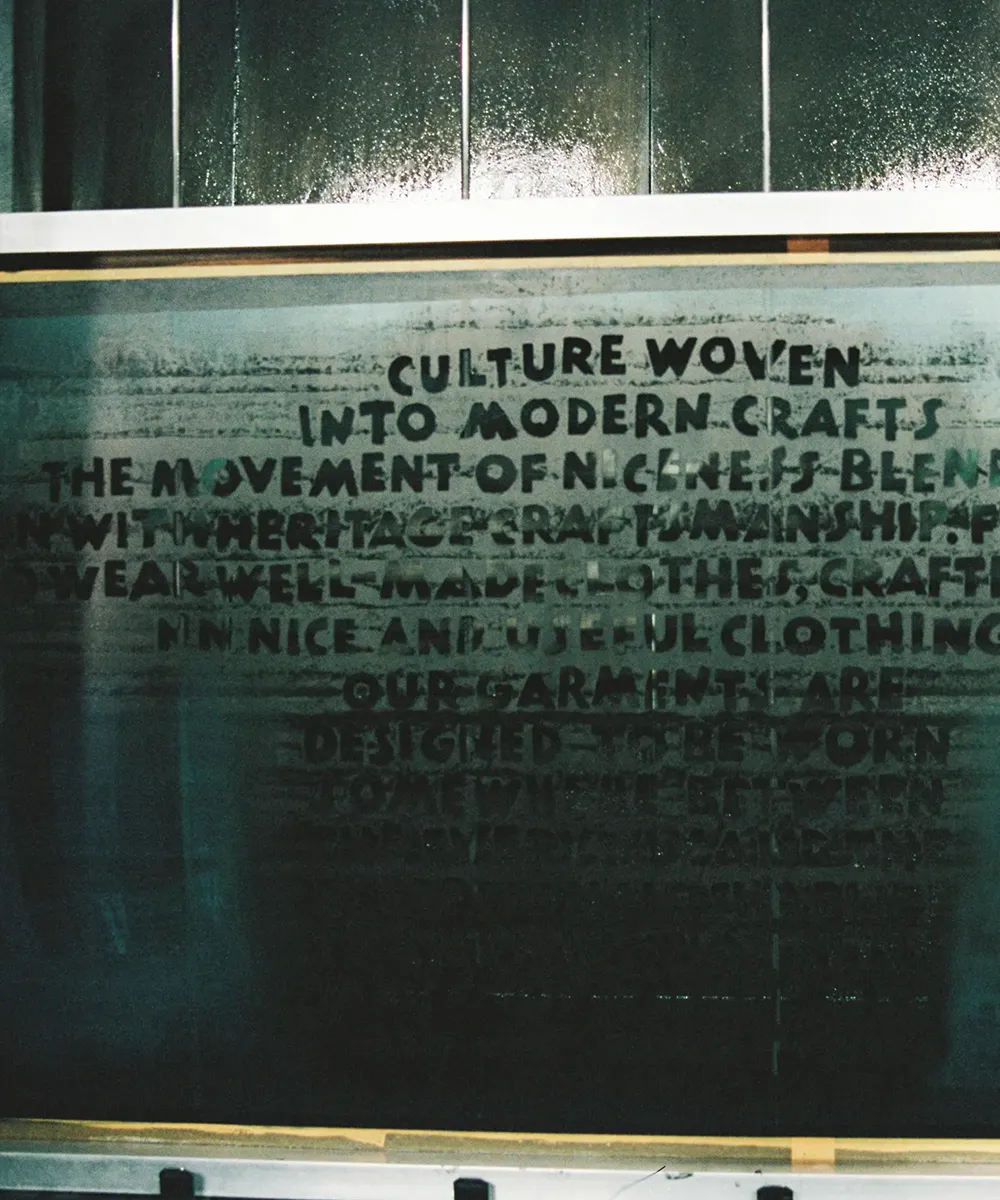
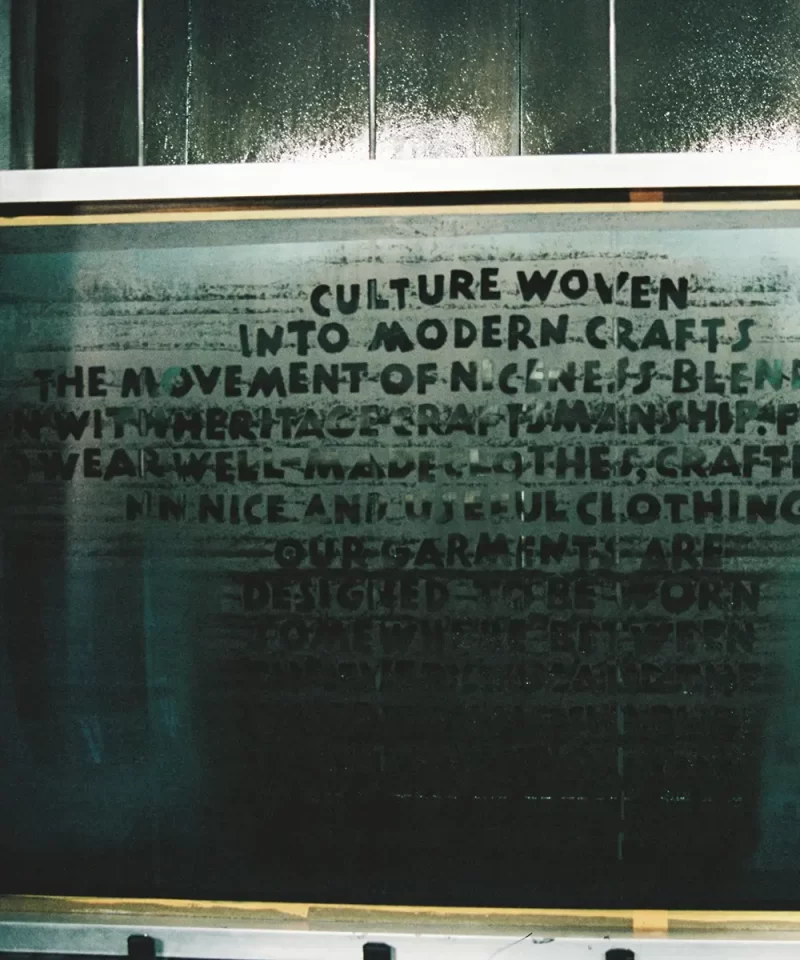
This season’s fabric is a cotton weather cloth printed through silk-screening. While technological advances now allow for incredibly precise inkjet printing, silk-screen printing retains an irreplaceable analog character. Each step—placing the screen, applying the dye, pulling the squeegee—is done by hand. That human process creates slight misalignments, tiny irregularities, and subtle unevenness that machines could never replicate. Because pressure is applied when printing, the pattern sometimes even seeps faintly through to the reverse side of the fabric.
During development, we set out with a goal: Could we print two completely different patterns on each side without them interfering with one another? The attempt failed—the prints bled through, and the designs clashed. Yet that failure revealed something unexpectedly fascinating. What if we embraced the transparency? Perhaps by turning that “flaw” into a feature, we could create a more intricate and layered form of camouflage.

As we continued the process, two figures emerged in our minds: Henri Matisse and Andy Warhol. Matisse believed deeply in the value of art itself and hoped his work would bring comfort to weary souls—“a good armchair,” as he once described it. Warhol, the icon of 20th-century pop art, famously said he wished to become Matisse. Working on this camouflage, we began to sense a synchronicity with Matisse’s late cut-out works. In homage, we began cutting colored papers by hand, composing the pattern through analog experimentation.
The resulting fabric—printed on both sides with motifs inspired by these two great artists—is the product of both trial and error. It stands as a tribute to Matisse and Warhol, and as a reminder that in art, fashion, and perhaps even in sports or business, innovation often demands a step outside convention. What began as a failed experiment became a lesson in perspective: that the unexpected, depending on how it is seen, can turn from a mistake into something profoundly creative.