A Dialogue with Noriyuki Misawa
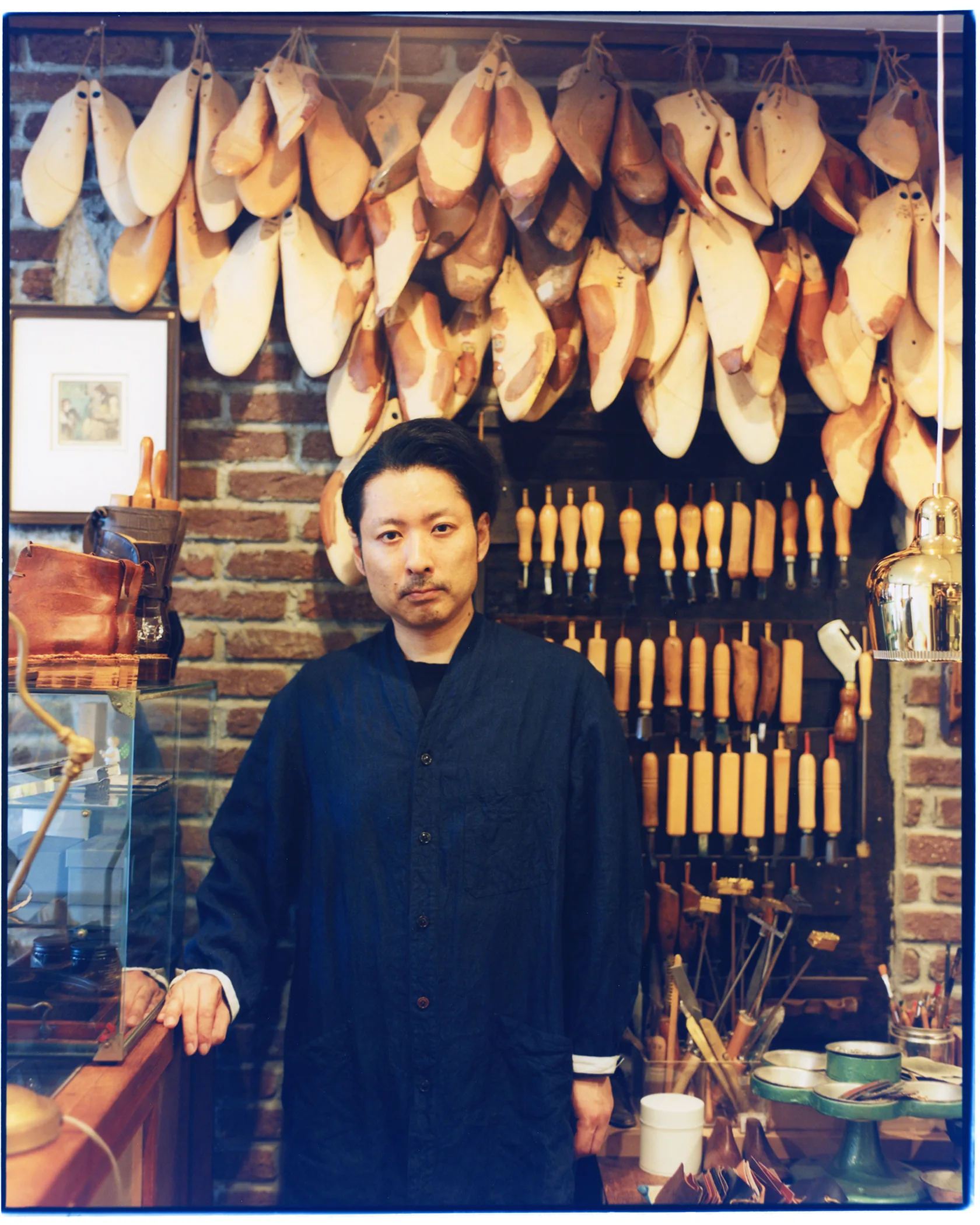
Photo: Yuto Kudo
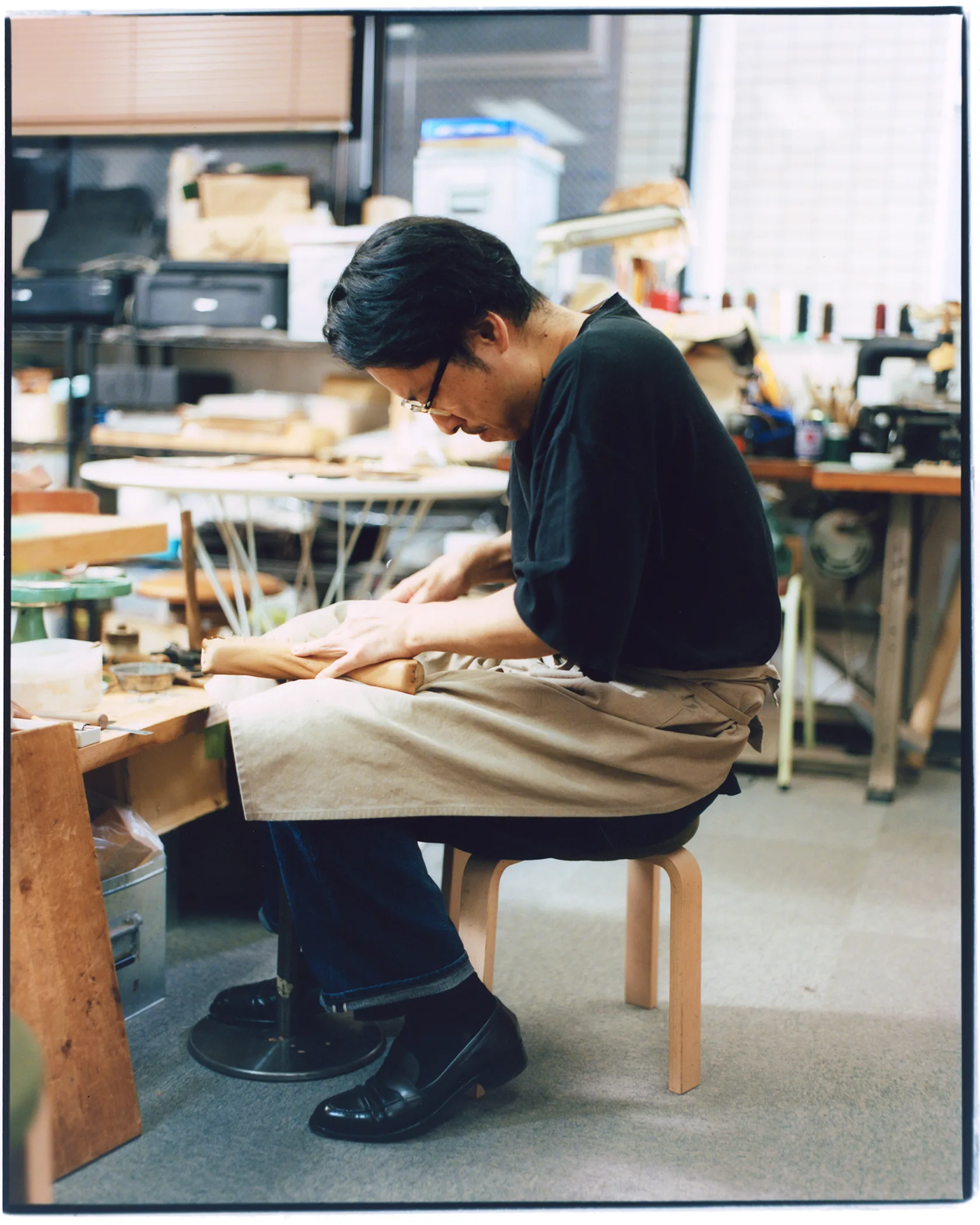
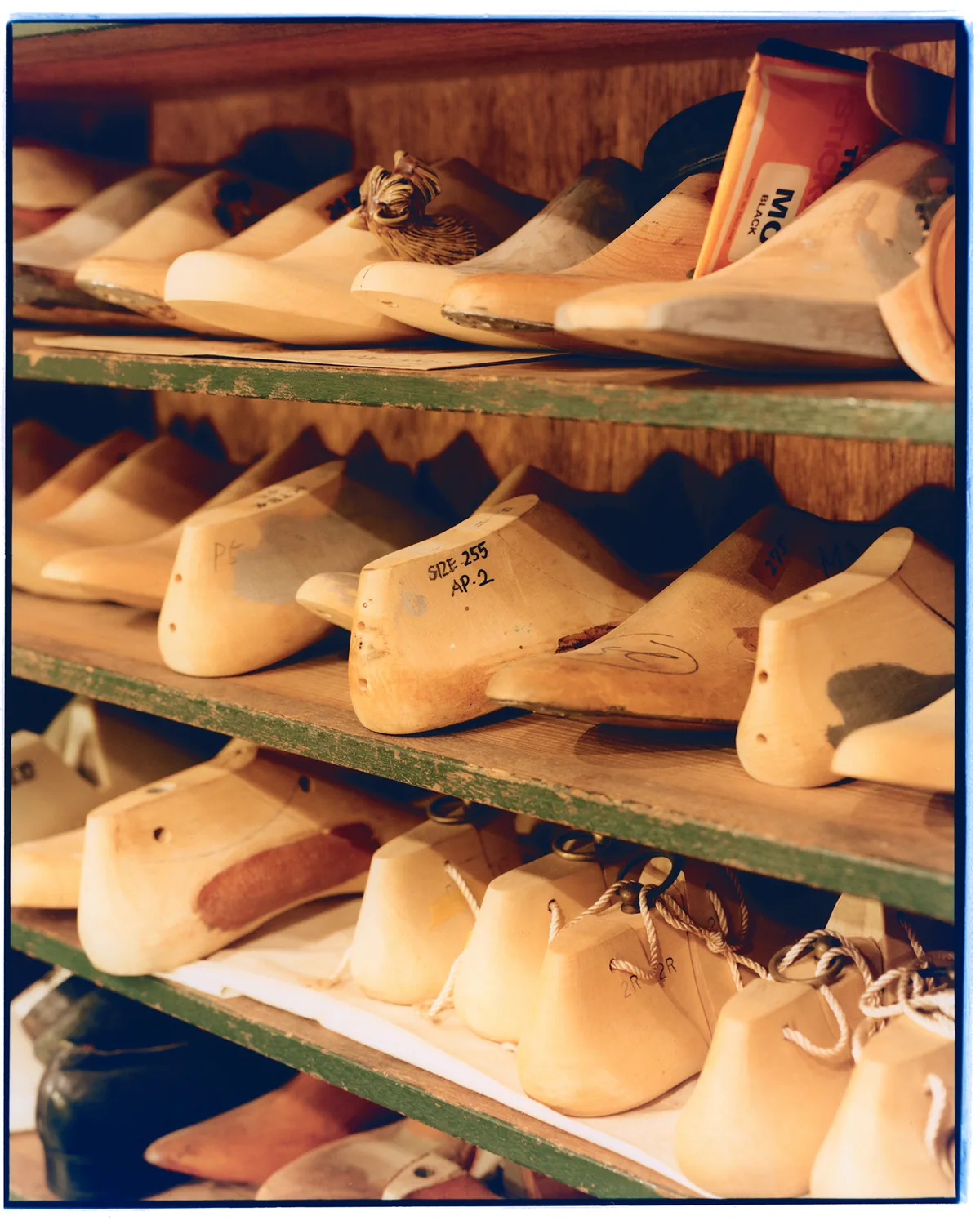
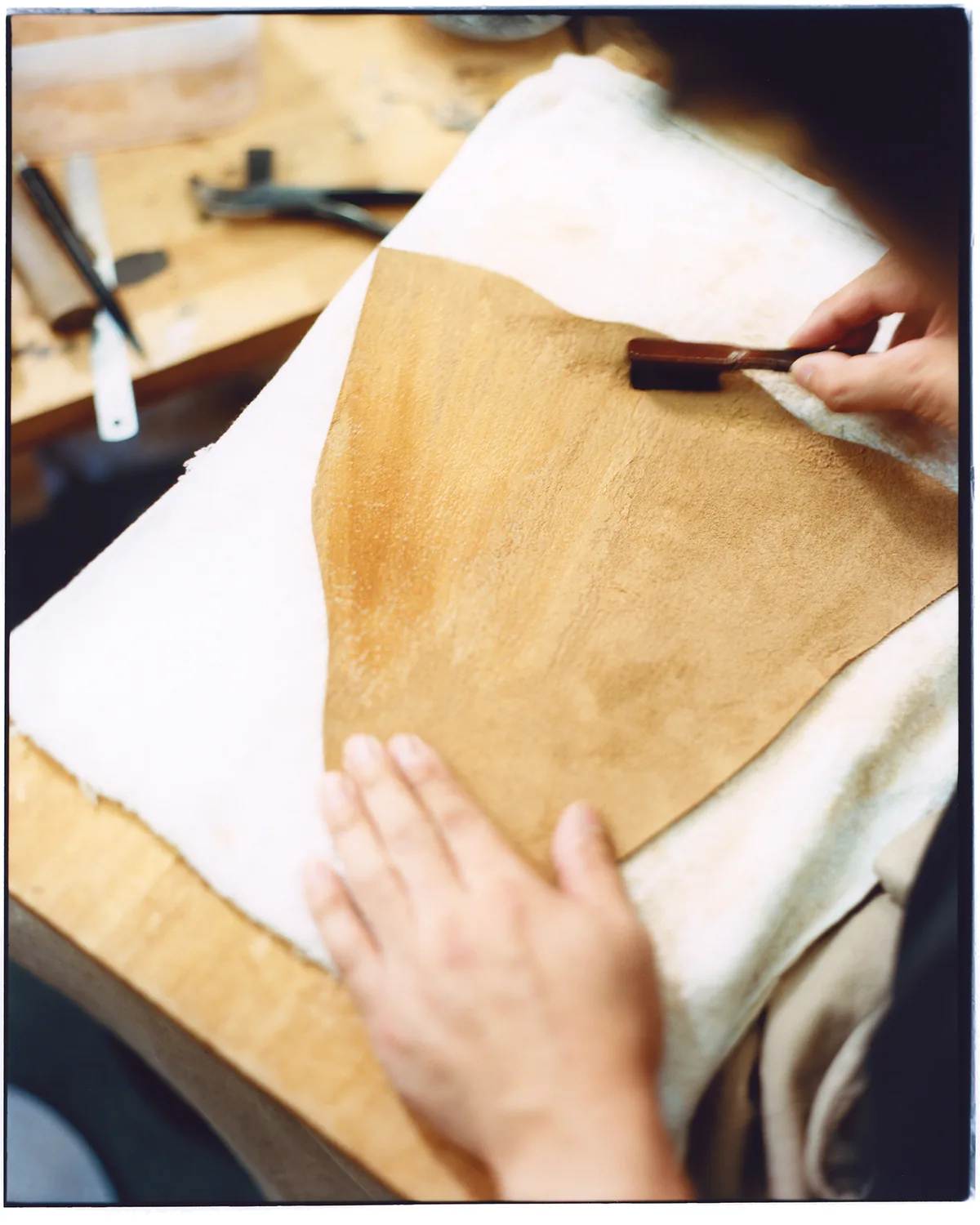
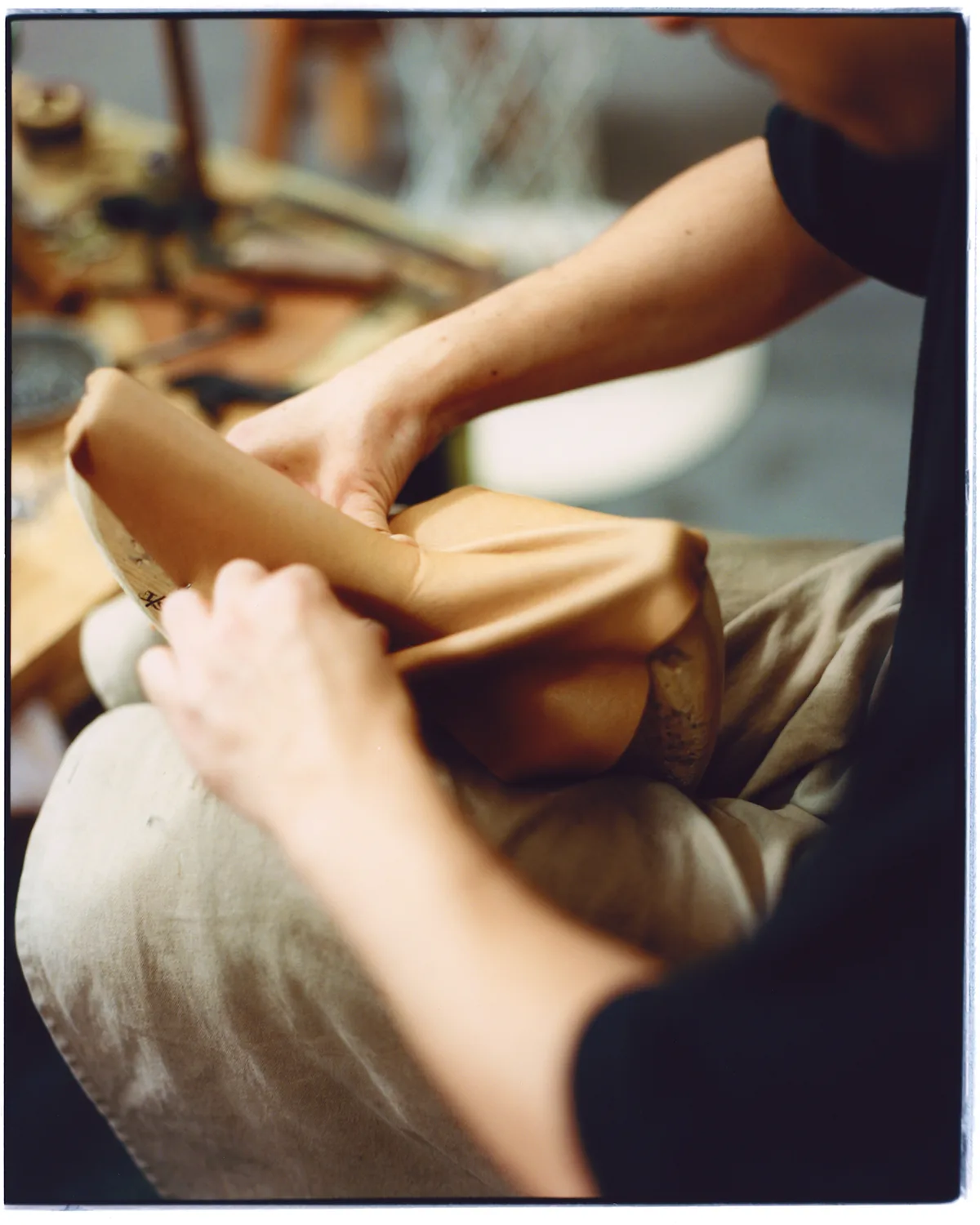
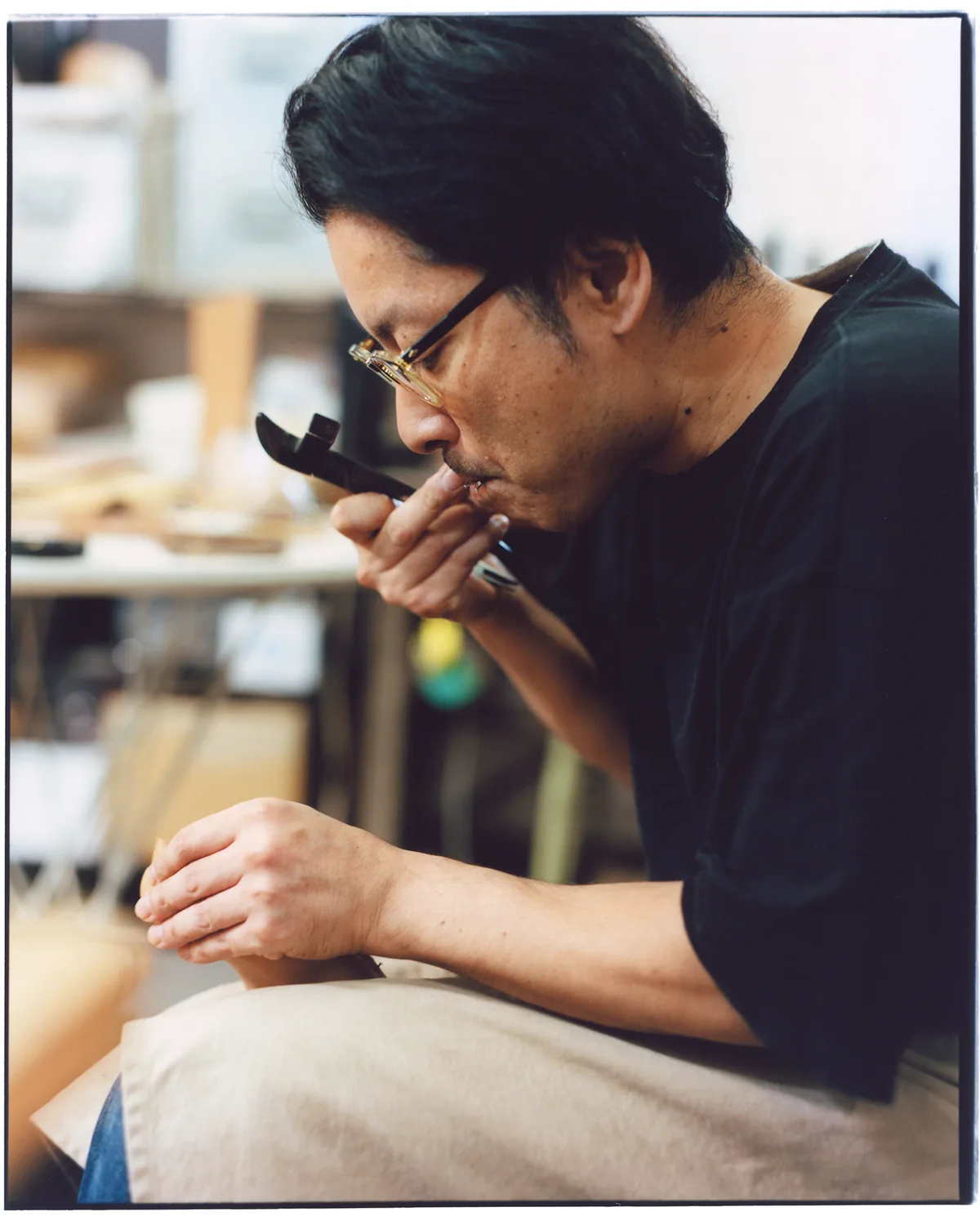
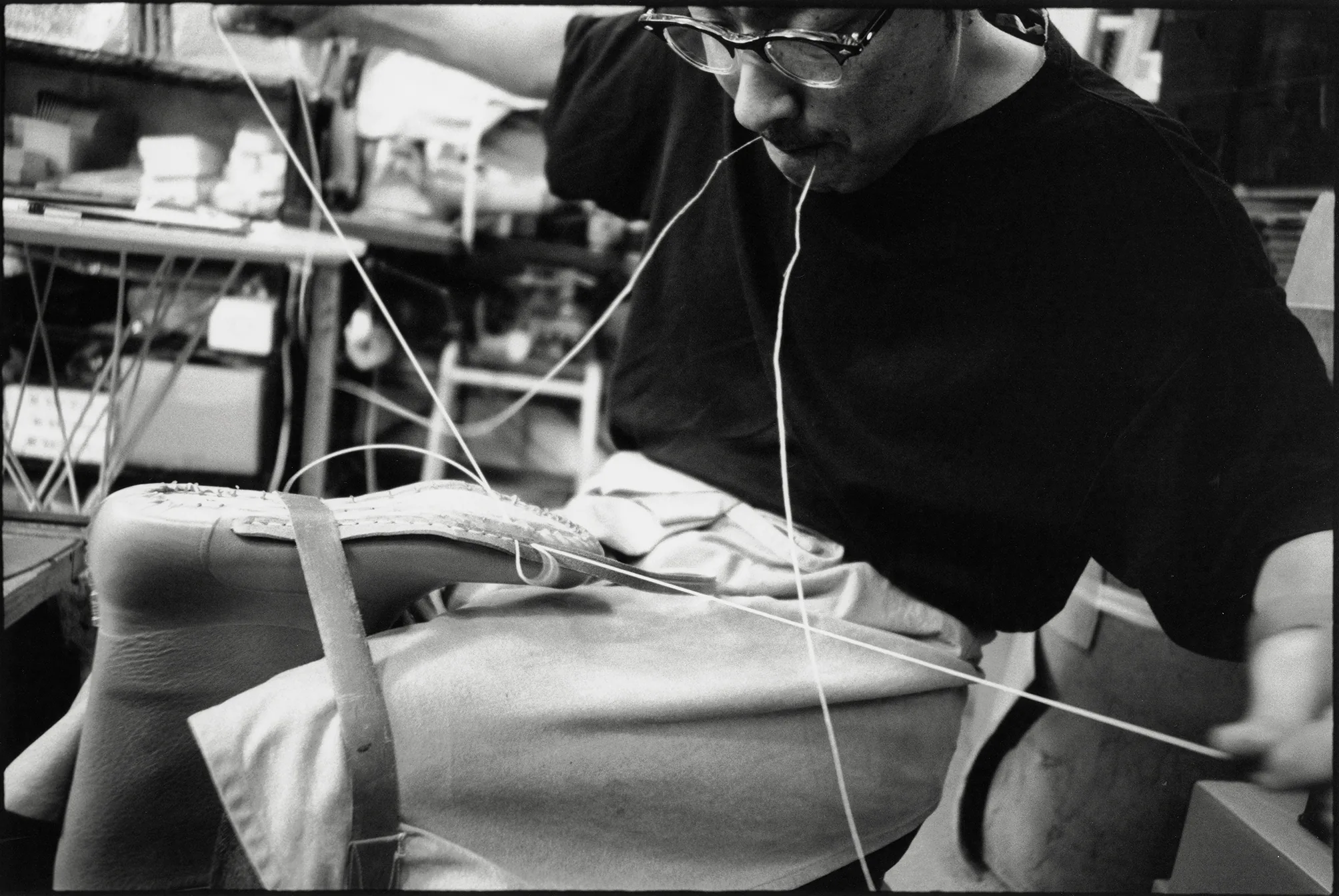
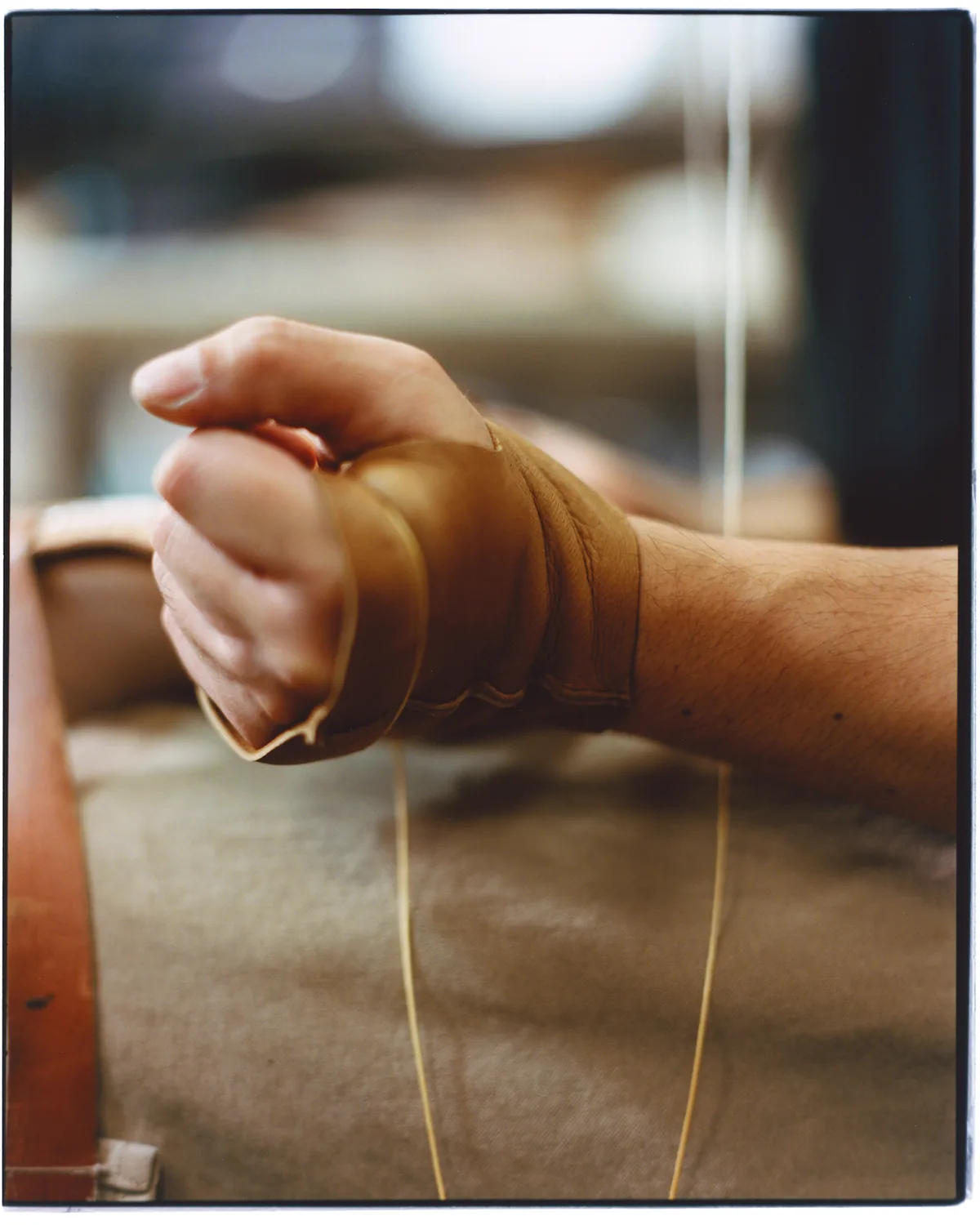
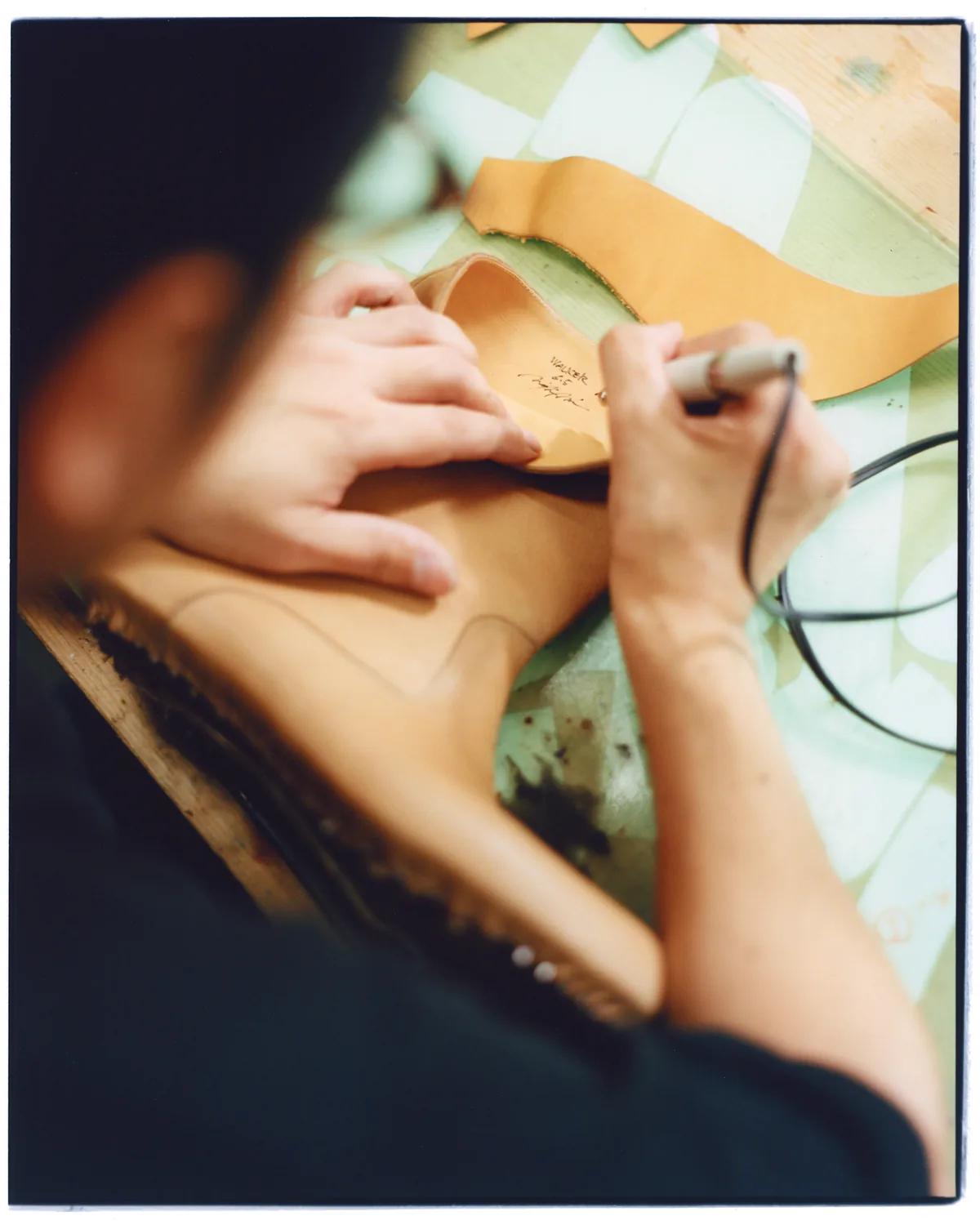
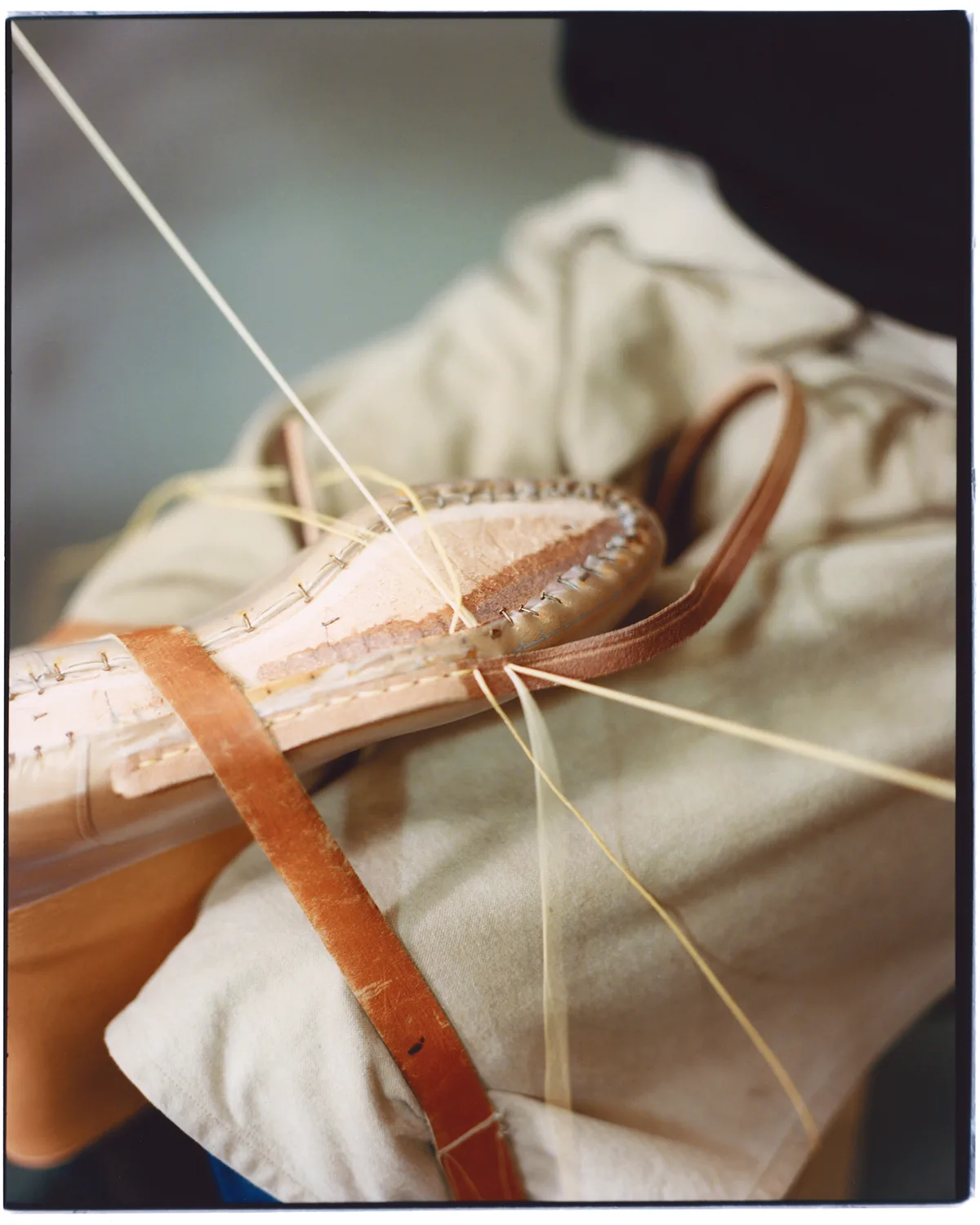
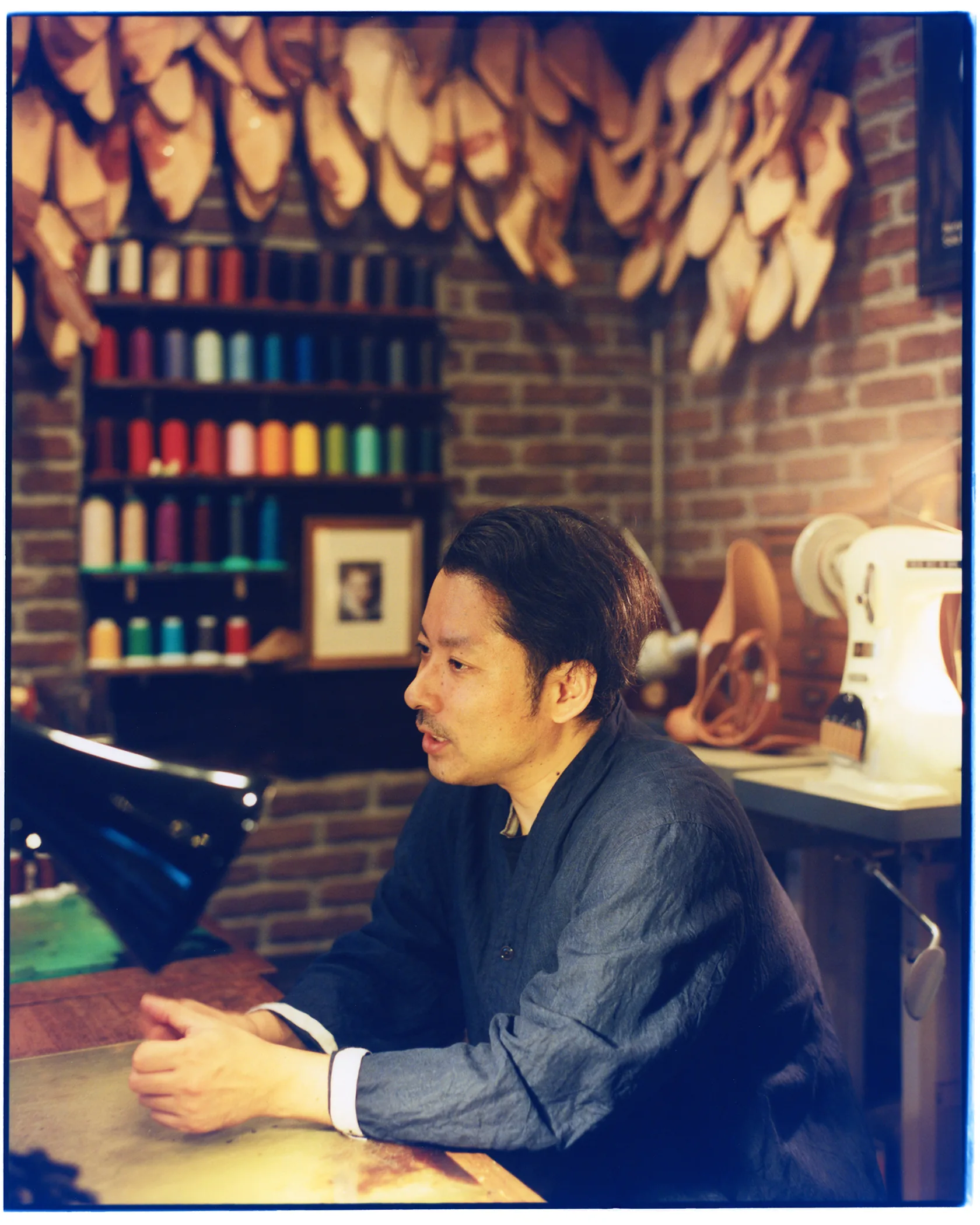
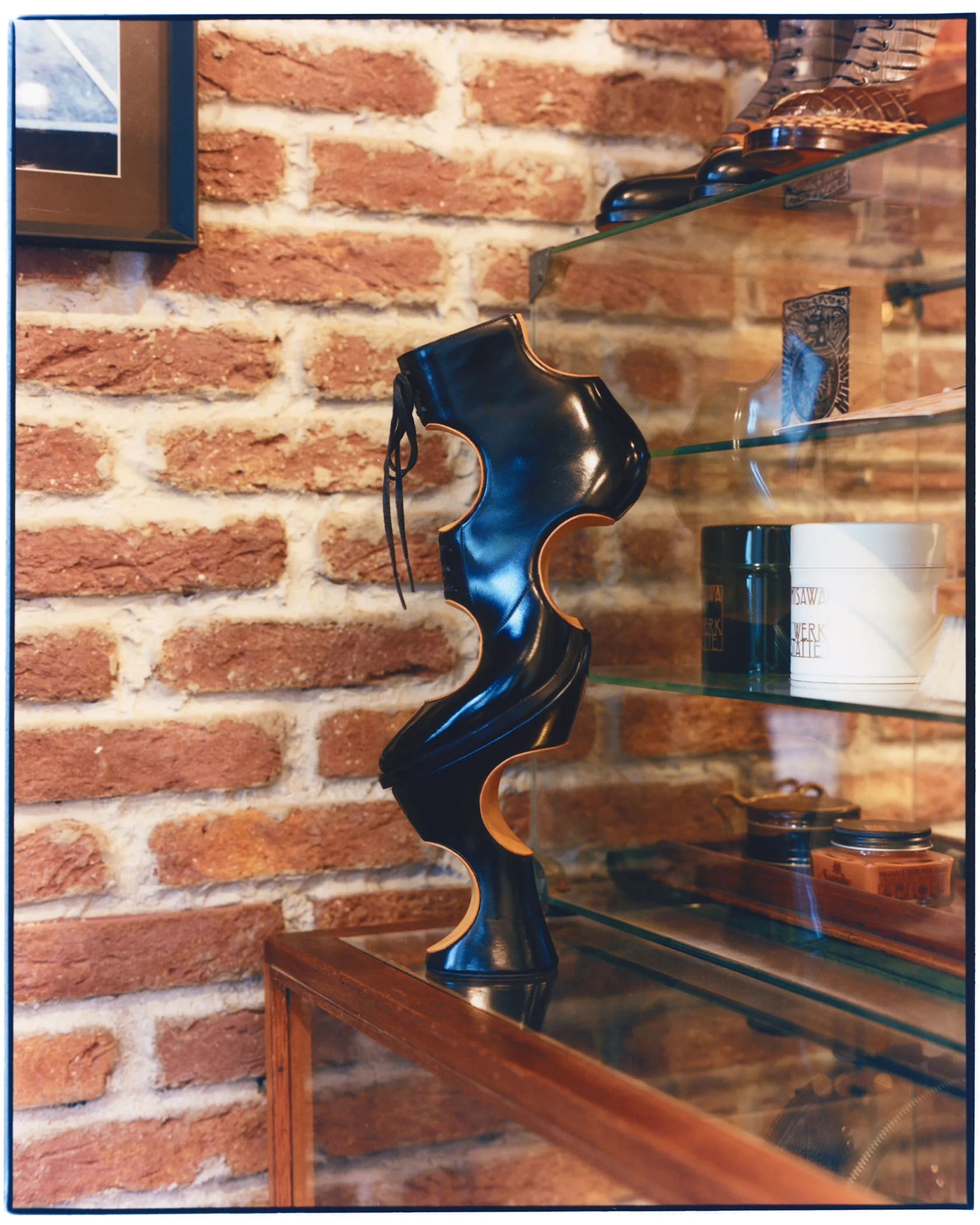
In his atelier in Arakawa, Tokyo, wooden shoe lasts hang in layers from the ceiling, tools line the walls, and rolls of vegetable-tanned leather stand propped against them. Here, Noriyuki Misawa makes shoes one pair at a time, carrying out almost every stage of the process by hand. What he creates falls into two categories: shoes intended to be worn and sculptural works intended to be contemplated. He has continued to make both with his own two hands.
“Good craftsmanship is a given.” These are the words of a craftsman who has thoroughly mastered traditional bespoke shoemaking and won a gold medal at an international competition in Germany. Precisely because he can reproduce the established forms of shoes perfected more than a century ago with such accuracy, he is concerned with drawing a line beyond them. Throughout our conversation, he returned again and again not to questions of technique, but to one question: “Is it genuinely new?”
The single point beyond a perfect score of one hundred. He believes that the energy residing in that extra point can only emerge through accumulated detours, setbacks, and unexpected turns. Pursuing something new and taking the time to arrive there might seem like opposing ideas, but for Misawa, they belong to the same place.
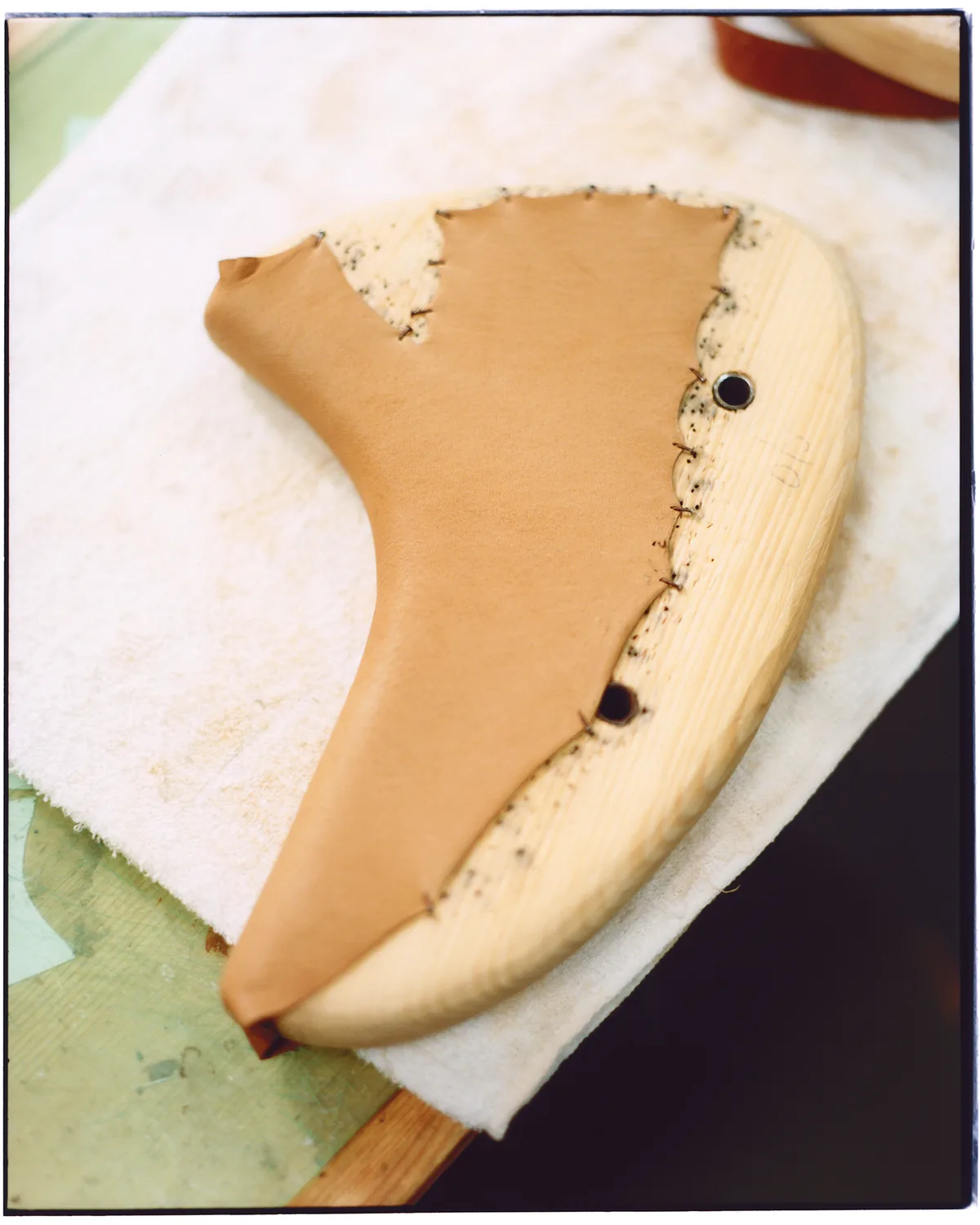
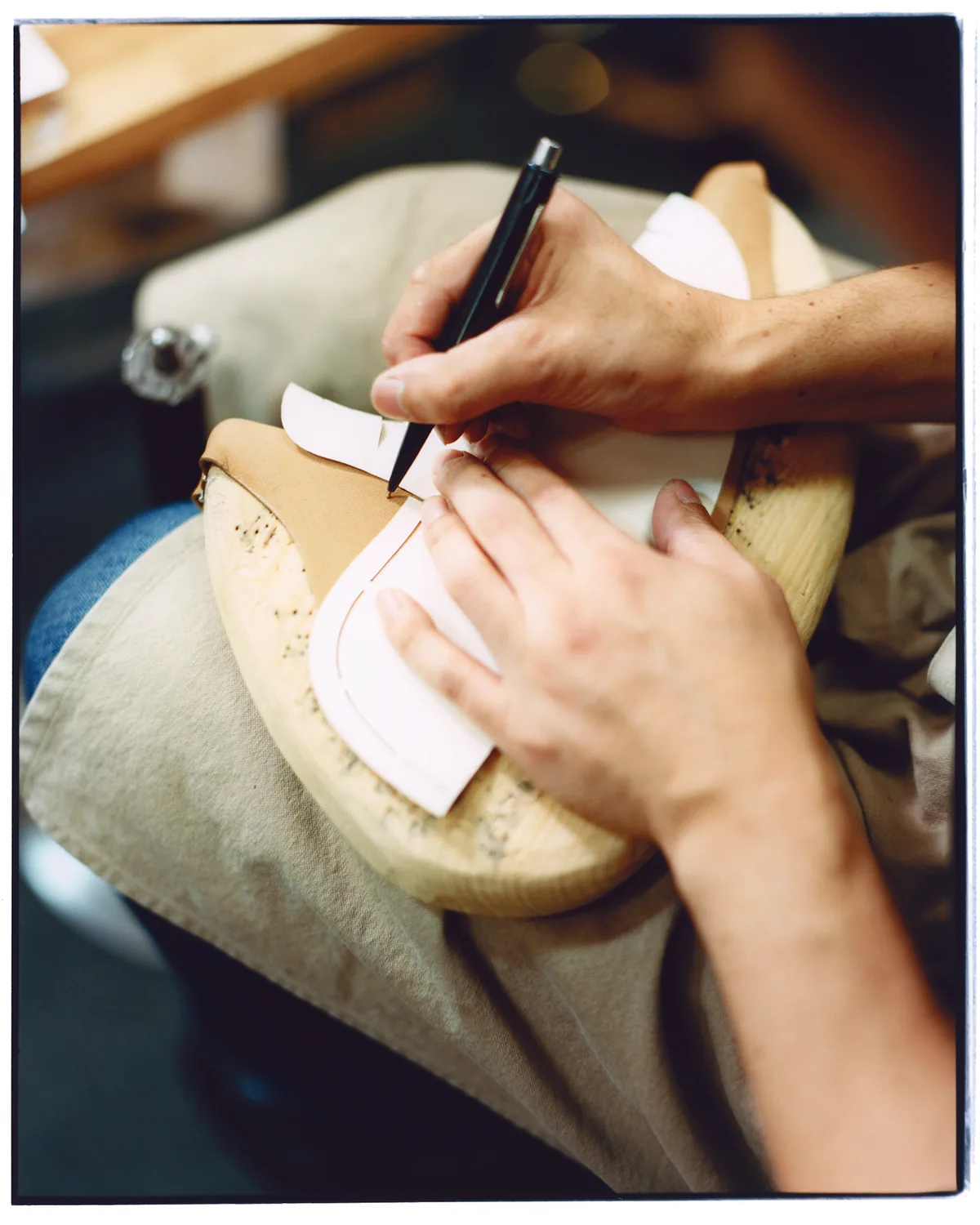
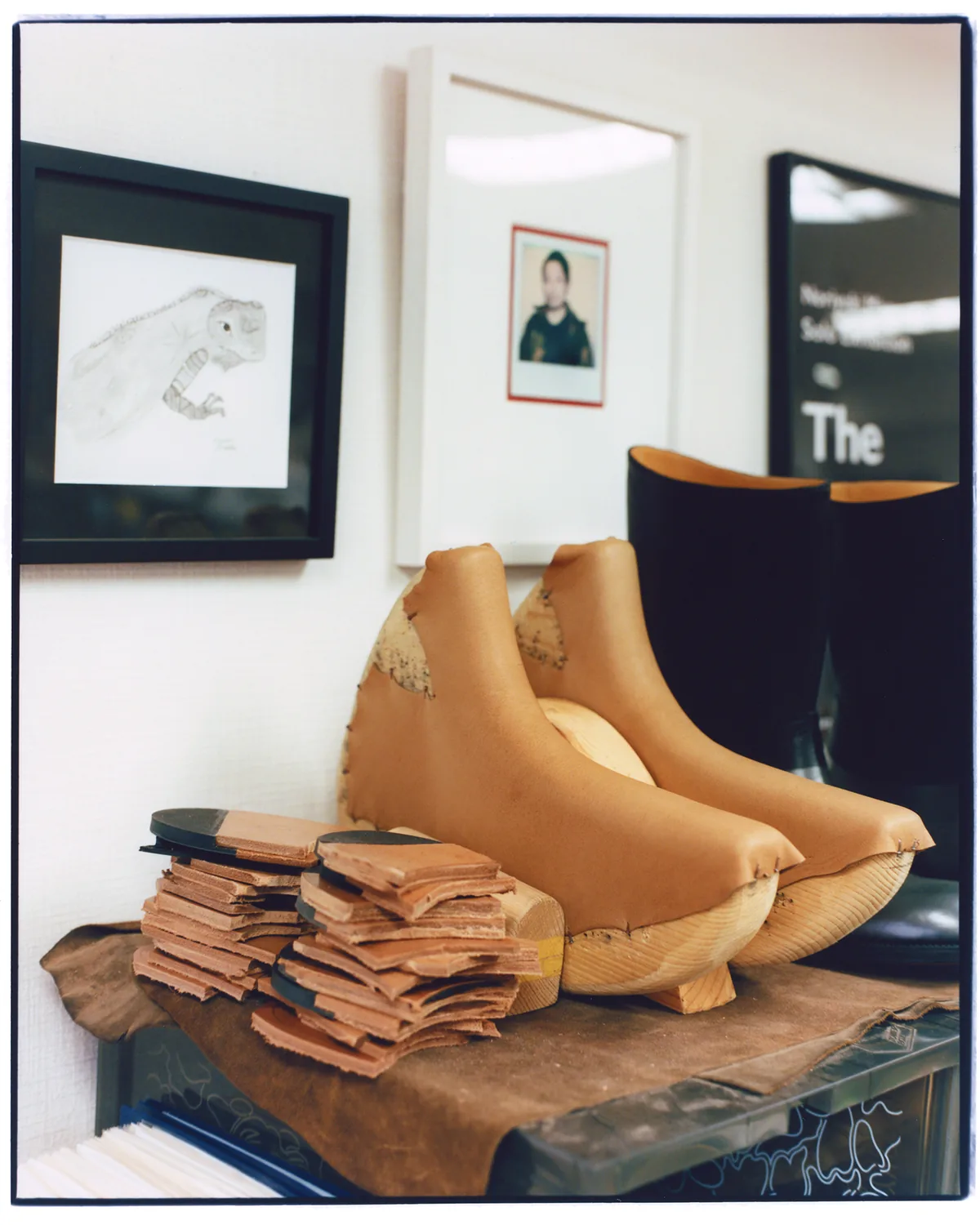
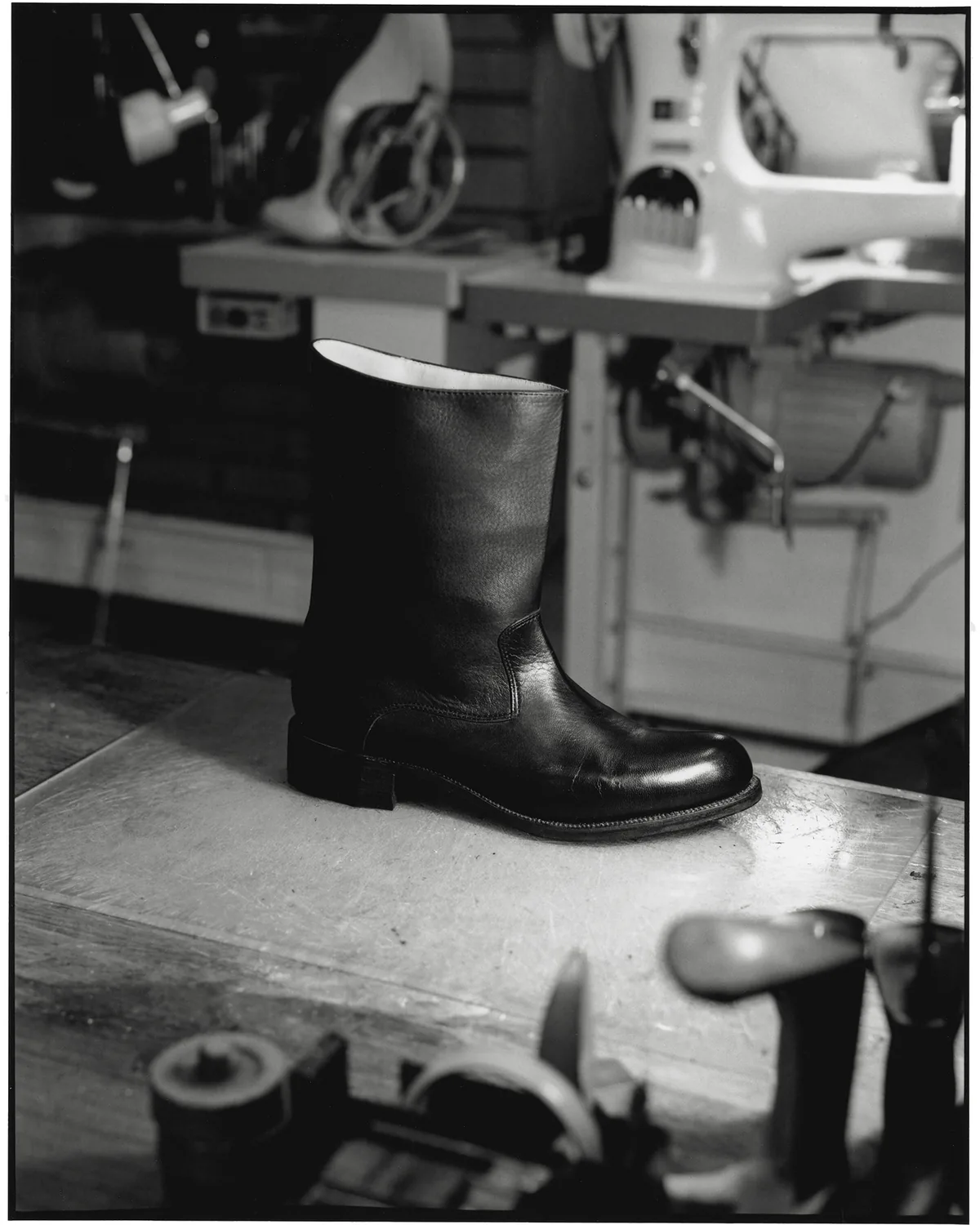
For WALKER, the boots NICENESS commissioned him to create, we shared only the initial idea and direction, leaving the execution to his discretion. His approach was a constant source of surprise. Even the internal stiffeners, invisible unless the boots are taken apart, are shaped by his own hands from pieces of leather. He devotes extraordinary amounts of time not only to the exterior, which determines how a shoe looks, but also to the smallest structural details, working until he is satisfied with the result. Good craftsmanship is not necessarily defined only by what can be seen. Countless trials and adjustments, and attention to details that may never be noticed, gradually accumulate to give the finished object its character. Learning the established forms, then moving beyond them. In Misawa’s words, I could sense the weight of the twenty-five years he has spent moving through the stages of shu-ha-ri — learning, breaking away, and ultimately transcending tradition.
Good Craftsmanship Is Already a Given
NN: What are the most important principles or ideas guiding your work?
Misawa: Design. Good craftsmanship is already a given, as far as I’m concerned. Being able to make something accurately and beautifully is the starting point. The question is what you can design beyond that. I want to create shoe designs that nobody else is making, things that only I can do. That applies to both wearable shoes and artworks.
Of course, it’s impossible for everything I make to be a completely original design, so I set myself something like an annual design project. Every year, I want to create at least one or two new things that I can proudly say I accomplished. I don’t mind being criticised, or having people say, “Well, that didn’t work out this year.”
The difficulty is that when you’re trying to create something new, it takes a long time before you can actually start making it. If the theme is stars, for example, I might come up with dozens of ideas, then leave the promising ones alone for a few days. When I return to them, I keep only those that haven’t lost their appeal.
NN: Continuing to create something new is no easy task.
Misawa: For my artworks, I’ve been working with ironworkers and woodworkers in Shimane, so I’ve visited the area several times. On one of those visits, there was an exhibition on Kobayashi Jodei, a woodworker from the Edo period, so I went to see it. He was obsessed with making something new. Every time he started a project, he would make his tools from scratch. And once he finished, he would apparently throw those tools away. Because if the tools remained, he might end up making the same thing again.
I couldn’t go that far myself. But learning that someone had been so completely consumed by the desire to create something new was quite a shock.
My World Was Far Too Small
NN: Could we go back a little and talk about where this commitment to originality began? What first led you to shoemaking?
Misawa: When I was at university, I was struggling with what to do after graduation. Around that time, a new shoe shop opened along my route to campus. I’d always liked shoes, so I went in. They had all sorts of brands I’d never heard of, at prices I’d never encountered. I started going regularly, and eventually I was even talking to the owner about my worries over finding a job. One day, he mentioned “shoemaking.” At first, I thought, what do you mean, shoemaking? Obviously, I knew shoes were made. But I’d never really considered the idea that someone actually made them. There were people making these things, and that was why they existed in front of me. That realisation was a shock. Suddenly, I wanted to make shoes.
I started researching and discovered that, for shoemaking, Asakusa was apparently the place to go. This was before the internet, so I went through dozens of magazines before finally finding my way there. Every Saturday, I visited shoe factories in Asakusa and asked to watch people work. Most of the time, I was turned away at the door. (Laughs.) Eventually, I realised that to learn shoemaking as a whole, rather than learning on the job, I should go to school first. I attended shoemaking classes during my university summer holidays, and as soon as I graduated, I moved to Asakusa and began studying seriously.
NN: After studying in Asakusa for six years, why did you decide to move to Vienna?
Misawa: I know this sounds a bit arrogant, but I was pretty good. I was confident that I stood out among the younger shoemakers. As my skills improved, I began thinking about becoming independent. As an exercise, I tried designing a pair of shoes of my own. And I couldn’t do it at all. Not a single thing outside the established patterns.
There are several dozen classic styles in shoemaking, and it’s an industry where you earn recognition by executing those styles beautifully. I’d been satisfied with that. But if I wanted to work independently, I needed to make shoes that were different from my master’s. Otherwise, I would always be second best.
I was twenty-eight, and I realised I was in trouble. When I looked at my life, I’d never even been on an aeroplane. I’d barely left Asakusa. All I’d done was make shoes. I knew I had to broaden my world, so I decided to go abroad.
I chose Vienna because workshops in Italy, Britain and France were often featured in magazines, but I wasn’t especially drawn to the world of bespoke that was already well established and glamorously presented. I was more interested in the unglamorous, hands-on shoemaking that never appeared in magazines. I’d also heard that shoemaking traditions were deeply rooted in Central and Eastern Europe. Vienna is a place where Eastern and Western cultures meet, and it’s a city of art. I later became completely obsessed with Klimt.
I Found My Place Through Portraits
NN: In Vienna, you joined a workshop rather than attending a school. What were those days like?
Misawa: My first workshop lasted only a month because I couldn’t get a work visa. I was too embarrassed to go home, so I walked into another workshop unannounced and simply stayed, without even asking whether that was all right. (Laughs.)
I was confident in my technical abilities, but communication was difficult. The second-in-command, who effectively ran the workshop, took a dislike to me. Just when I thought I might have to give up, I started drawing portraits of everyone while taking notes, and they were a huge hit. People began lining up, saying, “Draw me too!” From then on, I felt accepted by everyone. That was how I found my place.
NN: While you were at that workshop, you won a gold medal at a competition in Germany. How did that come about?
Misawa: I never really managed to get along with the second-in-command, and the master was approaching retirement. I was starting to feel it might be time for me to move on to the next stage. So, as a culmination of everything I’d learned at the workshop, I decided to humbly take on the competition in Germany where the master had won gold medals for many years. In the end, I was fortunate enough to receive a gold medal and an honorary award. I left the workshop with that as a milestone, but in fact, that was when my work in Vienna truly began.
A footwear brand called Rosa Mosa approached me, and I started helping every day with development work such as pattern making. The designer there had values completely different from those of traditional bespoke, and it seemed to me that she questioned the idea of endlessly remaking old shoes. The brand’s shoes were, in a good way, far removed from the conventions of the traditional shoemaking I had learned. They were simply unique.
I strongly identified with the brand’s commitment to making new shoes that only they could create. Of course, I will never abandon bespoke shoemaking. It’s my foundation. But while valuing that craft, I would pursue new designs of my own. Being there made me realise that this was the path I wanted to follow. I still respect them from the bottom of my heart, and I don’t think I would be who I am today without that encounter.
Shoes Don’t Always Have to Be Wearable
NN: I understand you visited museums almost every day while you were in Vienna. What first drew you to art?
Misawa: While I was at the workshop, I started at 6:30 in the morning and finished at three in the afternoon. So there I was, free at three o’clock in Vienna’s historic centre, a UNESCO World Heritage Site. I could go to museums and cafés every day. I had a wonderful time after work.
Until then, I knew absolutely nothing about art. But as I kept visiting museums, I became more and more curious. I started researching things, and gradually fell in love with art. Eventually, a question occurred to me: why aren’t shoes presented in places like this? I thought they deserved to be displayed in museums. Shoes have a craft-based appeal, but everyone sees them as tools. I wanted to change that. I began to think that perhaps I could be the one to do it.
NN: Why did you decide to apprentice yourself to an artist after returning to Japan?
Misawa: I’d found a direction, but I lacked the artistic knowledge and education to pursue it. So I spent about four years studying art while continuing to make shoes. I thought it would be much harder if I didn’t learn while I was still young.
The thing is, I’m not naturally the kind of person who can come up with wild, unconventional artistic designs. I’d spent about ten years making classical bespoke shoes, so I inevitably stayed within established forms. Those classic forms are the finest lines that have survived over time. I simply couldn’t draw a line that departed from them. That was incredibly frustrating.
But art is free, isn’t it? So I thought, fine, I’ll make things that are completely artworks. They don’t have to be wearable. They can be objects, sculptures, anything. And the moment I declared that this was what I was going to do, I realised how many different things I was capable of.
That was when I created a separate category for art within my practice. I began with the hope that one day, my artworks and shoemaking would come together, and something genuinely new and wearable would emerge. Now I feel that they are beginning to merge successfully. That said, I still keep the days when I work on wearable shoes completely separate from the days when I work on artworks. I find it difficult to think about an artwork while making shoes. I have to draw a clear line between the two and switch my mind completely.
It’s As Though Music Is Playing
NN: You hold solo exhibitions almost every year, each time in a different place. What motivates you to continue?
Misawa: It’s really just that I’ve reached a point where I don’t feel right unless I have one every year. (Laughs.) I also love Woody Allen’s films. Vicky Cristina Barcelona, To Rome with Love — he makes films in all these famous places. I liked the idea that he seemed to be travelling and enjoying himself while making films. I’m sure it’s actually very hard work, though. You get to travel while working. I decided I wanted to do something similar: go somewhere I wanted to visit and arrange a solo exhibition around the trip. So I’m genuinely enjoying myself.
The response to my work has been completely different from country to country. For my first exhibition in New York, I was determined to show in Chelsea, where all the galleries were. I didn’t care if it was just a warehouse-like space on the upper floor of a building. It had to be Chelsea. Then an arts calendar listing exhibitions around the city featured an image of my shoes alongside paintings and sculptures. A lot of people came because they were curious. Why were there shoes in an art exhibition? When they saw the actual works, they would say, “Oh, now I understand.” That made me incredibly happy.
London the following year was frightening. I was worried that people with such a strong sense of their own shoemaking tradition might be offended by someone taking that culture and doing something unconventional with it. It felt a little like a Japanese person trying to make hip-hop music. But in reality, lots of people from the industry came, and they were deeply moved. Someone told me, “We should have been doing this ourselves. The fact that we didn’t is why so little of London’s bespoke shoemaking tradition remains.” Those words have stayed with me ever since.
NN: Musical motifs appear repeatedly in your work. Was there a particular experience that inspired them?
Misawa: In 2017, I had the opportunity to exhibit in Cannes. The deaf actress Millicent Simmonds came to the exhibition. She was still a child at the time, and she tried on a pair of my shoes. She had lost her hearing when she was very young, but as she tried them on, she smiled in this indescribable way and said, “It feels like music is playing.”
And I thought, yes, that’s exactly it. You know how, in the cartoons we watched as children, whenever a character walked along happily, a light, cheerful tune would play, as if to express exactly how they felt? Perhaps that’s how it feels when you put on a pair of shoes you really love. It made me realise again that, beyond their function of being worn and walked in, shoes might also have the possibility of creating music. That was the beginning of my music series, which I’m still continuing today.
Is It Genuinely New?
NN: What does “value” mean to you?
Misawa: ...Something that has been designed.
I know from personal experience how painful it can be to create something new. So if someone makes a new kind of chair, for example, I think about how difficult that must have been. I don’t buy it out of sympathy. It’s respect. The same goes for music. When I hear something and think, wow, this is new, I feel tremendous respect. Originality. I find value in things that only that particular person could have created.
NN: What do you think gives your current work its originality?
Misawa: I’m sorry to give essentially the same answer as I did to your first question, but it comes down to whether something is genuinely new. Newness. Part of it, I think, is a strong reaction against the leather shoe industry I’ve belonged to for so long.
The forms of today’s leather shoes were almost entirely perfected more than a hundred years ago. Of course, those shoes are wonderful. But somewhere along the way, those perfected forms have become the only correct answer. The closer something is to that answer, the better. A slight refinement is just right. But substantially breaking the form is rarely accepted. I’m not rejecting traditional shoemaking. On the contrary, I’m someone who has studied its techniques thoroughly, and I have deep respect for it. But I don’t think the correct answer from a hundred years ago needs to remain the only correct answer today.
For example, whatever genre something belongs to, I want to be able to say that something good is good. Even if someone shows me a ceramic vessel I know absolutely nothing about, I can say, based on my own values, “I like this,” or “This isn’t to my taste.” But I feel that far too many people put society’s judgement and established values ahead of their own sensibility. That’s why I think the shoe industry has, as a result, tended to keep people who create new designs at a distance. I see myself as fighting against that. That’s why I probably go further than most people in insisting that new design is important.
If I don’t keep fighting, I’ll drift towards what feels comfortable too. And you can make a living by staying there. It’s easier to sustain a business by continuing to make things that are already recognised. But the moment you step outside, making a living suddenly becomes much harder. So I suppose I keep pushing myself on. Telling myself not to settle.
The One Point Beyond a Hundred
NN: In an age when digital technology and AI are spreading so rapidly, do you feel that our ideas of “authenticity” and “value” are changing?
Misawa: I don’t mean to speak badly of young shoemakers today, but to put it frankly, I sometimes feel that their work is shallow and hasn’t had enough time to mature. Superficial, in a way. At the same time, I think the world we live in allows that. You can make a perfectly good living and attract attention even if what you do is superficial.
But I think what will matter from now on is what lies beyond that. Let’s say a good piece of work scores a hundred points. I think the real value lies in reaching a hundred and one, or even a hundred point five. People might say, “But a hundred points is already perfect. Isn’t that enough?” So what is that extra point? It might be conviction, spirit, or the feelings that went into making something.
Those things become an aura that resides within the work. If someone had said that to me years ago, I probably would have laughed at them. But now I think it’s going to become genuinely important. The energy invested in an object. To an ordinary observer, two things might both score a hundred points and appear no different. But ultimately, what matters is that you want to pick one up rather than the other. One feels more compelling. I hope that’s something AI won’t be able to do.
And I don’t think that extra point is worth just one hundredth of the whole. I think it carries the weight of tens of thousands of points. Extraordinary life experiences, all kinds of twists and turns. Even the long, roundabout journey I took before finding my way to Asakusa. I think those experiences, and the maturity they bring, will become incredibly important.
NN: Today, we can access almost anything in a second, so that time in between is treated as though it never existed.
Misawa: Society guides us towards what it presents as the “correct” way to act, and the more we follow it, the less we think for ourselves. There are all sorts of mechanisms encouraging that. In the past, when something was strange or misguided, it was usually obvious. Now I feel there’s a trap in which something that appears correct may actually be wrong.
Devoting Time to What Cannot Be Seen
NN: Could you tell us again how the collaboration to make our shoes came about?
Misawa: Go-san became interested in my work when he visited an exhibition, and he came here to the atelier. I showed him the workspace, and he said, “This is crazy.” (Laughs.) We talked about how it would be nice to work together someday, and that was where things ended at the time.
I already loved NICENESS clothing and bought it regularly. I owned several of the bags, too. I was a huge fan, so I hoped we might have the opportunity to do something together one day. Then, eventually, I received a message. Go-san already had a direction in mind for the shoes he wanted to create. The starting question was, “What would happen if Misawa made these?”
It was my first time working with a brand. There were difficulties. I was such a fan that part of me really didn’t want to interfere with what NICENESS was doing. Half of my mind was trying to remain humble. But the other half was thinking, “Here we go!” I was completely excited. (Laughs.) I carried both those feelings throughout the process.
NN: I understand the conversation began with the question of what it would mean for you, specifically, to make these shoes. How did you approach that?
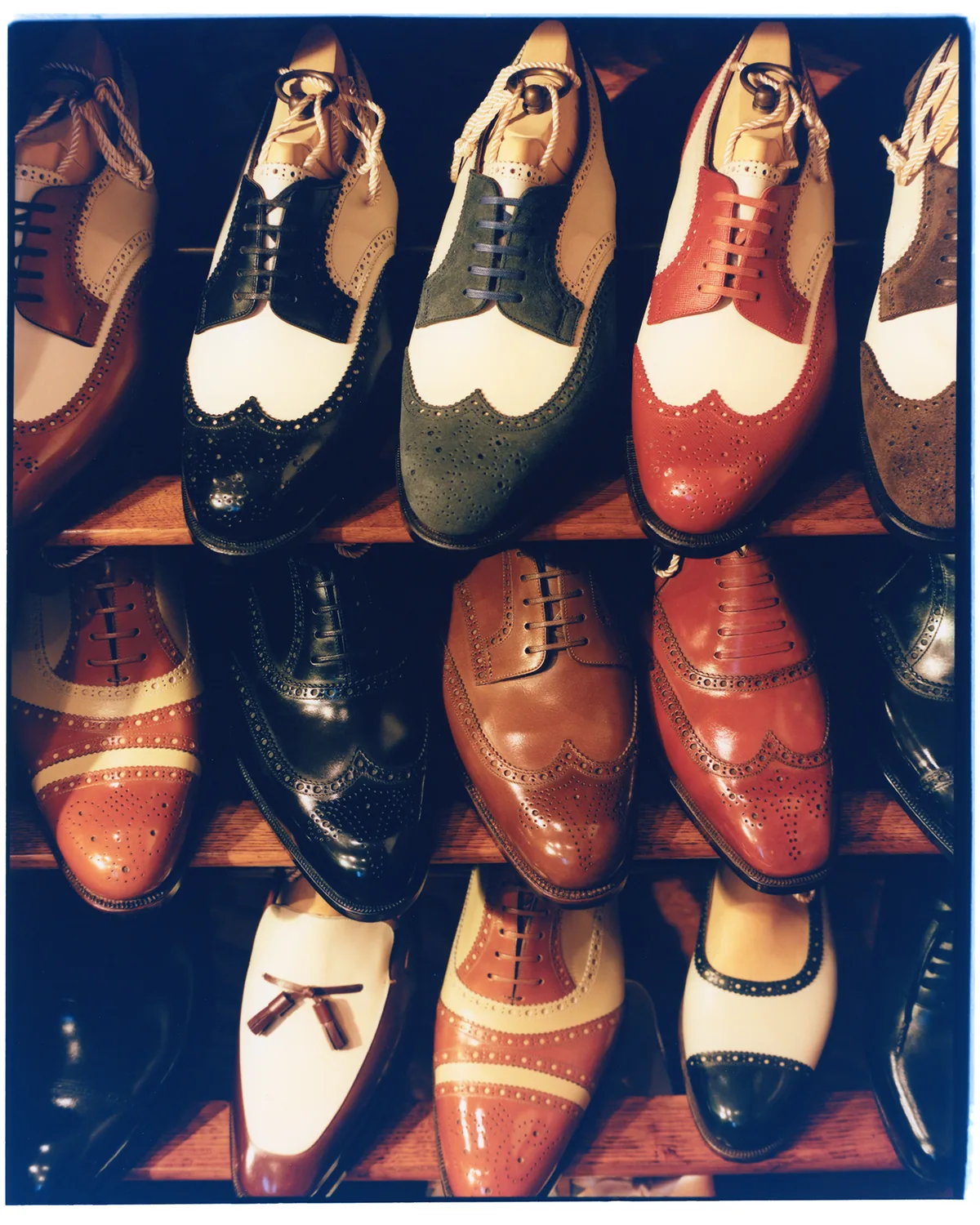
Misawa: I also felt that it would be better not to make them in the way a conventional boot manufacturer would — someone who makes heavy, rugged boots every day. And it seemed that Go-san felt the same way. The idea was for someone who normally makes bespoke shoes to create boots using that level of technique and delicacy. That’s why they’re surprisingly light, and where something needs to be delicate, it’s extremely delicate.
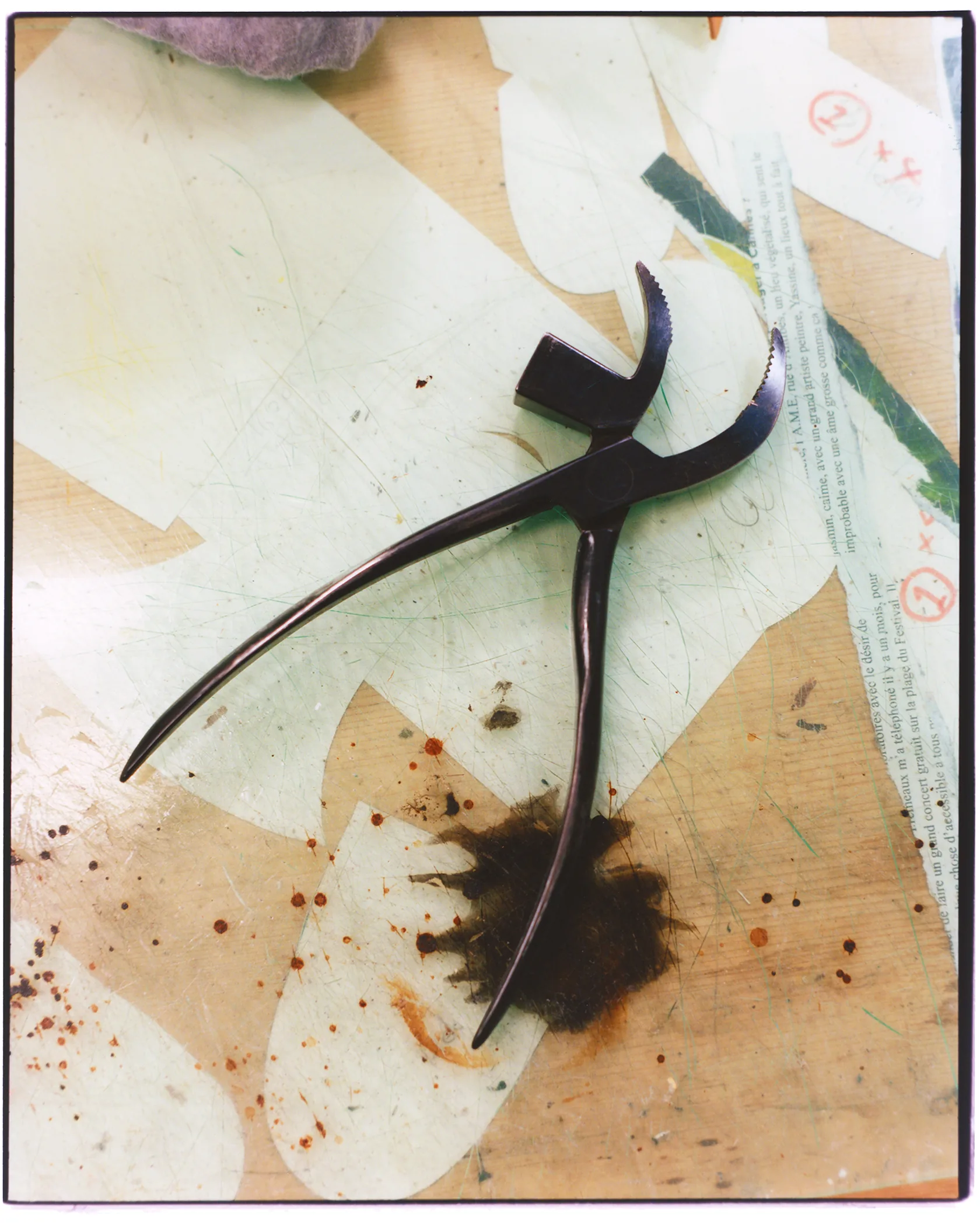
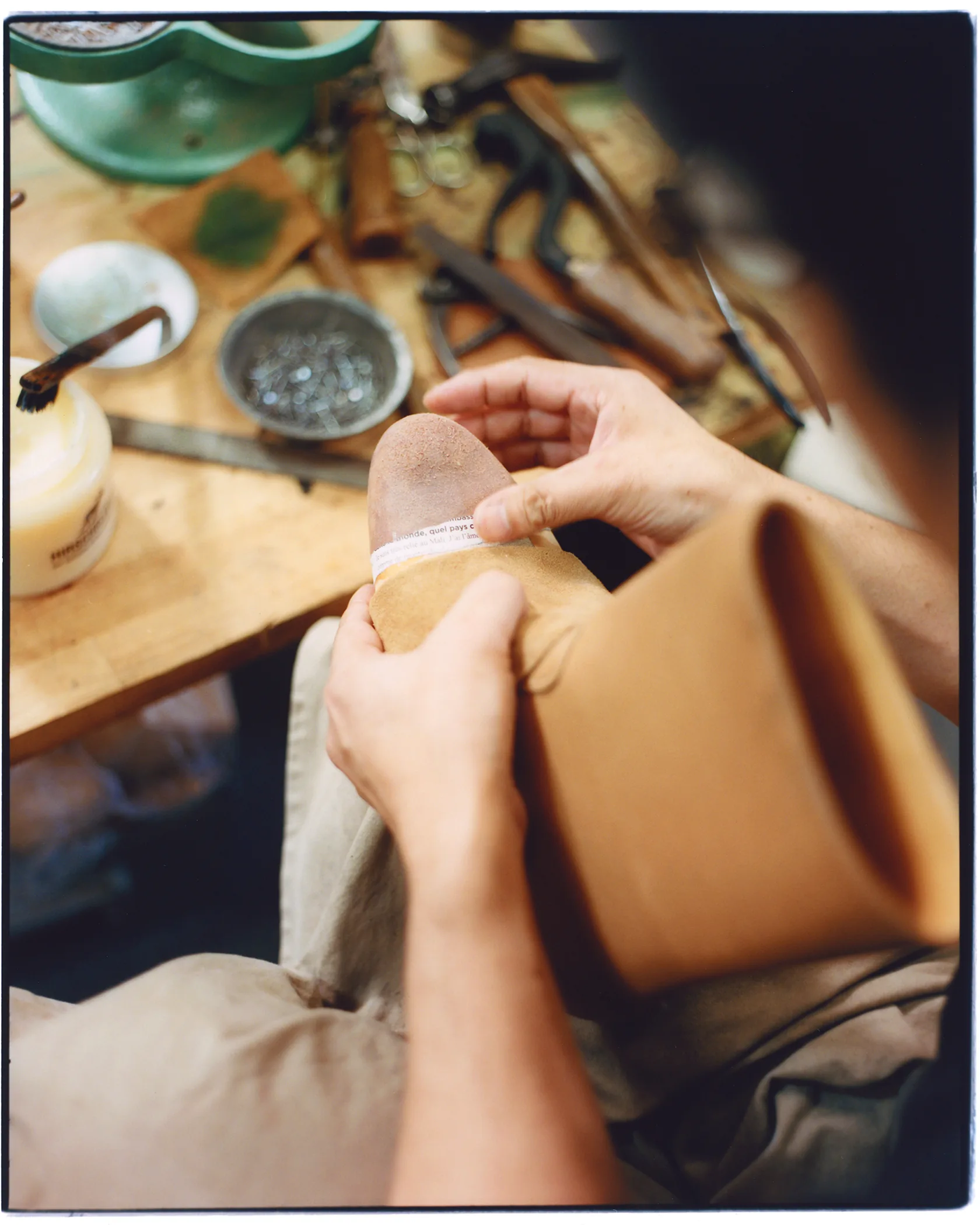
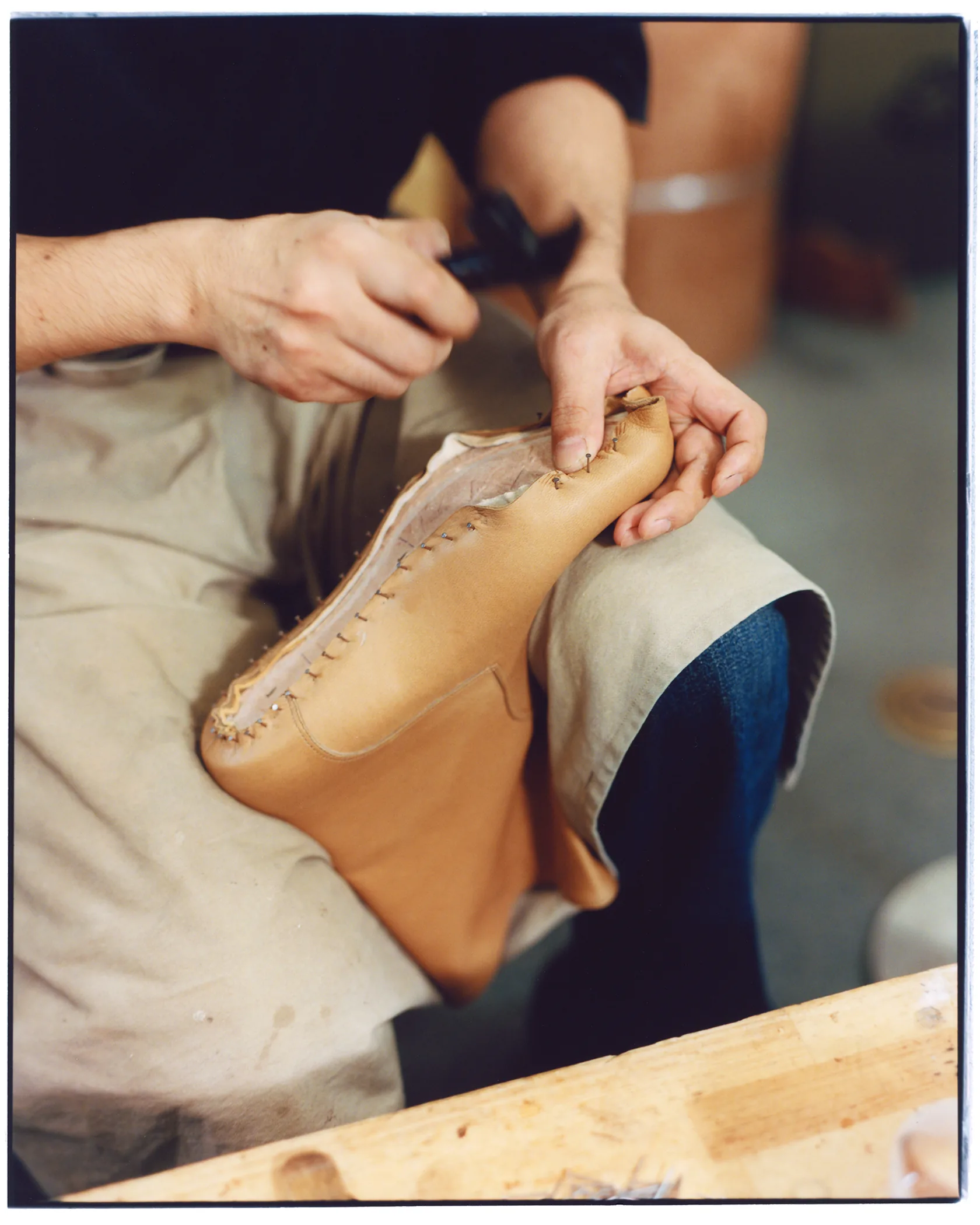
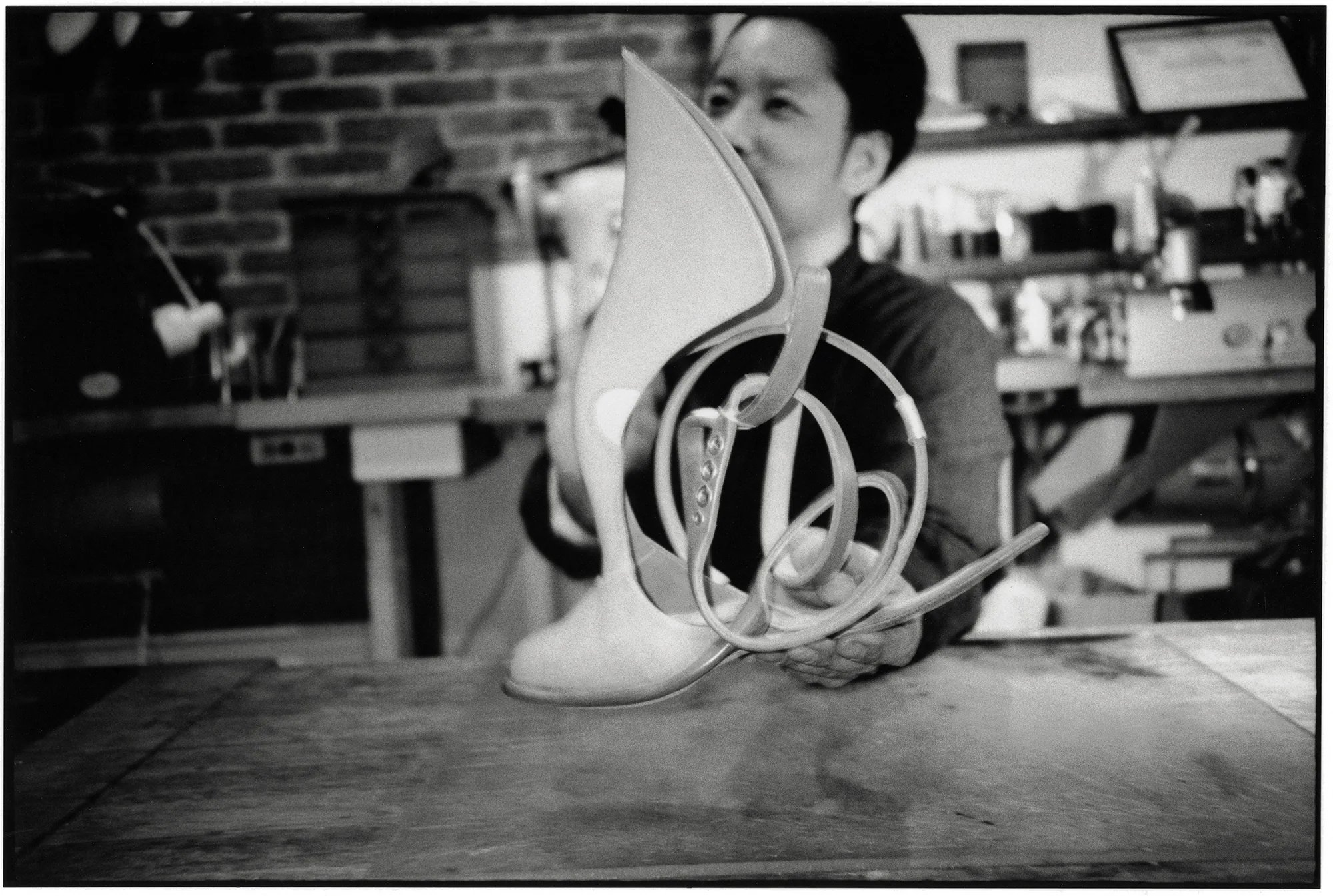
If they ended up looking as though they’d been factory-made, there would be no point in having me make them. It’s demanding, but they’re made entirely by hand. Even the internal stiffeners, both at the toe and the heel, are carved and shaped from leather. There are countless small details built up in places you can’t see. I hope that people who pick them up will be able to sense at least a little of that.
Making Shoes That Will Leave a Mark on History
NN: Your practice spans such a wide range, from exhibitions to wearable shoes. What drives you, and what would you like to pass on to the future?
Misawa: As for what drives me, I’m very conscious of wanting to see how far someone like me, an ordinary person from the countryside, can go. At the same time, I don’t really think I work too much. I grew up as an ordinary person in an ordinary family, and now I’m doing something quite extraordinary: making shoes that people praise and are willing to pay hundreds of thousands of yen for. So I think it’s only natural that I should work several times harder than other people. Perhaps it would be different if I’d been born a genius. But I came from an ordinary family. That’s one source of motivation.
The other is history. The history of footwear goes back roughly three thousand years, even if we start with ancient Egypt. But within that timeline, the leather shoes everyone considers normal today have existed for only about a hundred and fifty years. Even the leather shoe that seems so definitive has a history of just a hundred and fifty years. So what about all the time before that? There were countless forms of footwear made from all sorts of materials. That means the things we casually call “shoes” today might no longer be considered normal fifty years from now. History tells us that.
And that’s what I want to challenge. Someday, when someone puts together a timeline of shoe history and asks, “What were the defining shoes of these two hundred years?”, I want someone to be able to say: “Well, actually, at this turning point, there was this fellow called Misawa who made these strange-looking shoes. And eventually, they became the norm.” I want to invent a shoe that leaves that kind of mark on history. That’s what I’m working towards now. And in terms of what I want to leave for the future, I suppose that’s it.
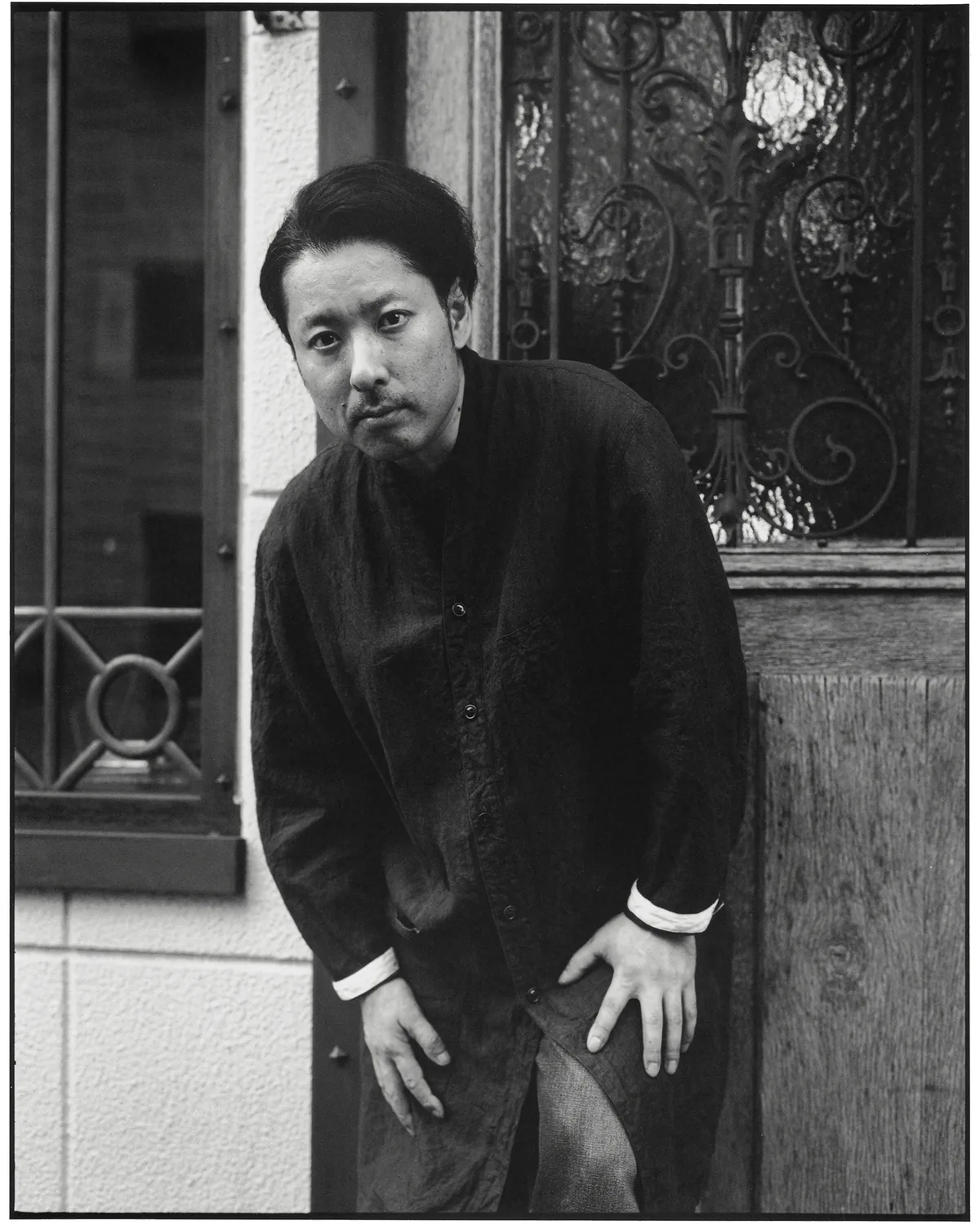
Noriyuki Misawa
Shoe sculptor.
Born in 1980 in Miyagi Prefecture. Discovered shoemaking while at university, trained in Asakusa, then moved to a workshop in Vienna, Austria. In 2010, while there, he won the gold medal and an honorary award at the International Shoemakers' Competition in Germany. After returning to Japan, he studied under an artist and now creates both wearable shoes and sculptural works that cannot be worn. Received the Minister of Education, Culture, Sports, Science and Technology Award at the Japan Leather Craft Exhibition in 2015, won the GLOBAL FOOTWEAR AWARDS in 2022–23, and received a Gold Award at the International Design Awards (USA) in 2025. Solo exhibitions have been held in New York, London, Tokyo, Sapporo, Singapore, Paris and Rome. His atelier is in Arakawa, Tokyo.
www.noriyukimisawa.com
